Utilization of the flow ratio measured by echocardiography (FRecho) compared to the flow ratio by right heart catheterization (FRrhc) for detecting Eisenmenger syndrome in uncorrected acyanotic adult congenital heart disease (ACHD)
Charlotte Johanna Cool, Achmad Fitrah Khalid, Norman Sukmadi

TL;DR
This study compares two methods for measuring blood flow ratios in adult congenital heart disease patients and finds that one method overestimates the flow ratio compared to the other.
Contribution
The study evaluates the reliability of TTE-derived flow ratio as a substitute for RHC-derived flow ratio in ACHD patients.
Findings
FRecho significantly correlates with FRrhc but tends to overestimate the flow ratio.
Bland-Altman analysis shows a mean difference of 1 between FRecho and FRrhc.
FRecho should not replace FRrhc for clinical decision-making in this population.
Abstract
The increasing number of adult congenital heart disease (ACHD) patients, especially in low- and middle-income countries (LMICs), necessitates effective management methods. The Qp/Qs or flow ratio (FR) is crucial for this purpose because one of the indications for closure is a significant shunt. This study compares the utility of the transthoracic echocardiography (TTE)-derived flow ratio (FRecho) with that of the right heart catheterization (RHC)-derived flow ratio (FRrhc) to guide clinical decisions in resource-limited settings. This cross-sectional study in Bandung, Indonesia, included 36 patients with uncorrected acyanotic ACHD who underwent both RHC and TTE on the same day. FRecho was calculated using stroke volumes of the respective ventricles derived from Doppler measurements, and FRrhc was measured using indirect Fick’s method. Of the 36 patients, 80.6% were female, with a…
Genes, proteins, chemicals, diseases, species, mutations and cell lines named across the full text — each resolved to its canonical identifier and authoritative record.
Click any figure to enlarge with its caption.
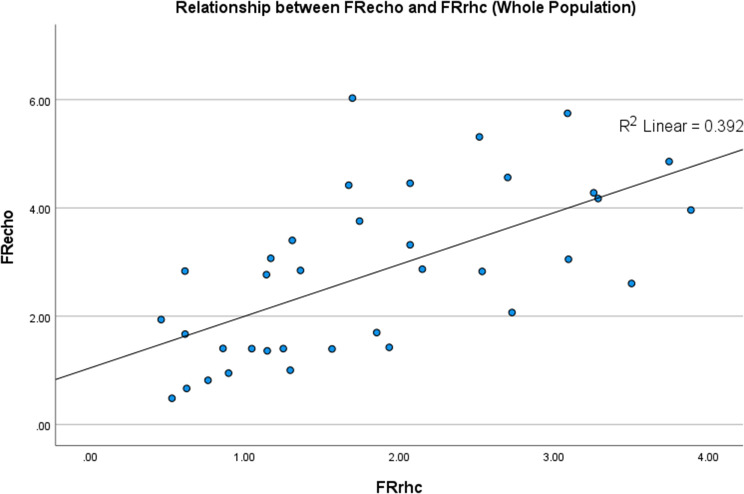 Figure 1
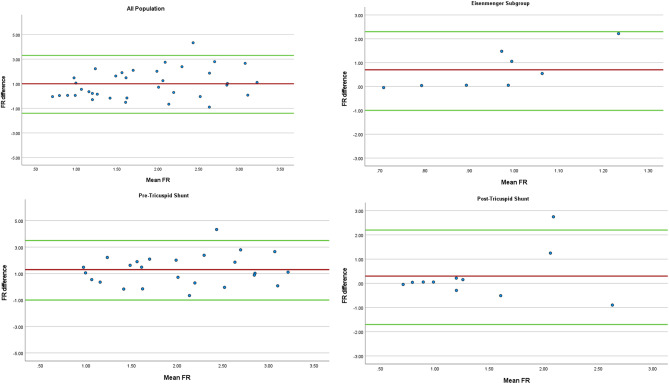 Figure 2
Peer Reviews
No public reviews on file for this paper yet. If you reviewed it on a platform where reviews are public (OpenReview, ICLR, NeurIPS, ICML), you can paste yours below so the community can read it here.
Videos
No videos yet. Explain this paper in a talk, walkthrough, or lecture? Add one.
Taxonomy
TopicsCongenital Heart Disease Studies · Pulmonary Hypertension Research and Treatments · Coronary Artery Anomalies