Why Dosing Matters: A Closer Look at the Dose–Response Relationship With OnabotulinumtoxinA
Wolfgang G. Philipp‐Dormston, John H. Joseph, Jean D. A. Carruthers, John P. Fezza, Mansi Mukherjee, Ahmed Yasin, Maria Musumeci

TL;DR
This paper examines how proper dosing of onabotulinumtoxinA affects treatment outcomes for upper facial lines.
Contribution
The paper provides insights into the dose–response relationship and suggests that underdosing may reduce efficacy without improving safety.
Findings
Using doses below the approved amount leads to shorter duration and lower patient satisfaction.
Higher doses may improve outcomes without increasing safety risks, particularly in the glabella region.
Further studies are needed to confirm these findings in other facial areas and subgroups.
Abstract
OnabotulinumtoxinA is licensed in many countries for simultaneous treatment of three areas of the upper face: glabellar lines, 20 U; lateral canthal lines, 24 U; and forehead lines, 20 U. To assess the onabotulinumtoxinA dosing science and dose–response relationship in the treatment of upper facial lines (UFL). Key practical questions are addressed using available data. OnabotulinumtoxinA doses were selected for Phase 3 registrational trials based on rigorous dose‐ranging studies. In clinical practice, it is important to consider the relationship between dose and efficacy outcomes, duration, and safety. Interstudy comparison of duration analyses is complicated by the lack of a single comprehensive definition, but trial data with standard onabotulinumtoxinA dosing in the glabella suggest a median effect duration of ~4 months. Treatment of UFL at below the approved dose is associated…
Genes, proteins, chemicals, diseases, species, mutations and cell lines named across the full text — each resolved to its canonical identifier and authoritative record.
Click any figure to enlarge with its caption.
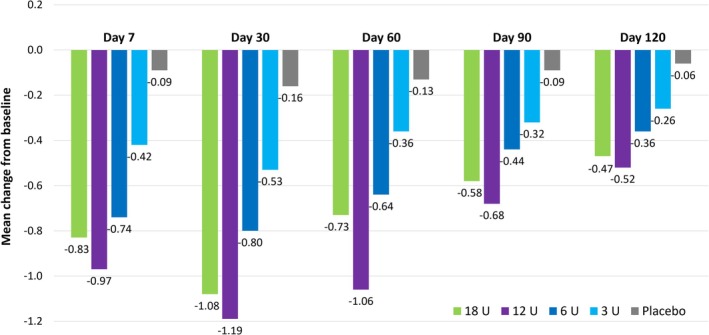 Figure 1
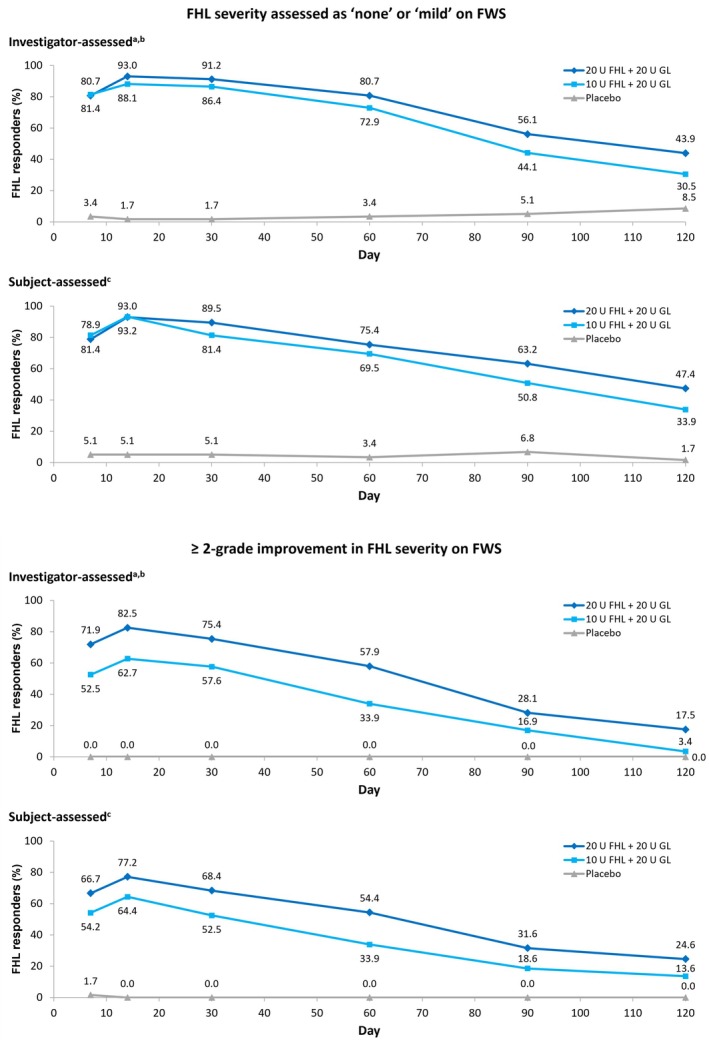 Figure 2
Peer Reviews
No public reviews on file for this paper yet. If you reviewed it on a platform where reviews are public (OpenReview, ICLR, NeurIPS, ICML), you can paste yours below so the community can read it here.
Videos
No videos yet. Explain this paper in a talk, walkthrough, or lecture? Add one.
Taxonomy
TopicsBotulinum Toxin and Related Neurological Disorders · Facial Rejuvenation and Surgery Techniques · Hair Growth and Disorders