IL-17A-producing NKp44(−) group 3 innate lymphoid cells accumulate in Familial Adenomatous Polyposis duodenal tissue
Kim M. Kaiser, Jan Raabe, Michael ToVinh, Gudrun Hack, Sarah Ahmad, Niko Müller, Julia Cassella, Sofia I. Walravens, Paula Alfaro, Lauren Arias Garcia, Dominik J. Kaczmarek, Tim Marwitz, Felix Goeser, Hans Dieter Nischalke, Philipp Lutz, Nils Sommer, Tim Vilz, Marieta Toma

TL;DR
This study shows that a specific type of immune cell accumulates in the duodenum of people with FAP and may contribute to tumor development.
Contribution
The study identifies IL-17A-producing NKp44(−) group 3 innate lymphoid cells as a novel contributor to FAP-related tumorigenesis.
Findings
IL-17A(+)NKp44(−)ILC3 cells are increased in FAP duodenal tissue and localized near the epithelium.
IL-17A stimulation increases ROS production and DNA damage in FAP organoids, promoting tumorigenesis.
Elevated IL1B, IL23A, and DLL4 transcripts correlate with IL-17A(+)NKp44(−)ILC3 accumulation in FAP.
Abstract
Familial adenomatous polyposis (FAP) is an inherited gastrointestinal syndrome associated with duodenal adenoma formation. Even among carriers of the same genetic variant, duodenal phenotypes vary, indicating that additional factors, such as the local immune system, play a role. We observe an increase in duodenal IL-17A(+)NKp44(−) innate lymphoid type 3 cell (ILC3) in FAP, localized near the epithelium and enriched in adenomas and carcinomas. Elevated IL1B, IL23A, and DLL4 transcript levels correlate with IL-17A(+)NKp44(−)ILC3 accumulation, and in vitro studies with duodenal organoids confirmed this relationship. Bulk RNA sequencing reveals upregulated Reactive oxygen species (ROS)-inducing enzymes DUOX2 and DUOXA2 in FAP adenomas. IL-17A-stimulated FAP organoids show increased DUOX2/DUOXA2 expression, Duox2 protein, and ROS production, leading to DNA damage, suggesting a mechanism by…
Genes, proteins, chemicals, diseases, species, mutations and cell lines named across the full text — each resolved to its canonical identifier and authoritative record.
Click any figure to enlarge with its caption.
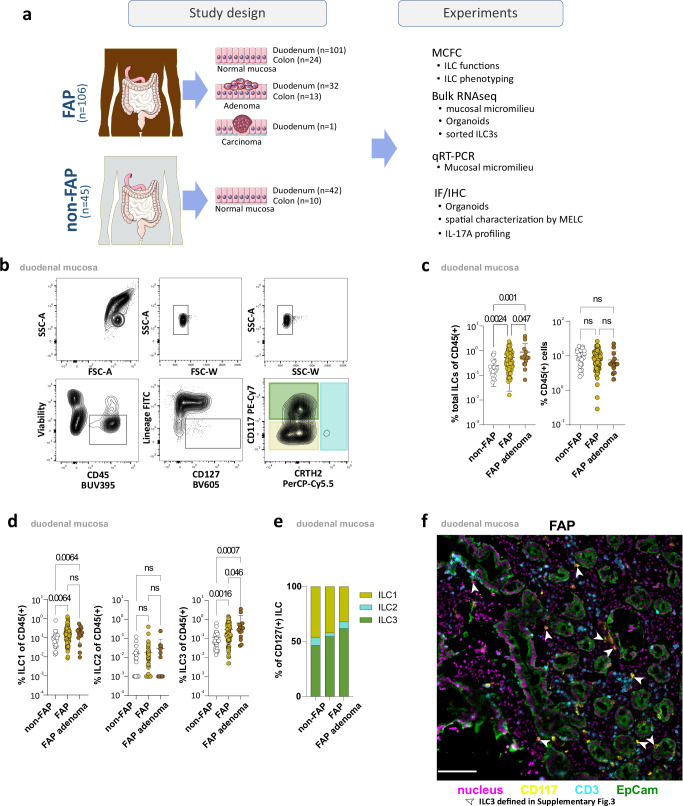 Figure 1
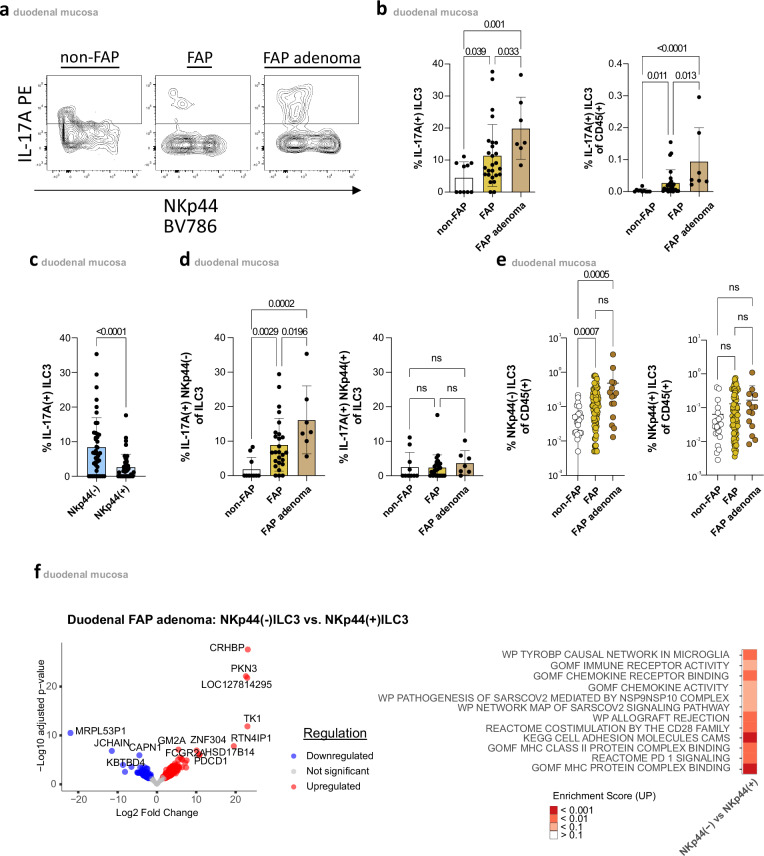 Figure 2
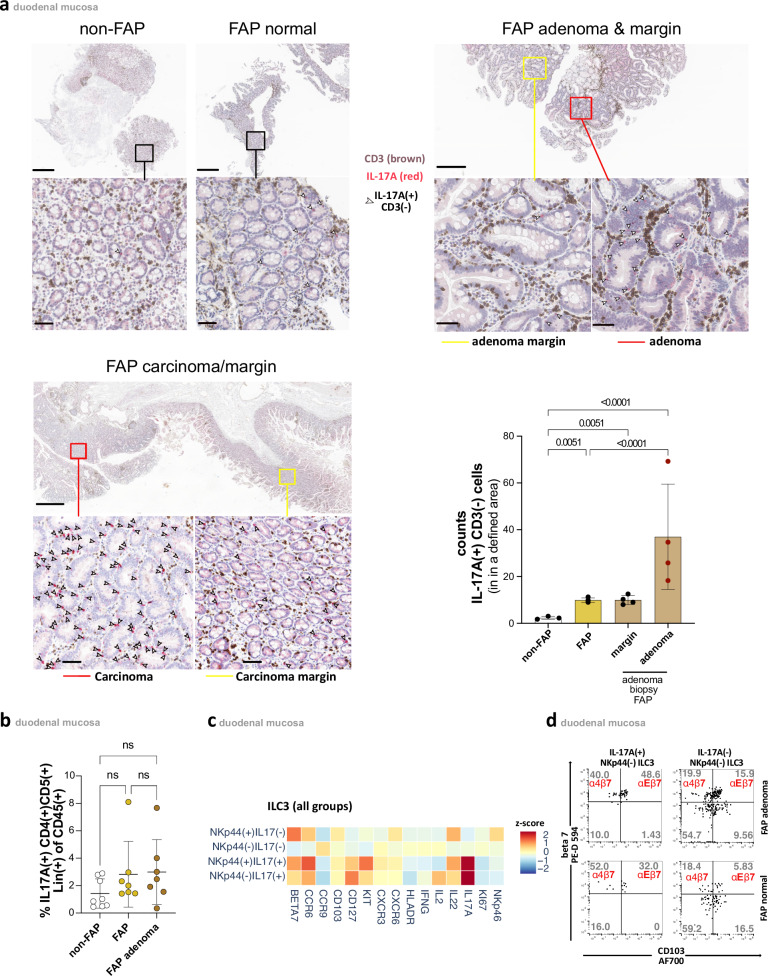 Figure 3
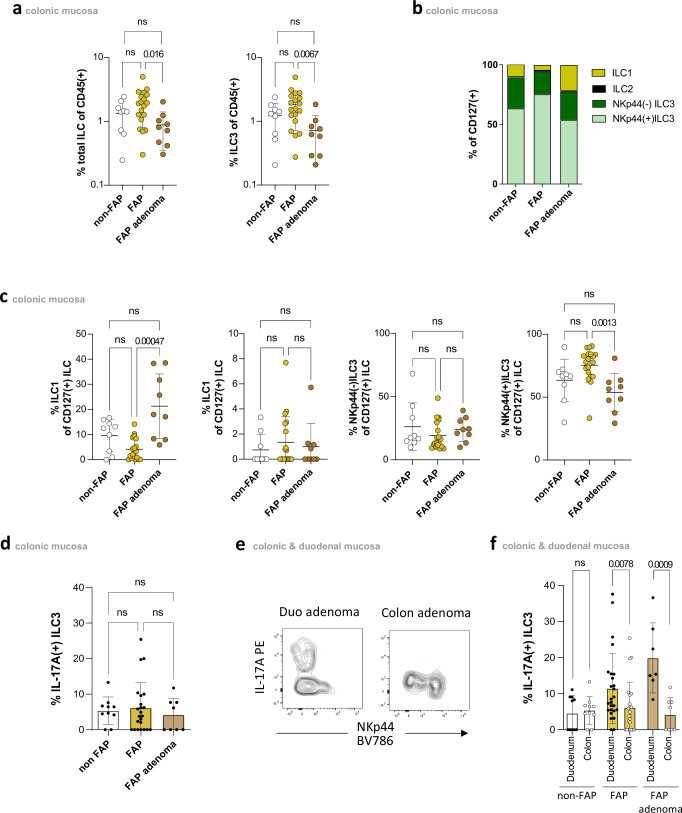 Figure 4
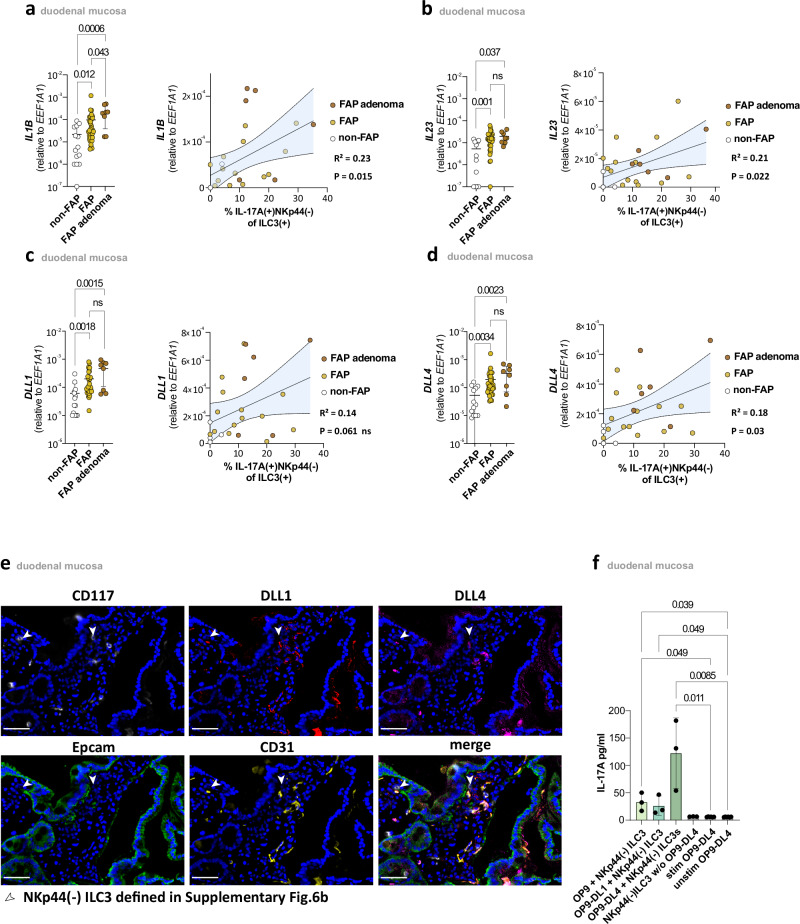 Figure 5
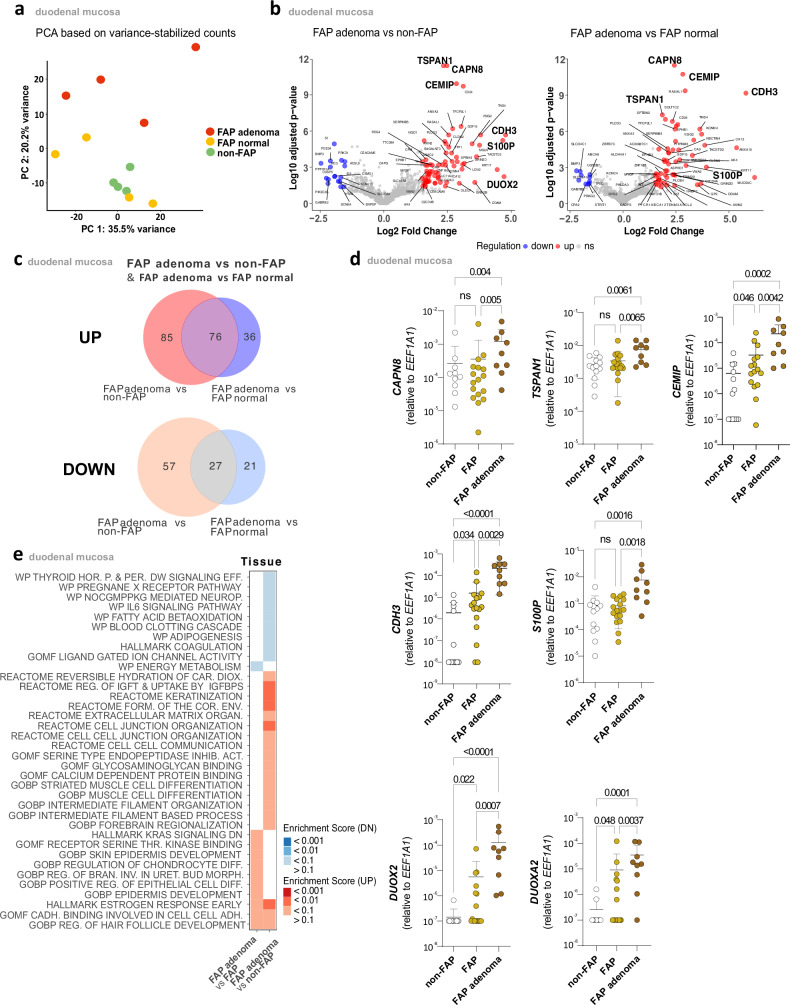 Figure 6
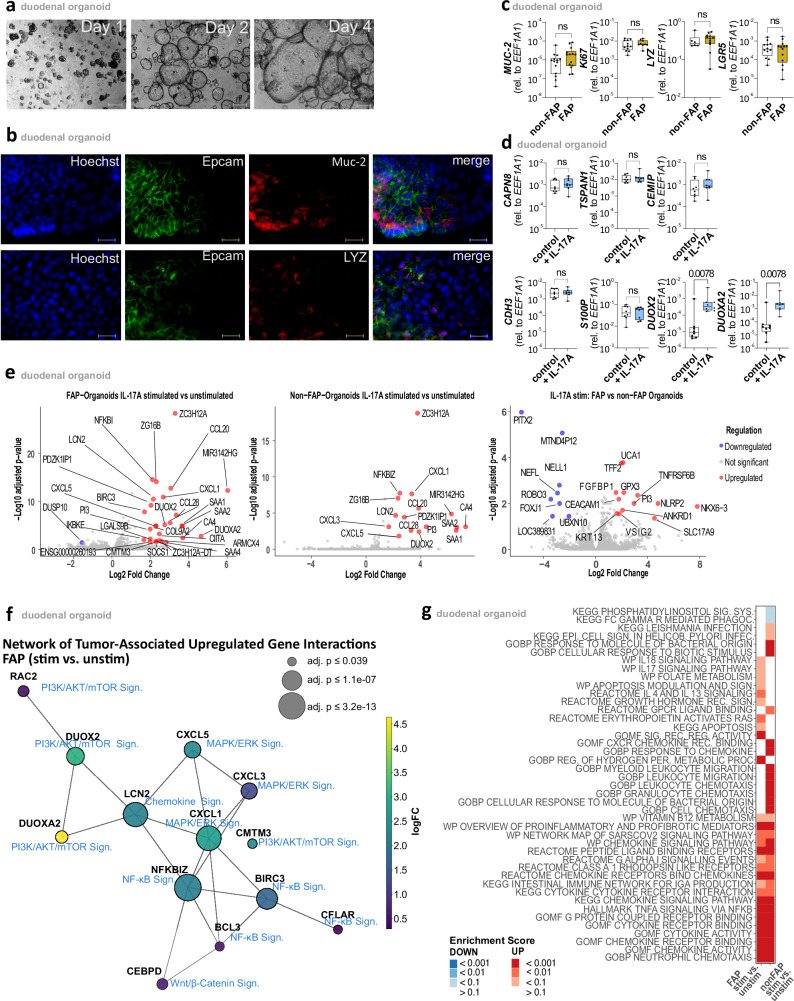 Figure 7
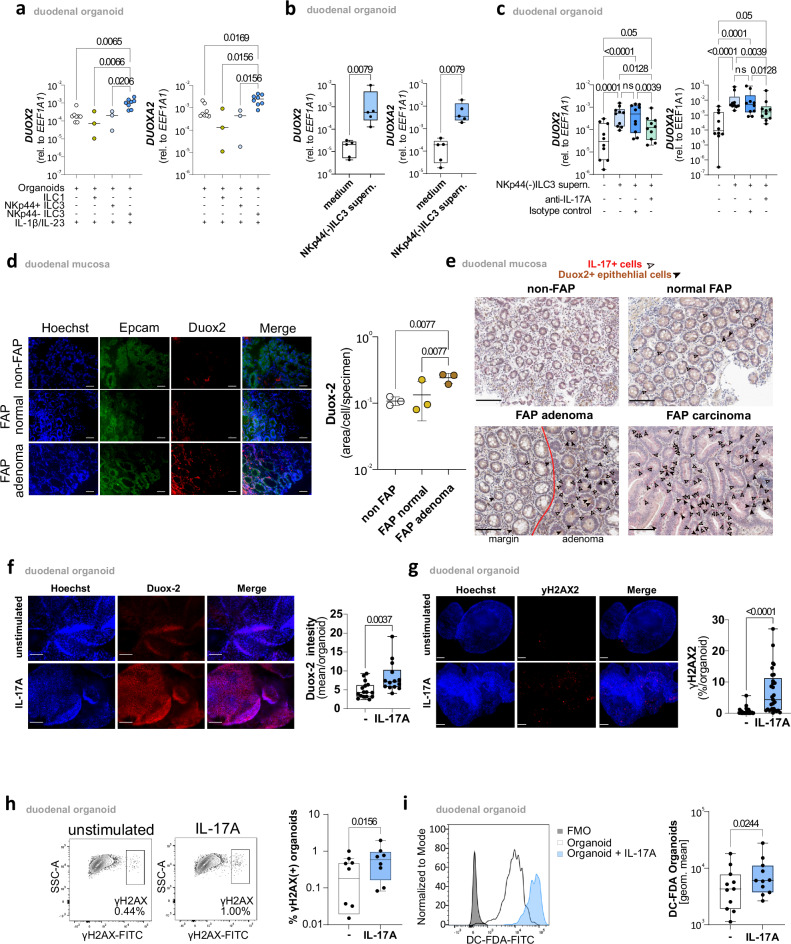 Figure 8
Peer Reviews
No public reviews on file for this paper yet. If you reviewed it on a platform where reviews are public (OpenReview, ICLR, NeurIPS, ICML), you can paste yours below so the community can read it here.
Videos
No videos yet. Explain this paper in a talk, walkthrough, or lecture? Add one.
Taxonomy
TopicsIL-33, ST2, and ILC Pathways · Eosinophilic Esophagitis · Immune Cell Function and Interaction