Direct cell interactions potentially regulate transcriptional programmes that control the responses of high grade serous ovarian cancer patients to therapy
Sodiq A. Hameed, Walter Kolch, Donal J. Brennan, Vadim Zhernovkov

TL;DR
This study shows that direct cell interactions in ovarian cancer can predict how patients respond to therapy, with immune cell involvement linked to better outcomes.
Contribution
The study introduces a method to analyze physical cell-cell interactions using scRNA-seq doublets to predict therapy response in ovarian cancer.
Findings
Transcriptional changes from physical cell interactions predict therapy response in ovarian cancer patients.
Immune cell interactions are associated with better clinical outcomes, while cancer-stromal interactions have mixed effects.
Distinct gene regulatory networks and transcription factor clusters were identified based on clinical responses.
Abstract
The tumour microenvironment is composed of a complex cellular network involving cancer, stromal and immune cells in dynamic interactions. A large proportion of this network relies on direct physical interactions between cells, which may impact patient responses to clinical therapy. Doublets in scRNA-seq are usually excluded from analysis. However, they may represent directly interacting cells. To decipher the physical interaction landscape in relation to clinical prognosis, we inferred a physical cell–cell interaction (PCI) network from ‘biological’ doublets in a scRNA-seq dataset of approximately 18,000 cells, obtained from 7 treatment-naive ovarian cancer patients. Focusing on cancer-stromal PCIs, we uncovered molecular interaction networks and transcriptional landscapes that stratified patients in respect to their clinical responses to standard therapy. Good responders featured PCIs…
Genes, proteins, chemicals, diseases, species, mutations and cell lines named across the full text — each resolved to its canonical identifier and authoritative record.
Click any figure to enlarge with its caption.
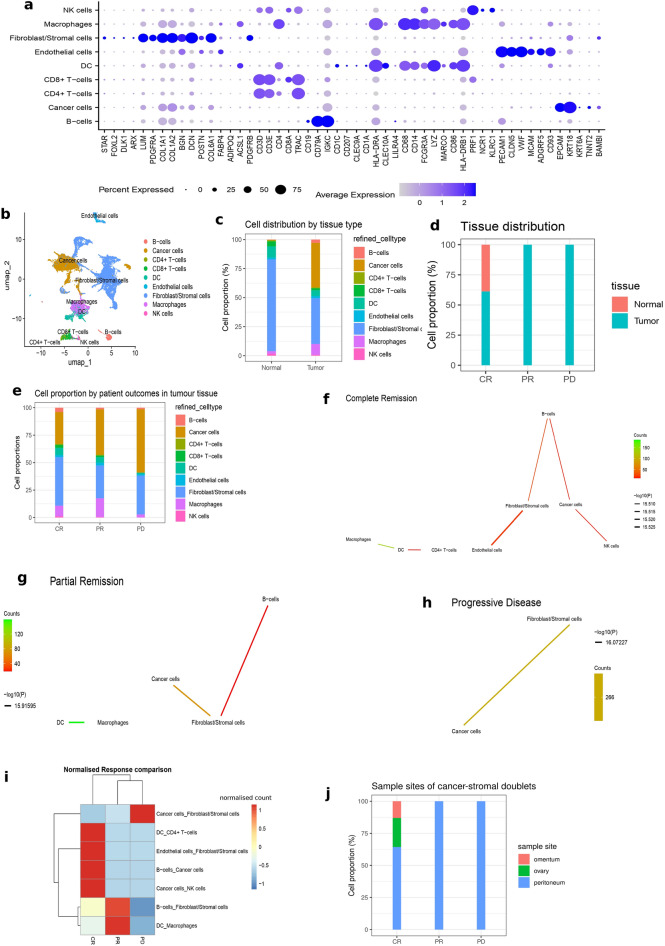 Figure 1
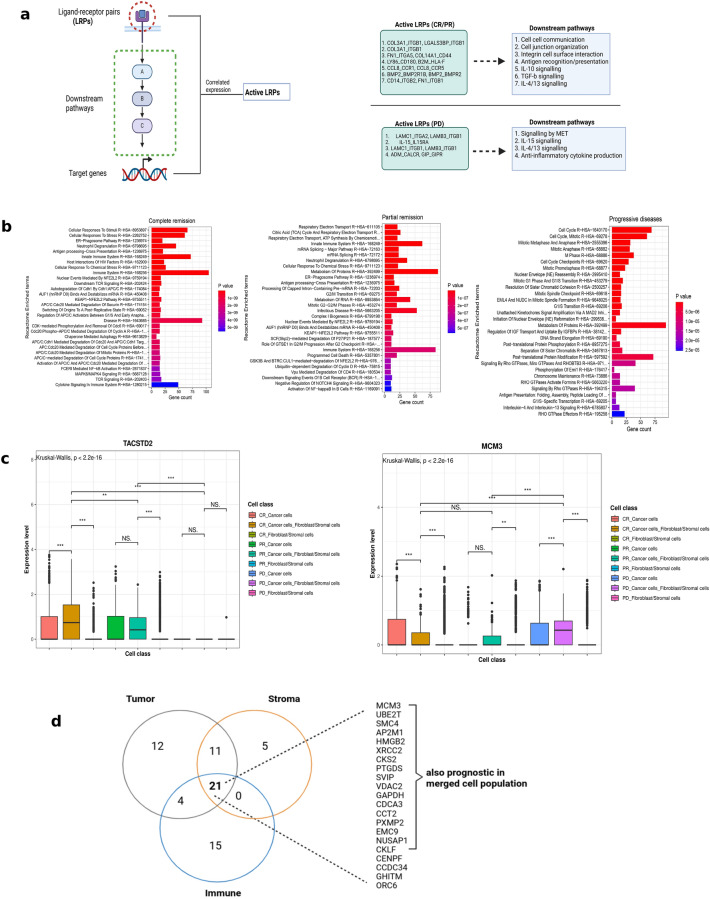 Figure 2
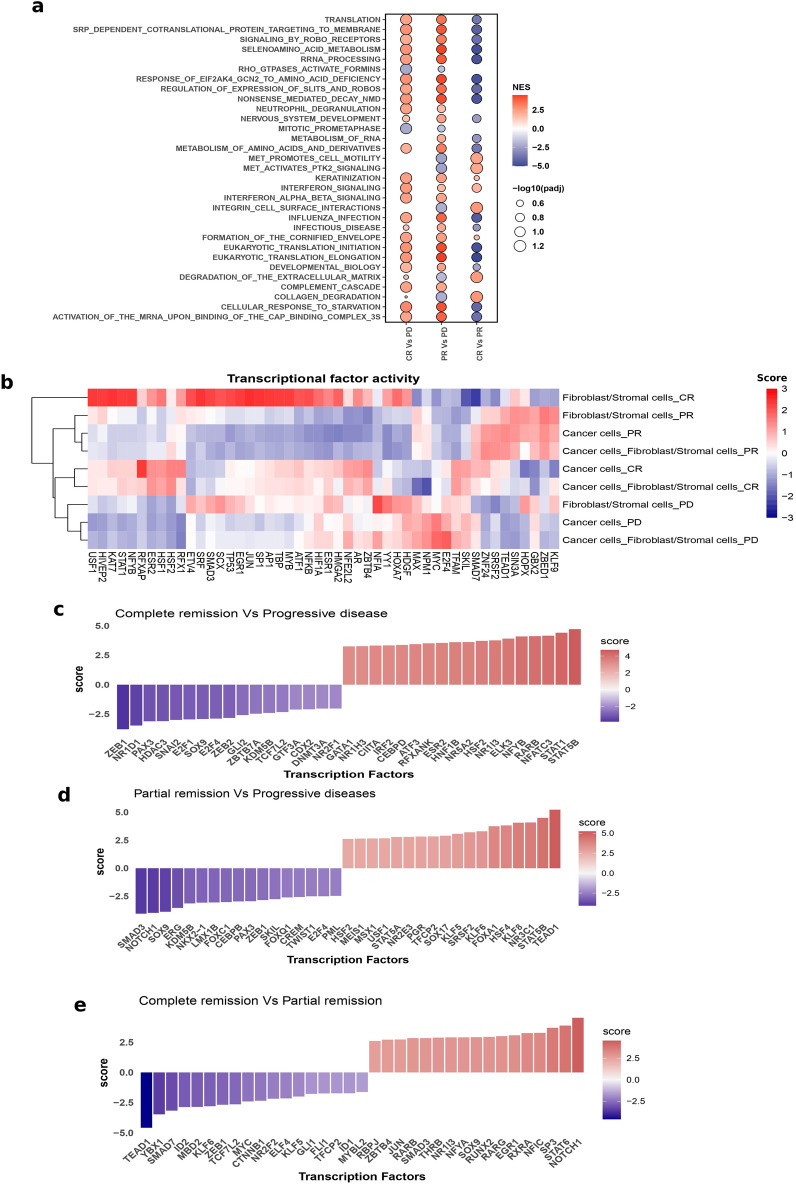 Figure 3
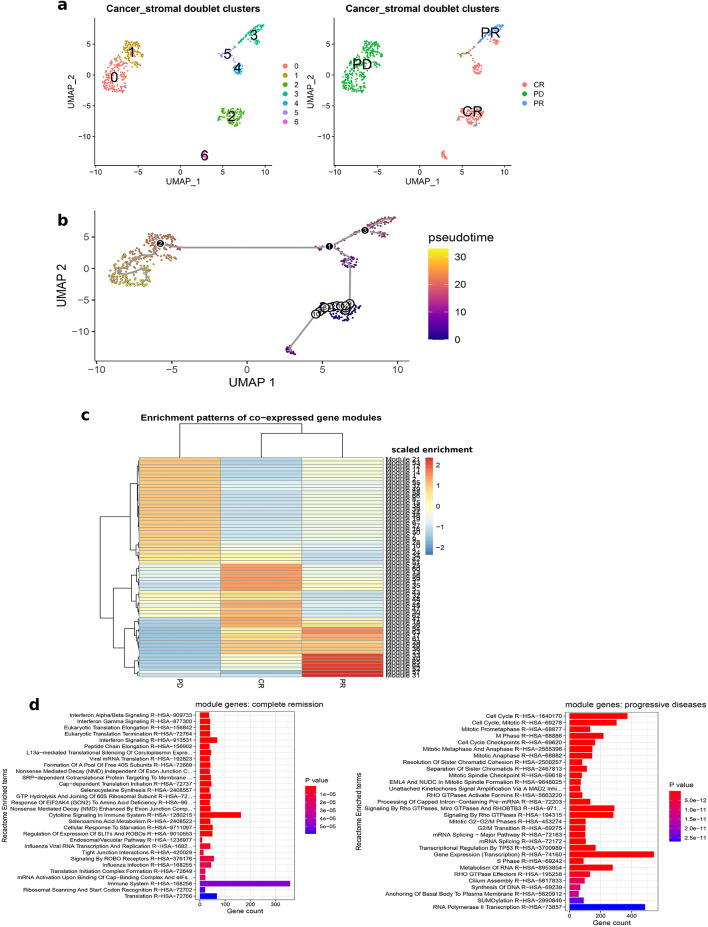 Figure 4
Peer Reviews
No public reviews on file for this paper yet. If you reviewed it on a platform where reviews are public (OpenReview, ICLR, NeurIPS, ICML), you can paste yours below so the community can read it here.
Videos
No videos yet. Explain this paper in a talk, walkthrough, or lecture? Add one.
Taxonomy
TopicsSingle-cell and spatial transcriptomics · Immune cells in cancer · Mathematical Biology Tumor Growth