A cubic-quadratic phenomenological model explains the spiking, chaotic and bursting behaviors of neuron
Shuihan Qiu, Yeyuge Chen, Zengru Di

TL;DR
This paper introduces a new neuron model that can simulate spiking, bursting, and chaotic behaviors using a two-dimensional mathematical framework.
Contribution
The novel contribution is a two-dimensional phenomenological model that captures diverse neuron dynamics through bifurcation analysis.
Findings
The model exhibits Andronov-Hopf and saddle-point bifurcations.
Periodic input currents can reproduce spiking, bursting, and chaotic behaviors.
The model's behavior changes with input current frequency.
Abstract
In this manuscript, we present a two-dimensional phenomenological spiking neuron model. By analyzing the bifurcation diagram and phase portraits of the two-dimensional model, Andronov-Hopf bifurcation, saddle-point bifurcation and saddle-point on invariant circle bifurcation are discussed in detail. Based on the above analysis, a periodic input current is designed to simulate the basic firing mode of a single neuron. With the change of the input current frequency, the model can reproduce rich dynamical behaviors such as spike, bursts, and chaos.
Genes, proteins, chemicals, diseases, species, mutations and cell lines named across the full text — each resolved to its canonical identifier and authoritative record.
Click any figure to enlarge with its caption.
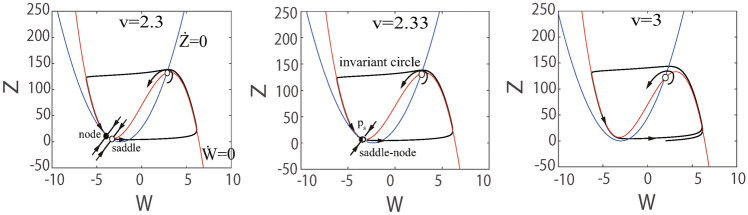 Figure 10
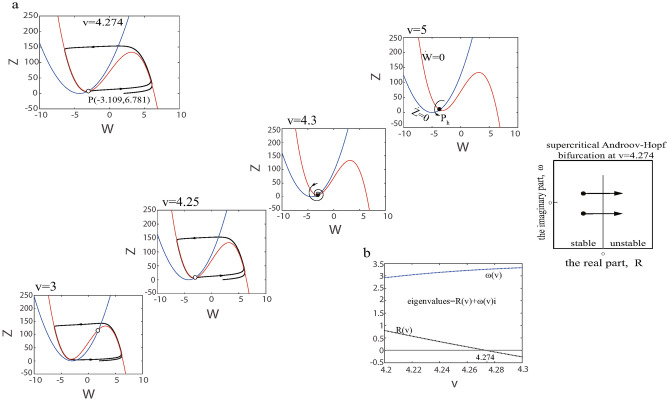 Figure 11
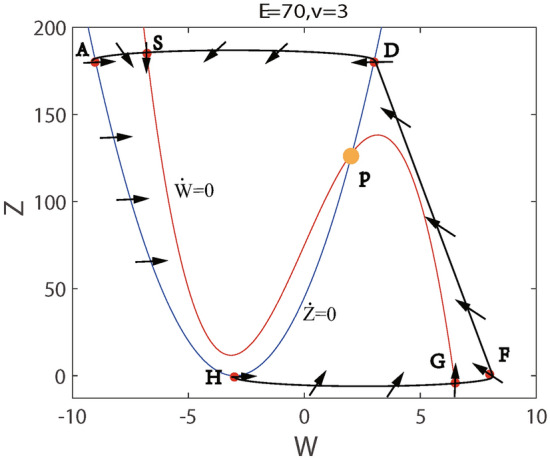 Figure 12
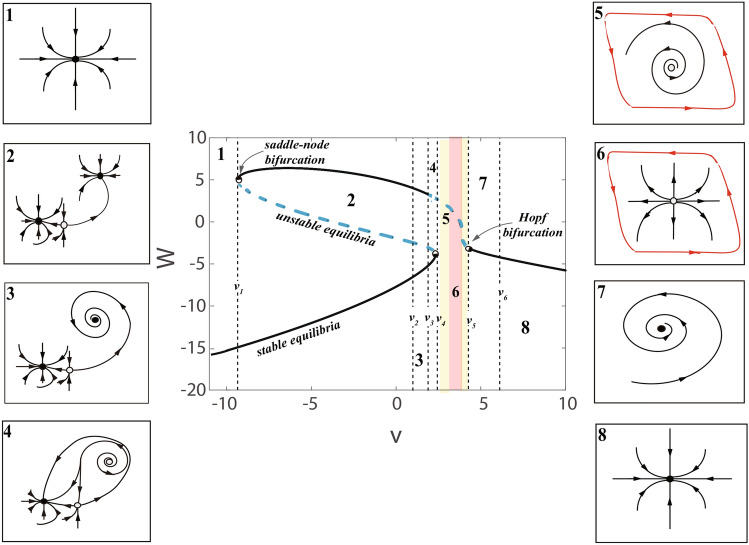 Figure 1
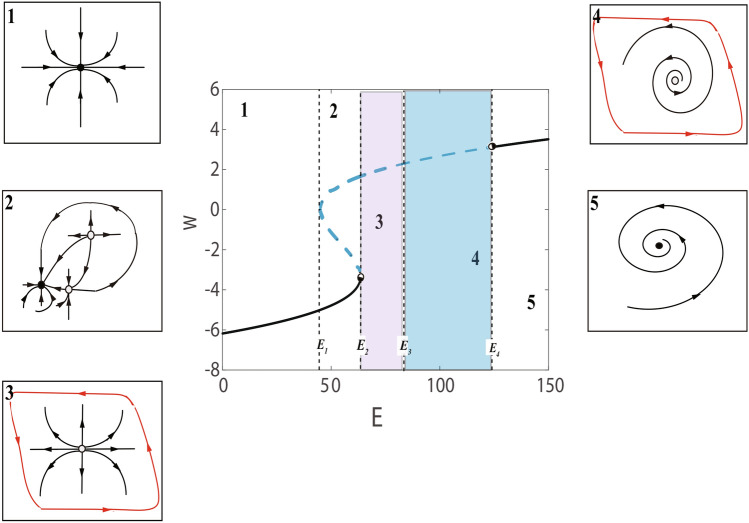 Figure 2
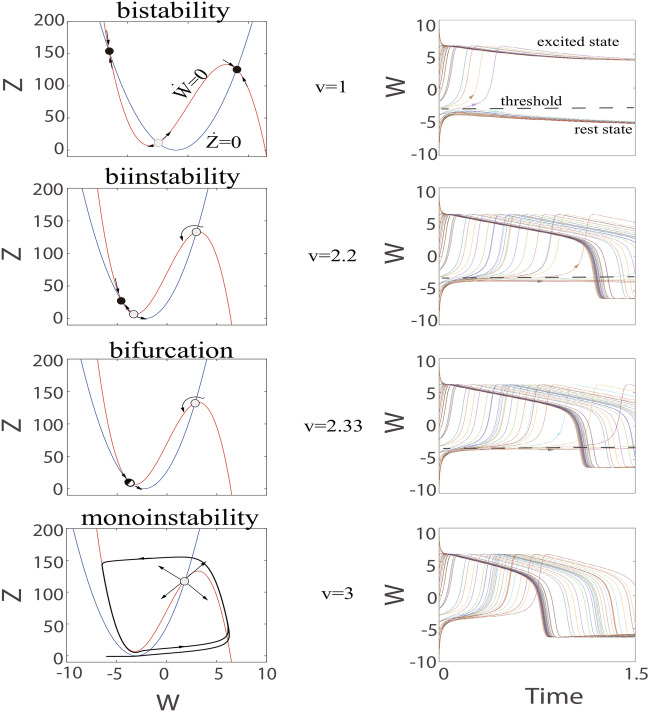 Figure 3
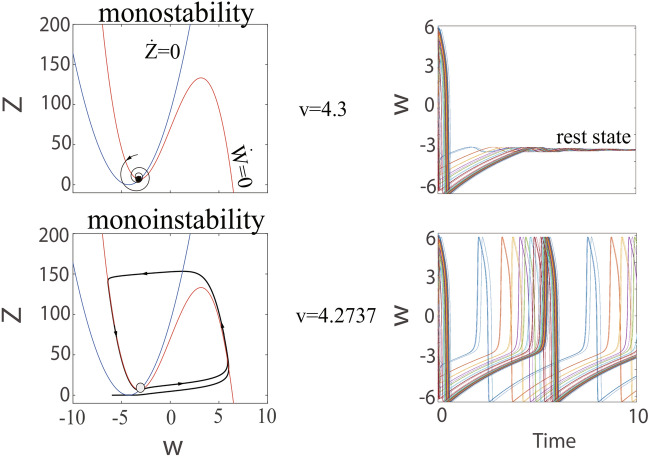 Figure 4
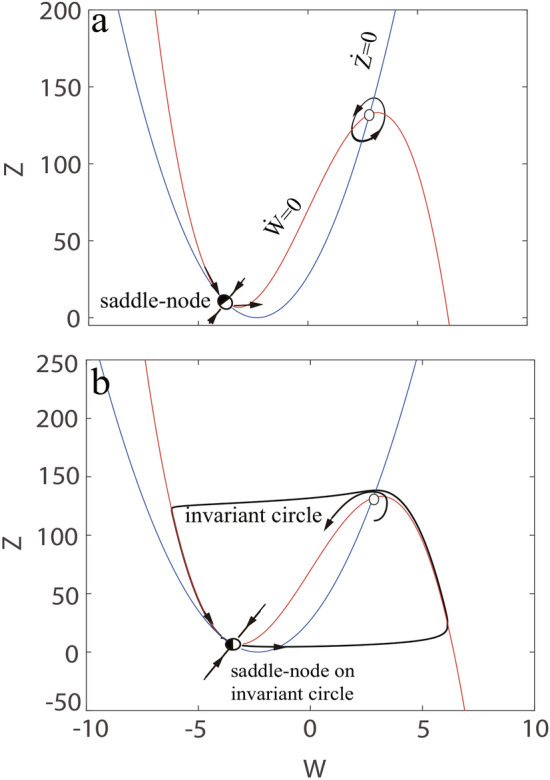 Figure 5
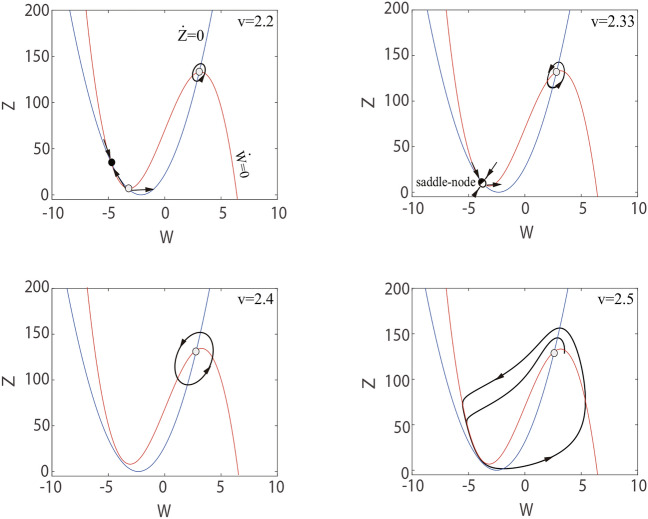 Figure 6
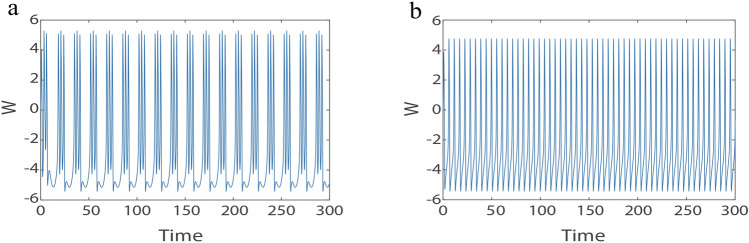 Figure 7
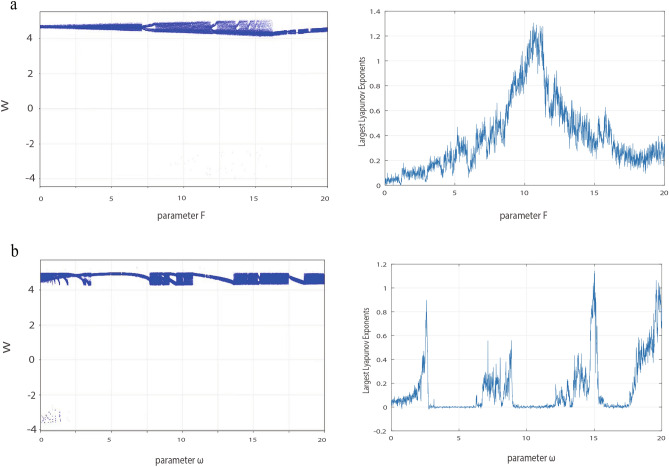 Figure 8
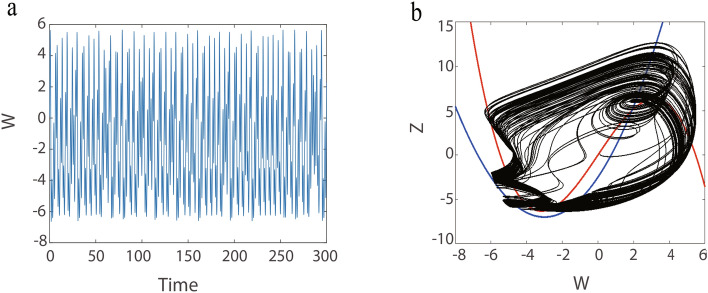 Figure 9
Peer Reviews
No public reviews on file for this paper yet. If you reviewed it on a platform where reviews are public (OpenReview, ICLR, NeurIPS, ICML), you can paste yours below so the community can read it here.
Videos
No videos yet. Explain this paper in a talk, walkthrough, or lecture? Add one.
Taxonomy
TopicsNeural dynamics and brain function · stochastic dynamics and bifurcation · Chaos control and synchronization