Is there still a place for autologous salvage transplantation in relapsed/refractory multiple myeloma in the era of novel therapies?
Simone Karp, Karolin Trautmann-Grill, Paul Warncke, Dominik Zolnowski, Christoph Röllig, Marcel Pannach, Jessica Zinn, Frank Kroschinsky, Anke Morgner, Malte von Bonin, Annette Hänel, Regina Herbst, Stephan Fricke, Martin Bornhäuser, Mathias Hänel, Raphael Teipel

TL;DR
This study examines if retransplantation remains a viable treatment for multiple myeloma patients in the era of new therapies.
Contribution
The study provides updated survival data and identifies prognostic factors for autologous salvage transplantation in relapsed/refractory multiple myeloma.
Findings
Re-AHCT achieved 57% 5-year overall survival in RRMM patients.
R-ISS stage and duration of previous response are key prognostic factors for survival.
Low-risk patients may still benefit from Re-AHCT despite novel therapies.
Abstract
For patients (pts) with relapsed or refractory multiple myeloma (RRMM) after previous autologous hematopoietic cell transplantation (AHCT), novel agents, cellular and immunotherapies are increasingly available. Options for second-line treatment mostly include triplet regimens based on proteasome inhibitors, immunomodulatory drugs and anti-CD38 monoclonal antibodies and since recently also CAR T cells. The importance of autologous salvage transplantation (retransplantation, Re-AHCT) has significantly decreased in recent years due to the availability of many new treatment options. Therefore, we performed a retrospective analysis of 171 pts cases with RRMM who received Re-AHCT between 2002 and 2021. With a median follow-up of 74.7 months, the 5-year rates of progression-free survival (PFS) and overall survival (OS) were 18% (median 20.6 months) and 57% (median 65.0 months), respectively,…
Genes, proteins, chemicals, diseases, species, mutations and cell lines named across the full text — each resolved to its canonical identifier and authoritative record.
Click any figure to enlarge with its caption.
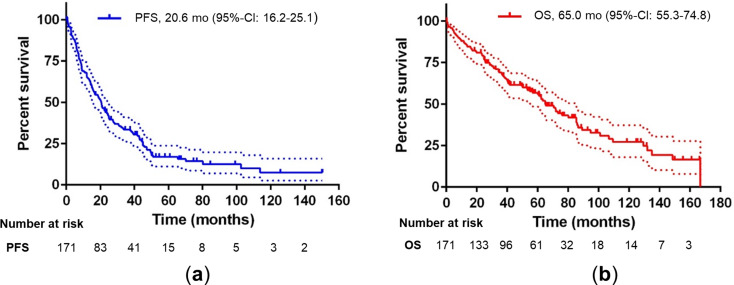 Figure 1
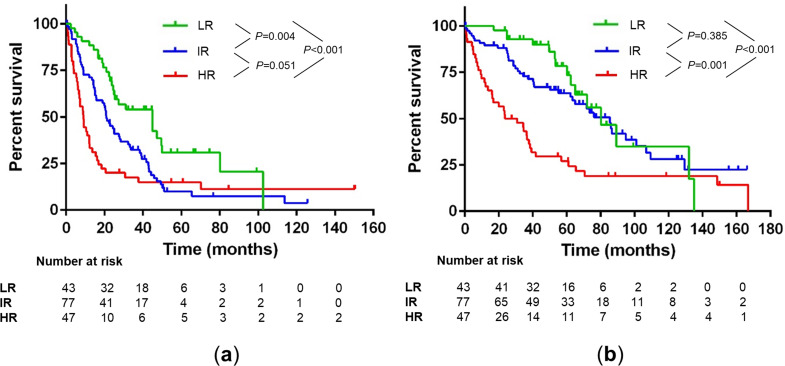 Figure 2
Peer Reviews
No public reviews on file for this paper yet. If you reviewed it on a platform where reviews are public (OpenReview, ICLR, NeurIPS, ICML), you can paste yours below so the community can read it here.
Videos
No videos yet. Explain this paper in a talk, walkthrough, or lecture? Add one.
Taxonomy
TopicsMultiple Myeloma Research and Treatments · Protein Degradation and Inhibitors · PI3K/AKT/mTOR signaling in cancer