PolyQ Length of the Clock Gene Is Correlated With Pelagic Larval Duration in the Damselfishes (Pomacentridae), but Within a Species Habitat Availability Counts
Gregor Schalm, Simon Kaefer, Philipp Krämer, Anna‐Lena Jäger, Michael J. Kingsford, Gabriele Gerlach

TL;DR
A part of the 'clock' gene influences how long coral reef fish larvae stay in the open ocean, but habitat availability can override this genetic effect.
Contribution
The study shows that PolyQ length in the clock gene correlates with pelagic larval duration across species, but not within a single species.
Findings
PolyQ and Qrich repeat lengths in the clock gene correlate with pelagic larval duration across 20 damselfish species.
Within the neon damselfish, PLD is reduced when habitat availability increases, not due to PolyQ length.
Ecological factors like habitat availability can override genetic influences on larval dispersal timing.
Abstract
Immediately after hatching, larvae of coral reef fish leave their natal reef environment and begin their pelagic larval phase probably to avoid high predation on the reef. The time they spend in the open ocean (pelagic larval duration, PLD), before settlement varies from species to species and depends partly on developmental processes that eventually require re‐settlement to a reef. The polyglutamine region (PolyQ) as part of the clock gene has been suggested as a possible candidate that could control developmental processes and potentially the time until settlement, which can be determined by counting the rings of the otoliths. We studied the potential relationship between the number of glutamine repeats in 20 species of pomacentrids and their PLDs. Most pomacentrids came from similar locations, so we avoided the impact of latitudinal clines on PLD. Within the clock gene, we found two…
Genes, proteins, chemicals, diseases, species, mutations and cell lines named across the full text — each resolved to its canonical identifier and authoritative record.
Click any figure to enlarge with its caption.
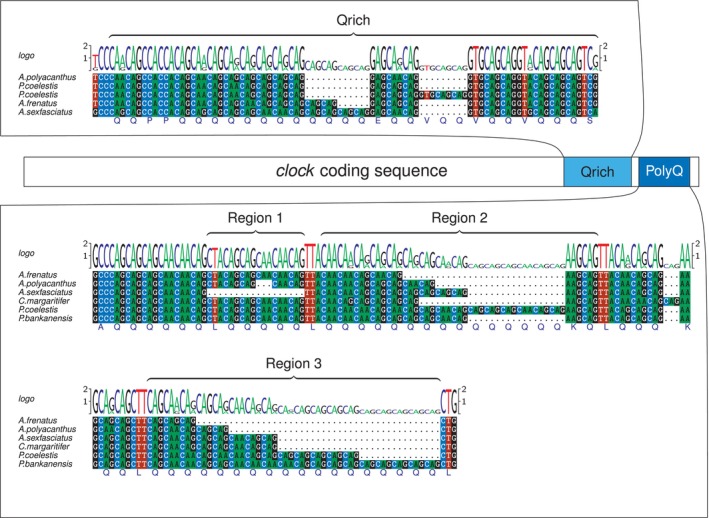 Figure 1
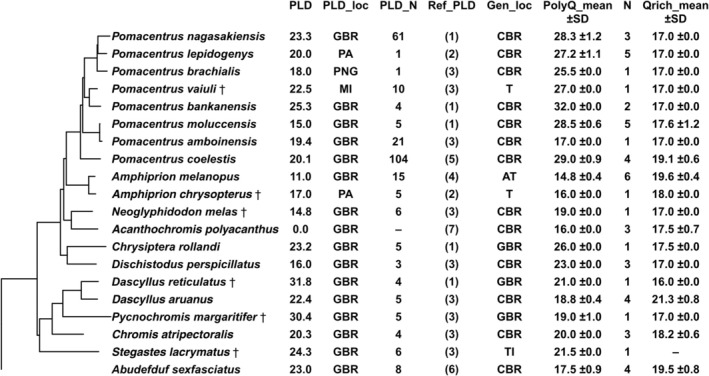 Figure 2
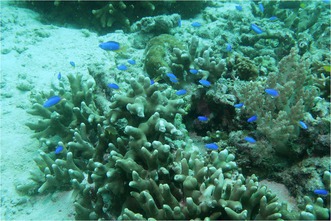 Figure 3
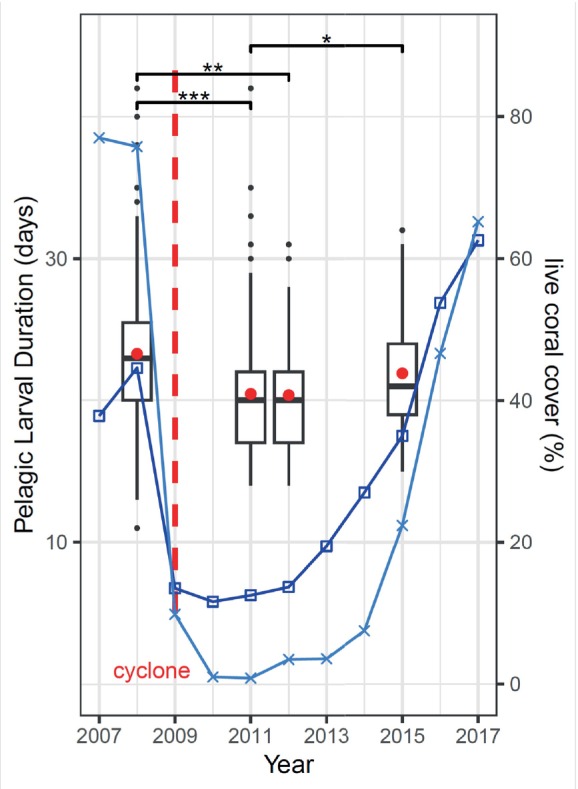 Figure 4
Peer Reviews
No public reviews on file for this paper yet. If you reviewed it on a platform where reviews are public (OpenReview, ICLR, NeurIPS, ICML), you can paste yours below so the community can read it here.
Videos
No videos yet. Explain this paper in a talk, walkthrough, or lecture? Add one.
Taxonomy
TopicsCoral and Marine Ecosystems Studies · Ichthyology and Marine Biology · Fish Ecology and Management Studies