Trackformers: in search of transformer-based particle tracking for the high-luminosity LHC era
Sascha Caron, Nadezhda Dobreva, Antonio Ferrer Sánchez, José D. Martín-Guerrero, Uraz Odyurt, Roberto Ruiz de Austri Bazan, Zef Wolffs, Yue Zhao

TL;DR
This paper explores using transformer-based machine learning models for particle tracking in high-energy physics experiments, showing promising results for handling large data volumes efficiently.
Contribution
The paper introduces and evaluates transformer-based models for particle tracking, demonstrating the viability of one-shot prediction approaches in high-luminosity environments.
Findings
Transformer-based models outperformed U-Net in certain tracking tasks.
One-shot encoder-classifier models showed practical efficiency for particle tracking.
Different model designs performed variably across data complexity levels.
Abstract
High-Energy Physics experiments are facing a multi-fold data increase with every new iteration. This is certainly the case for the upcoming High-Luminosity LHC upgrade. Such increased data processing requirements forces revisions to almost every step of the data processing pipeline. One such step in need of an overhaul is the task of particle track reconstruction, a.k.a., tracking. A Machine Learning-assisted solution is expected to provide significant improvements, since the most time-consuming step in tracking is the assignment of hits to particles or track candidates. This is the topic of this paper. We take inspiration from large language models. As such, we consider two approaches: the prediction of the next word in a sentence (next hit point in a track), as well as the one-shot prediction of all hits within an event. In an extensive design effort, we have experimented with three…
Genes, proteins, chemicals, diseases, species, mutations and cell lines named across the full text — each resolved to its canonical identifier and authoritative record.
Click any figure to enlarge with its caption.
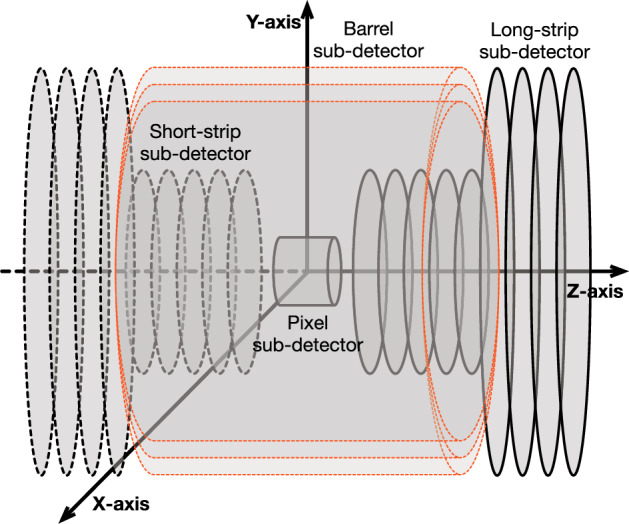 Figure 1
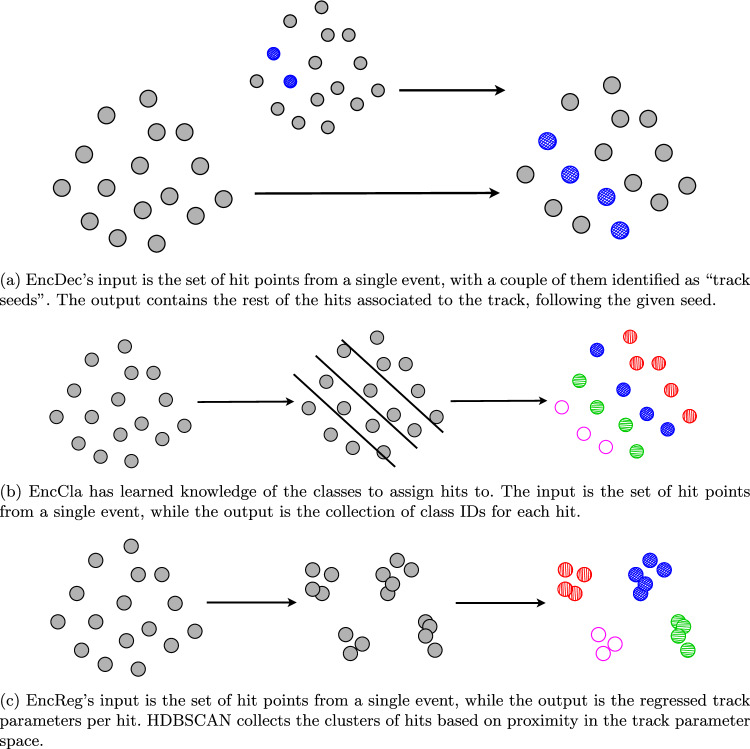 Figure 2
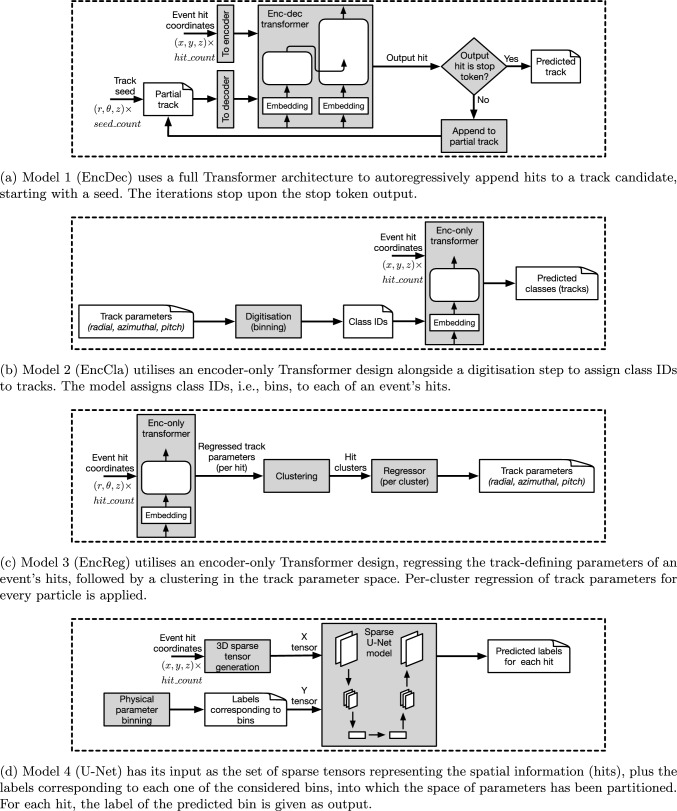 Figure 3
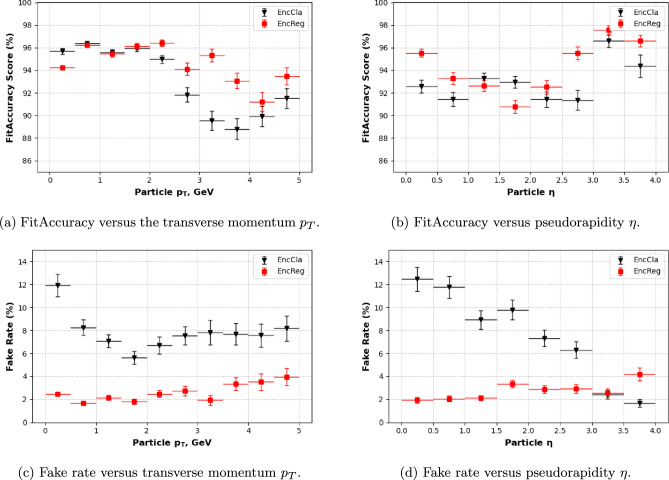 Figure 4
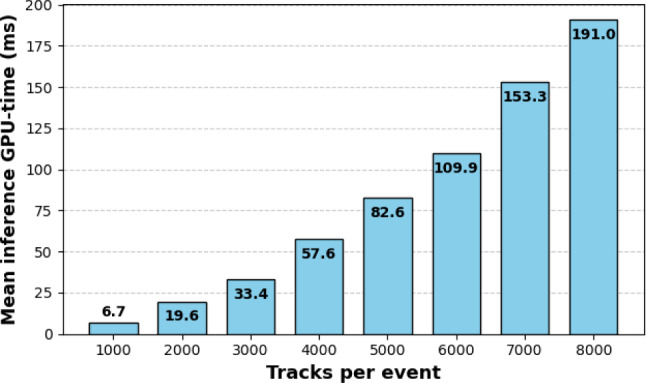 Figure 5
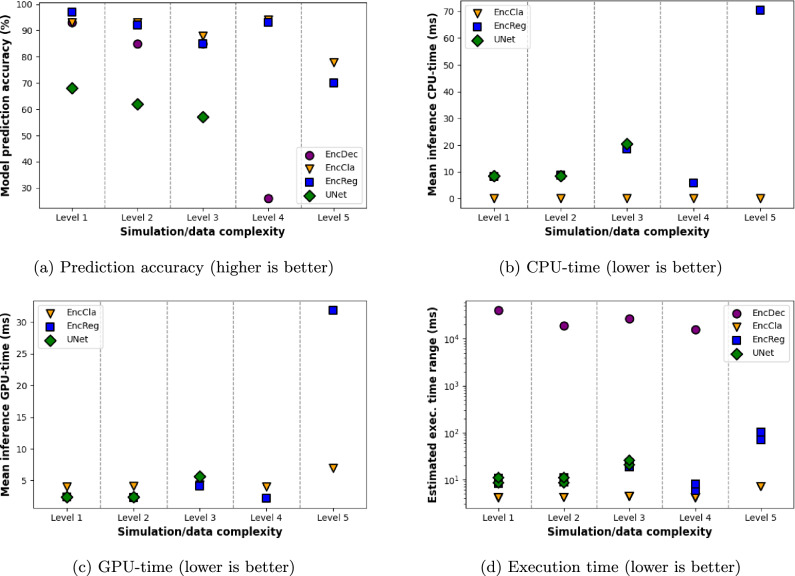 Figure 6
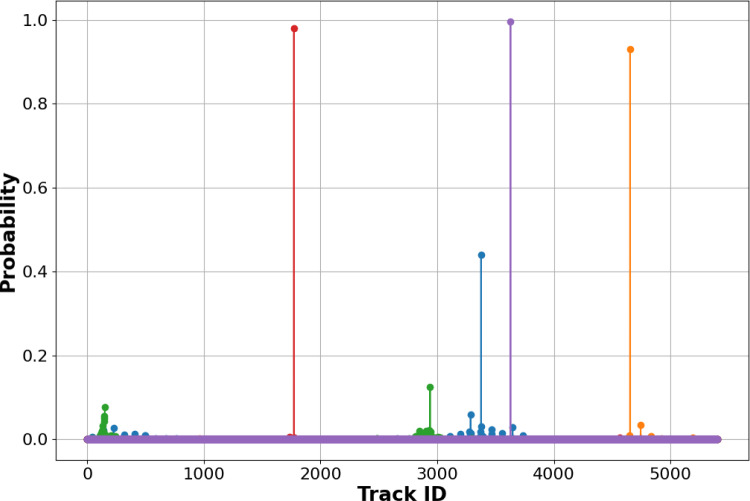 Figure 7
Peer Reviews
No public reviews on file for this paper yet. If you reviewed it on a platform where reviews are public (OpenReview, ICLR, NeurIPS, ICML), you can paste yours below so the community can read it here.
Videos
No videos yet. Explain this paper in a talk, walkthrough, or lecture? Add one.
Taxonomy
TopicsParticle physics theoretical and experimental studies · Particle Detector Development and Performance · Data Quality and Management