A phase 1 study of durvalumab as monotherapy or combined with tremelimumab with or without azacitidine in patients with myelodysplastic syndrome
Guillermo Garcia-Manero, Manila Gaddh, Uwe Platzbecker, R. Coleman Lindsley, Sarah M. Larson, Timothy Chevassut, Pierre Fenaux, Rami Komrokji, Roger Lyons, Aref Al-Kali, Yu Jiang, John Bothos, Danielle M. Townsley, Amer M. Zeidan

TL;DR
This phase 1 study tested the safety and effectiveness of durvalumab, alone or combined with other drugs, in patients with myelodysplastic syndrome who had previously been treated with hypomethylating agents.
Contribution
The study is the first to evaluate durvalumab in combination with tremelimumab and azacitidine for MDS in a clinical trial setting.
Findings
Durvalumab monotherapy and combinations were generally safe, with no dose-limiting toxicities in part 1 and 11% in part 2.
Marrow complete response was observed in 15% of patients in both parts of the study.
Hematologic improvement was seen in 35% and 30% of patients in parts 1 and 2, respectively.
Abstract
Upregulation of programmed death ligand-1 (PD-L1) has been observed in patients with MDS, and its expression on myeloblasts is associated with progression to AML. This open-label, phase 1 study evaluated the safety and tolerability of the PD-L1 antibody durvalumab as monotherapy (part 1) and in combination with tremelimumab, with or without azacitidine (part 2), in patients with MDS who progressed following hypomethylating agent treatment. Sixty-seven adults with MDS were enrolled (part 1, 40 with low/intermediate-1 or intermediate-2/high IPSS risk status; part 2, 27 with intermediate-2/high IPSS risk status). Primary safety endpoints included dose-limiting toxicities (DLTs) and treatment-emergent adverse events (TEAEs). Secondary endpoints included evaluation of clinical outcomes, survival, and pharmacokinetics. Dose-limiting toxicities were experienced by no patients in part 1 and 3…
Genes, proteins, chemicals, diseases, species, mutations and cell lines named across the full text — each resolved to its canonical identifier and authoritative record.
Click any figure to enlarge with its caption.
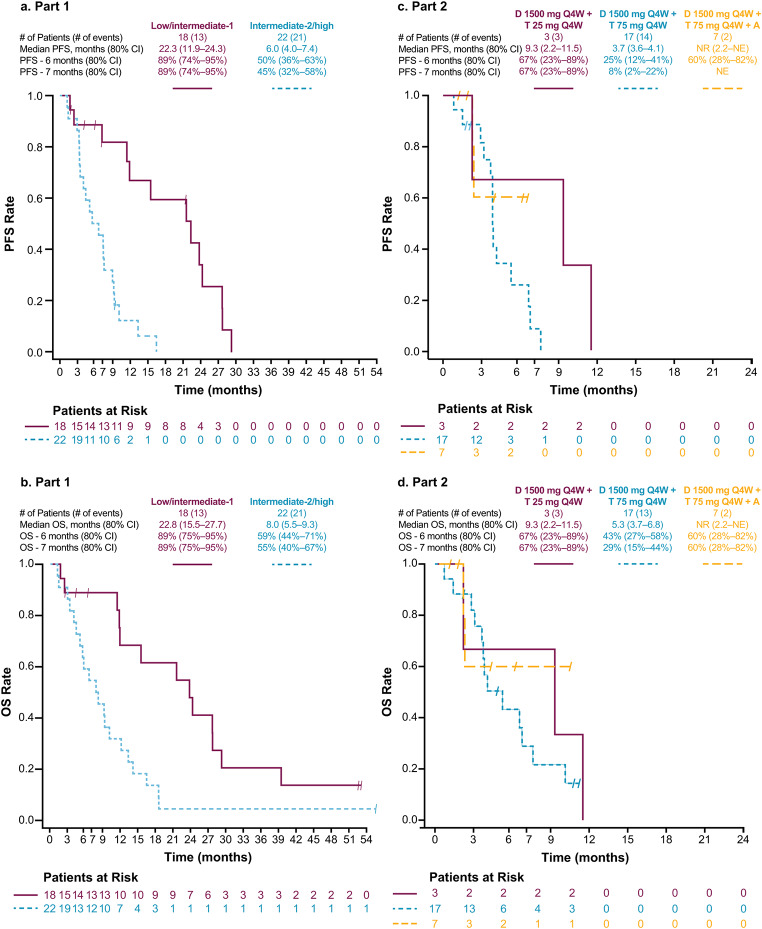 Figure 1
Peer Reviews
No public reviews on file for this paper yet. If you reviewed it on a platform where reviews are public (OpenReview, ICLR, NeurIPS, ICML), you can paste yours below so the community can read it here.
Videos
No videos yet. Explain this paper in a talk, walkthrough, or lecture? Add one.
Taxonomy
TopicsAcute Myeloid Leukemia Research · Chronic Myeloid Leukemia Treatments · Chronic Lymphocytic Leukemia Research