Effect of Metabolic Stress to High-Load Exercise on Muscle Damage, Inflammatory and Hormonal Responses
Séverine Stragier, Jacques Duchateau, Frédéric Cotton, Julie Smet, Fleur Wolff, Jérémy Tresnie, Alain Carpentier

TL;DR
Short rest intervals during high-load exercise increase lactate and trigger stronger inflammatory and hormonal responses compared to longer rest intervals.
Contribution
Demonstrates that metabolic stress from short rest intervals enhances physiological responses during high-load training.
Findings
The 3/7 method caused significantly higher lactate levels than the 8 × 6 method.
Inflammatory markers and GH/cortisol levels increased more with the 3/7 method.
Lactate accumulation was positively linked to increases in IL-6, GH, and cortisol.
Abstract
To assess the impact of metabolic stress on blood lactate, muscle damage, inflammatory and hormonal responses following a high-load (70% maximum) strength training session, we compared two methods with a similar number of repetitions but that differed by their metabolic demand: the 3/7 method consisting in two series of five sets of an increasing number of repetitions (3 to 7) with a short inter-set interval (15 s) and the 8 × 6 method that comprises eight sets of six repetitions with a longer inter-set interval (2.5 min). Blood concentrations in lactate, creatine kinase (CK), myoglobin (MB), interleukine-6 (IL-6), leukocytes, growth hormone (GH), insulin-like growth factor-1 (IGF-1) and cortisol were determined before and after each session. Lactate concentration increased more (11.9 vs. 3.1 mmol/L; p < 0.001) for the 3/7 method whereas CK and MB concentrations were augmented similarly…
Genes, proteins, chemicals, diseases, species, mutations and cell lines named across the full text — each resolved to its canonical identifier and authoritative record.
Click any figure to enlarge with its caption.
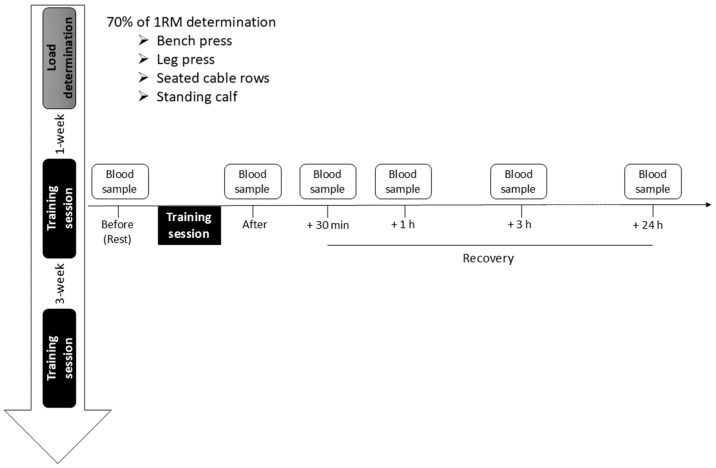 Figure 1
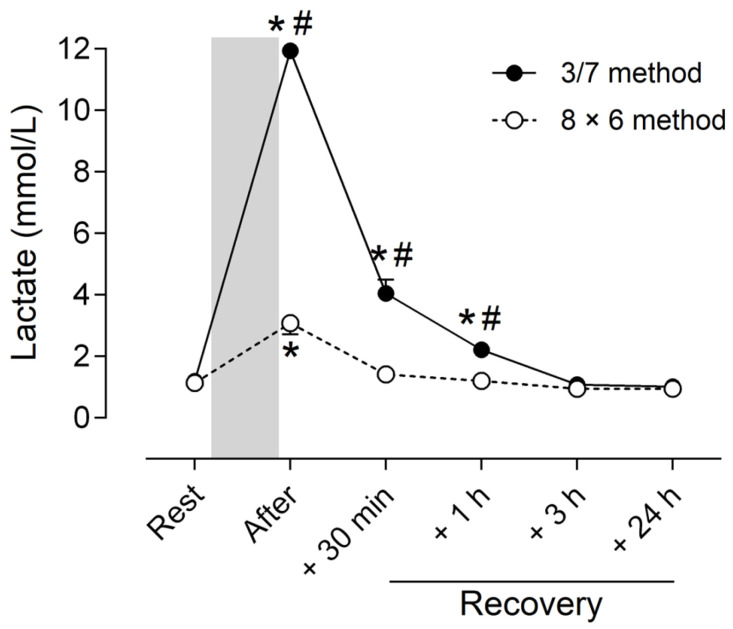 Figure 2
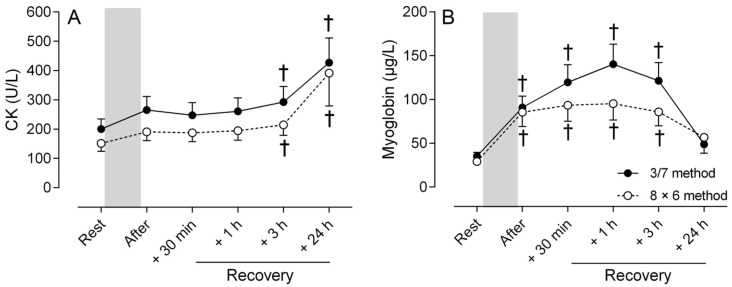 Figure 3
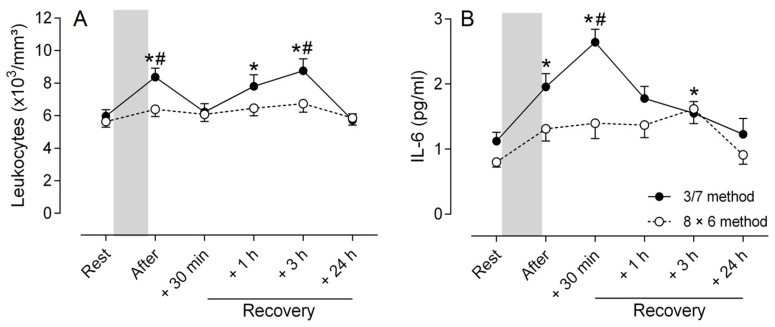 Figure 4
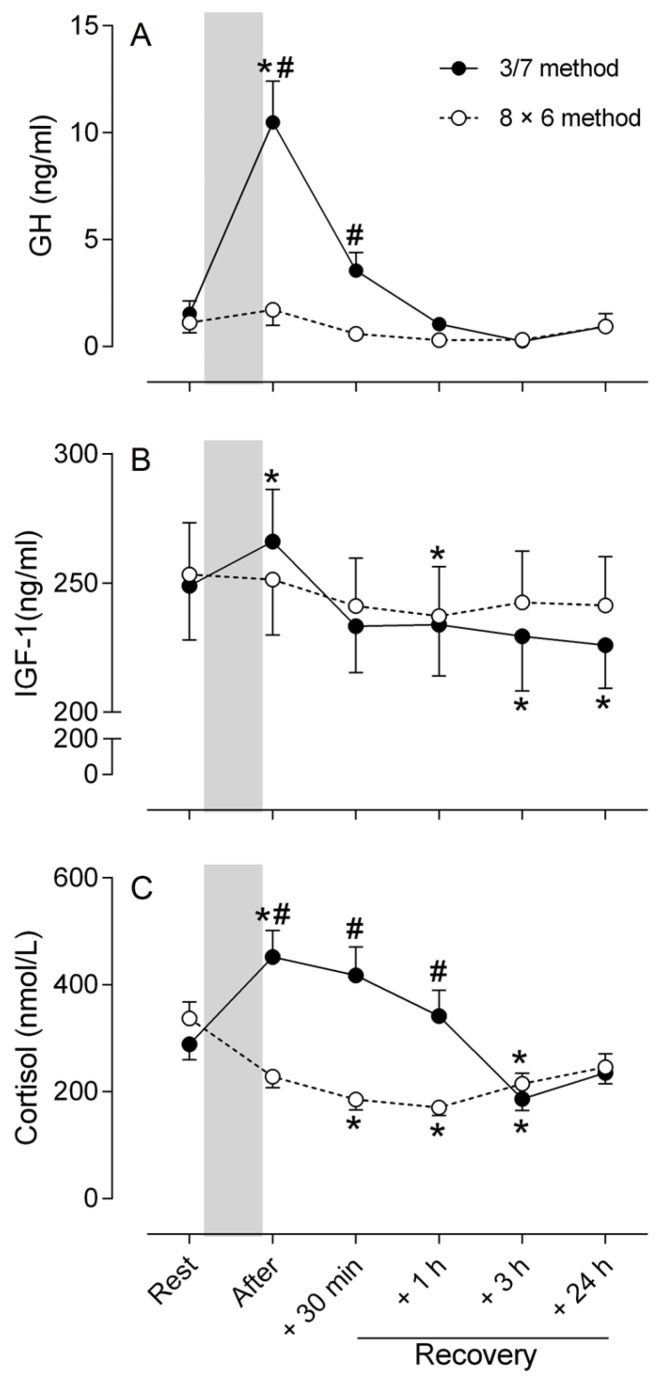 Figure 5
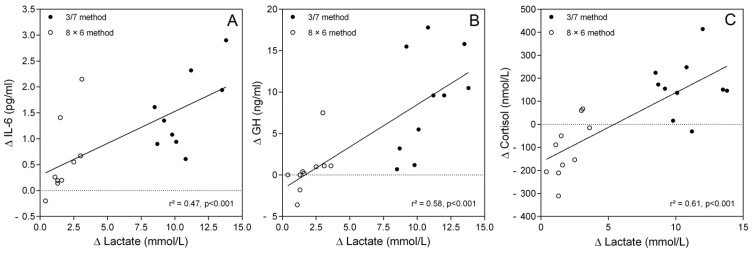 Figure 6
Peer Reviews
No public reviews on file for this paper yet. If you reviewed it on a platform where reviews are public (OpenReview, ICLR, NeurIPS, ICML), you can paste yours below so the community can read it here.
Videos
No videos yet. Explain this paper in a talk, walkthrough, or lecture? Add one.
Taxonomy
TopicsExercise and Physiological Responses · Cardiovascular and exercise physiology · Sports Performance and Training