Temporal Shift When Comparing Contrast-Agent Concentration Curves Estimated Using Quantitative Susceptibility Mapping (QSM) and ΔR2*: The Association Between Vortex Parameters and Oxygen Extraction Fraction
Ronnie Wirestam, Anna Lundberg, Linda Knutsson, Emelie Lind

TL;DR
This study explores how MRI data from brain scans can reveal information about oxygen use in the brain using vortex curves and susceptibility mapping.
Contribution
The study introduces novel vortex parameters derived from GRE-based MRI data that correlate with oxygen extraction fraction.
Findings
GRE-based grey-matter vortex parameters showed moderate and significant correlation with oxygen extraction fraction (OEF).
AIF vortex parameters did not show significant correlation with OEF.
The vortex effect was clearly observed in grey-matter regions using GRE and QSM data.
Abstract
Background: When plotting data points corresponding to the contrast-agent-induced change in transverse relaxation rate from a dynamic gradient-echo (GRE) magnetic resonance imaging (MRI) study versus a corresponding spin-echo study, a loop or vortex curve rather than a reversible line is formed. The vortex curve area is likely to reflect vessel architecture and oxygenation level. In this study, the vortex effect seen when using only GRE-based estimates, i.e., contrast-agent concentration based on GRE transverse relaxation rate and contrast-agent concentration based on quantitative susceptibility mapping (QSM), was investigated. Methods: Twenty healthy volunteers were examined using 3 T MRI. Magnitude and phase dynamic contrast-enhanced MRI (DSC-MRI) data were obtained using GRE echo-planar imaging. Vortex curves for grey-matter (GM) regions and for arterial input function (AIF) data…
Genes, proteins, chemicals, diseases, species, mutations and cell lines named across the full text — each resolved to its canonical identifier and authoritative record.
Click any figure to enlarge with its caption.
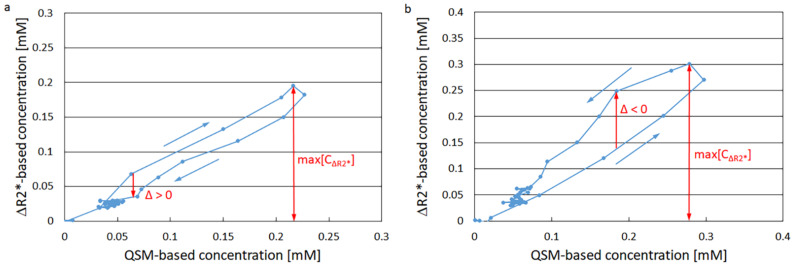 Figure 1
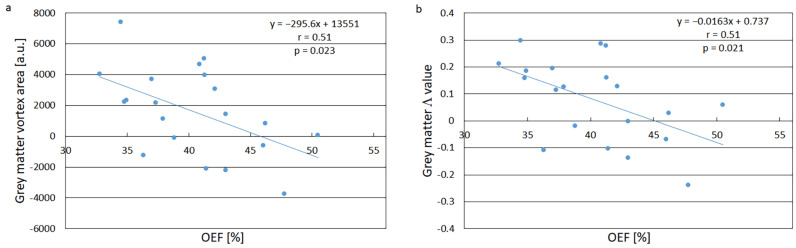 Figure 2
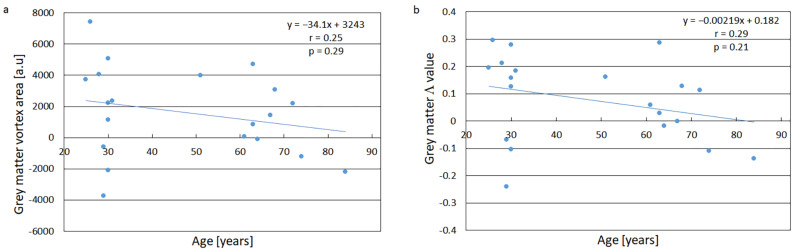 Figure 3
Peer Reviews
No public reviews on file for this paper yet. If you reviewed it on a platform where reviews are public (OpenReview, ICLR, NeurIPS, ICML), you can paste yours below so the community can read it here.
Videos
No videos yet. Explain this paper in a talk, walkthrough, or lecture? Add one.
Taxonomy
TopicsMetabolomics and Mass Spectrometry Studies