Distinguishing Lytic and Temperate Infection Dynamics in the Environment
Isha Tripathi, Naomi Barber-Choi, Lauren Woodward, Natalie Falta, Natalia Shahwan, Nickie Yang, Ben Knowles

TL;DR
This paper explores how to determine if viruses in an ecosystem primarily kill bacteria (lytic) or allow them to survive (temperate), using simulations and empirical methods.
Contribution
The study bridges theoretical ecology and environmental microbiology by simulating and comparing models of lytic and temperate viral infection dynamics.
Findings
Lytic and temperate models show similar predictions under most conditions but differ under nutrient addition.
A dichotomous key is proposed to help researchers distinguish between lytic and temperate dynamics in ecosystems.
Lytic models become less stable with no host density increase, while temperate models remain stable with elevated host abundances.
Abstract
Viral infection and lysis drive bacterial diversity and abundances, ultimately regulating global biogeochemical cycles. Infection can follow lytic or temperate routes, with lytic dynamics suppressing bacterial population growth and temperate infection enhancing it. Given that bacterial over-proliferation is a pervasive threat to ecosystems, determining which infection dynamic dominates a given ecosystem is a central question in viral ecology. However, the fields that describe and test the rules of viral infection—theoretical ecology and environmental microbiology, respectively—remain disconnected. To address this, we simulated common empirical approaches to analyze and distinguish between the predictions of three theoretical models mechanistically representing lytic to temperate infection dynamics. By doing so, we found that the models have remarkably similar predictions despite their…
Genes, proteins, chemicals, diseases, species, mutations and cell lines named across the full text — each resolved to its canonical identifier and authoritative record.
Click any figure to enlarge with its caption.
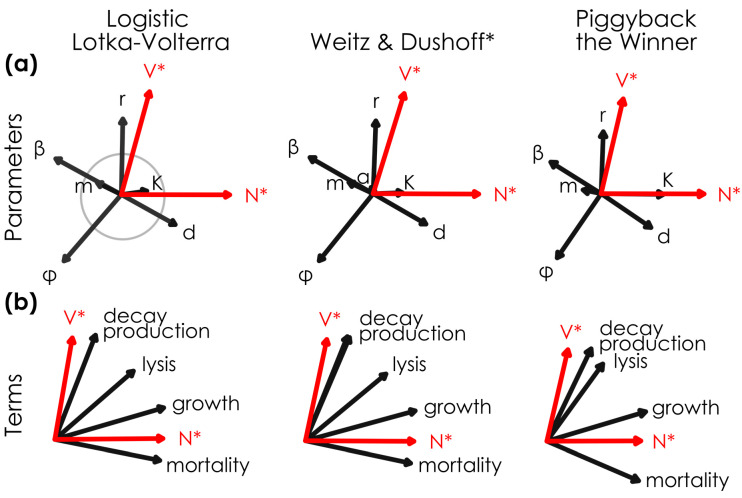 Figure 1
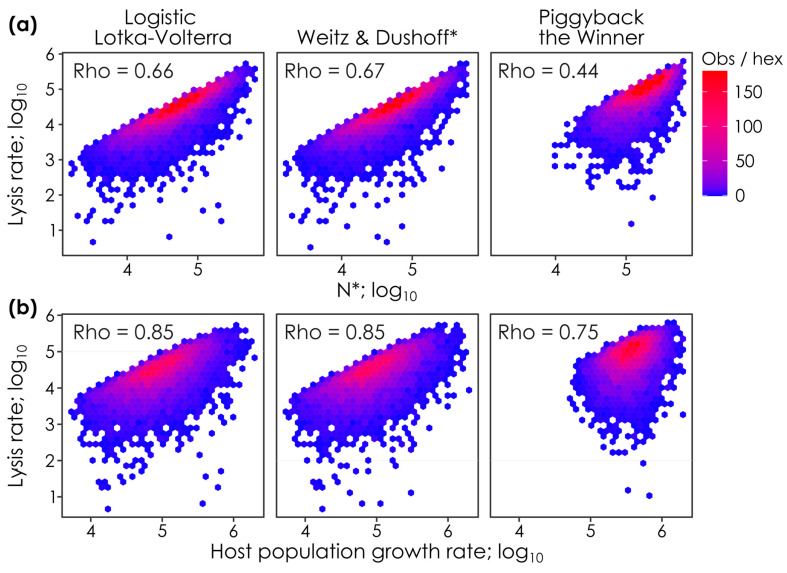 Figure 2
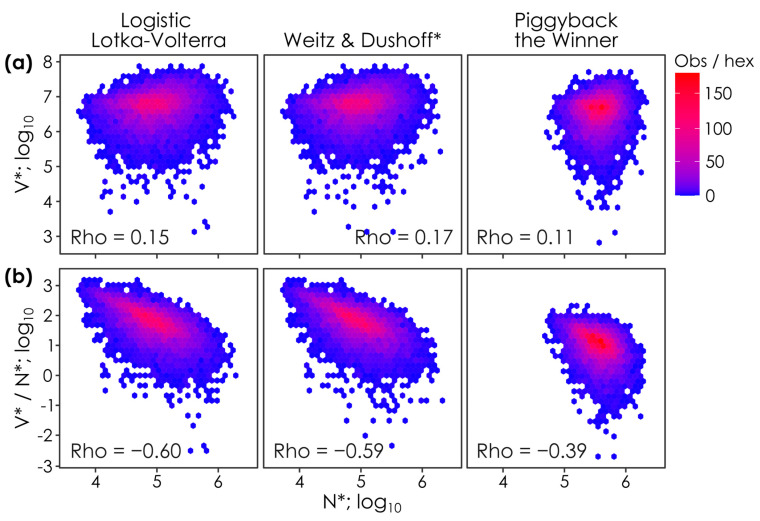 Figure 3
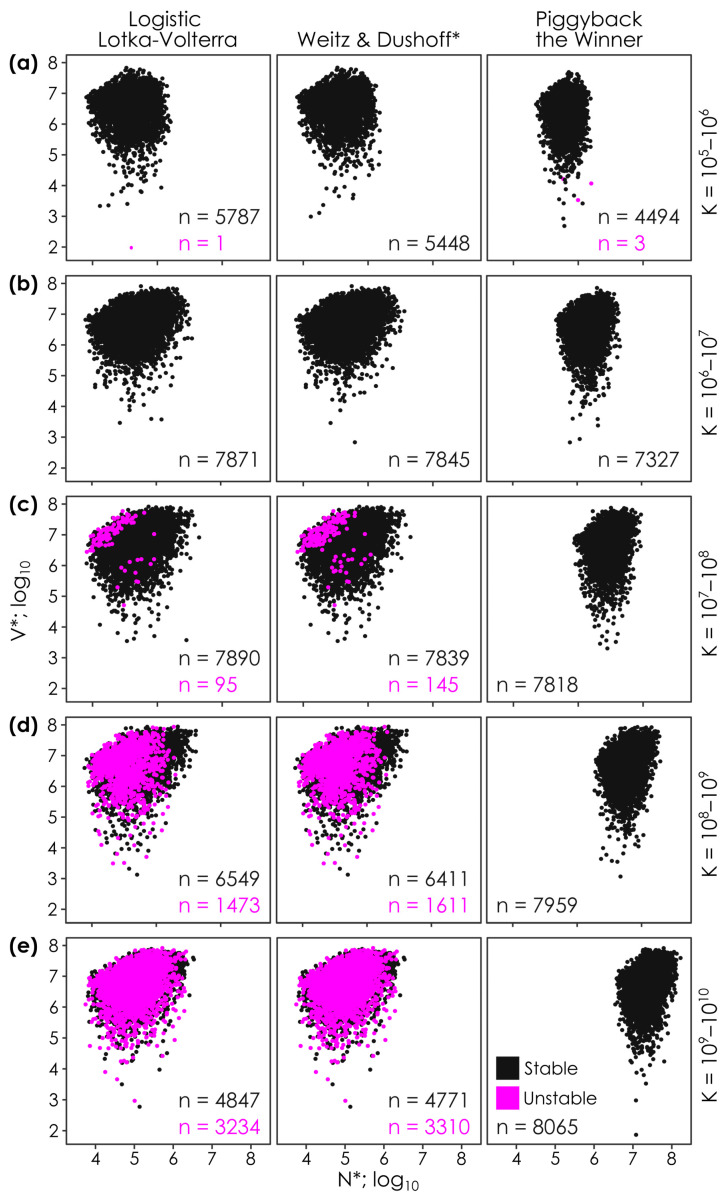 Figure 4
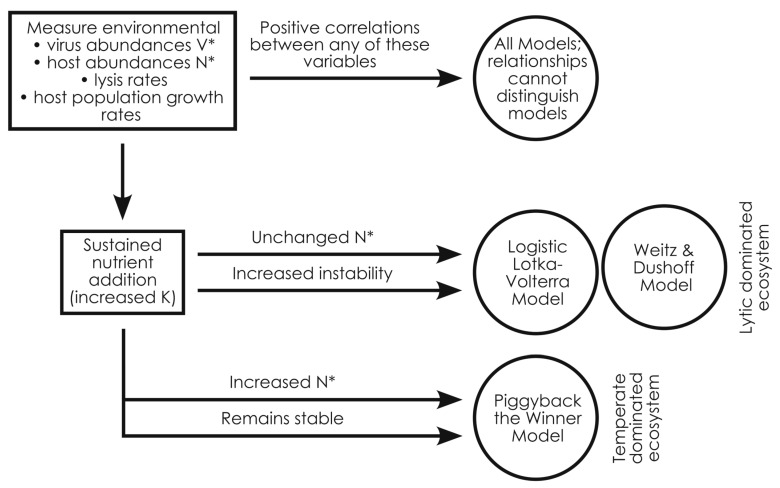 Figure 5
Peer Reviews
No public reviews on file for this paper yet. If you reviewed it on a platform where reviews are public (OpenReview, ICLR, NeurIPS, ICML), you can paste yours below so the community can read it here.
Videos
No videos yet. Explain this paper in a talk, walkthrough, or lecture? Add one.
Taxonomy
TopicsBacteriophages and microbial interactions · Evolution and Genetic Dynamics · Plant Virus Research Studies