Enhancing the Efficacy of Melanoma Treatment: The In Vitro Chemosensitising Impact of Vipera ammodytes Venom on Human Melanoma Cell Lines
Giovanni Paolino, Matteo Riccardo Di Nicola, Carla Raggi, Serena Camerini, Marialuisa Casella, Luca Pasquini, Cristiana Zanetti, Vincenzo Russo, Santo Raffaele Mercuri, Luana Lugini, Cristina Federici

TL;DR
This study explores how Vipera ammodytes venom can make melanoma cells more sensitive to chemotherapy, potentially improving cancer treatment.
Contribution
The study demonstrates that viper venom can chemosensitize resistant melanoma cells to cisplatin, a novel finding in oncology.
Findings
Vipera ammodytes venom showed consistent cytotoxicity across three melanoma cell lines with an IC50 of ~1.1 µg/mL.
Venom enhanced cisplatin's effectiveness in resistant cell lines, increasing cell mortality by up to 40%.
Venom components selectively target melanoma cells, suggesting potential for treating resistant or metastatic cases.
Abstract
Research on viper venom has expanded into diverse medical applications, including cancer treatment. This study investigates the potential of Vipera ammodytes venom in oncology, evaluating its cytotoxicity and chemosensitising effects on malignant melanoma cells. Proteomic analysis identified 125 proteins in the venom, with Phospholipases A2, C-type lectins, and metalloproteinases among the most abundant components. These proteins are associated with cytotoxic, anti-proliferative, and tumor-inhibiting properties. Three melanoma cell lines (M001, Me501, and A375) were used to assess venom cytotoxicity. The IC50 values demonstrated consistent venom sensitivity across cell lines (approximately 1.1 µg/mL). Combined treatment with venom and cisplatin significantly increased the cytotoxicity compared to single-agent treatments. Notably, venom enhanced the sensitivity of cisplatin in resistant…
Genes, proteins, chemicals, diseases, species, mutations and cell lines named across the full text — each resolved to its canonical identifier and authoritative record.
Click any figure to enlarge with its caption.
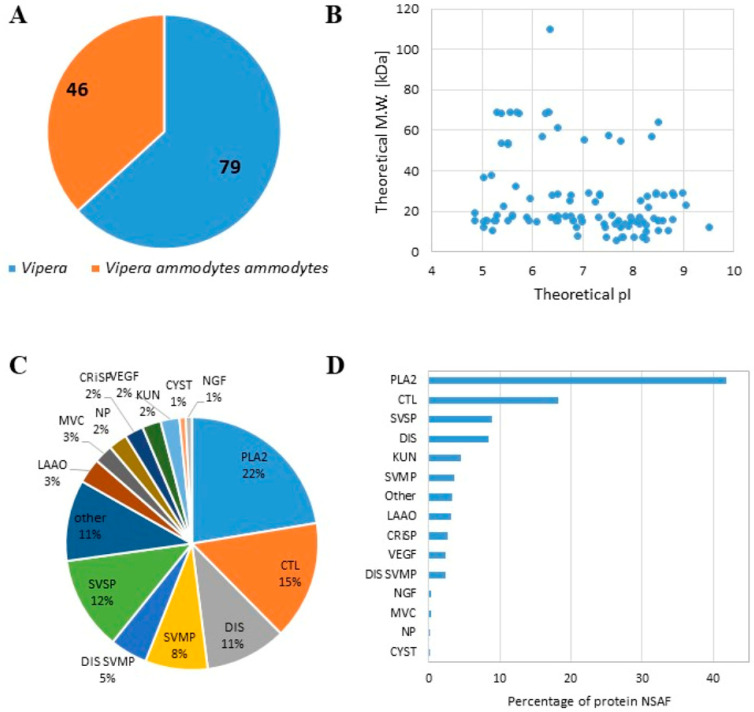 Figure 1
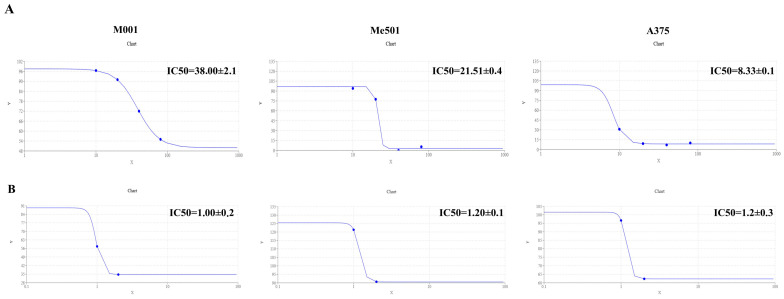 Figure 2
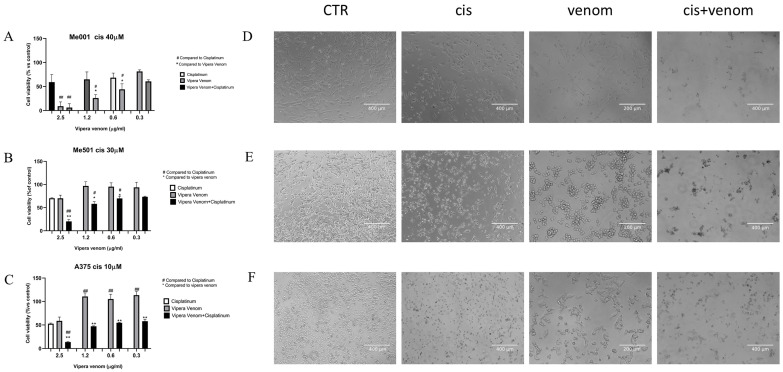 Figure 3
Peer Reviews
No public reviews on file for this paper yet. If you reviewed it on a platform where reviews are public (OpenReview, ICLR, NeurIPS, ICML), you can paste yours below so the community can read it here.
Videos
No videos yet. Explain this paper in a talk, walkthrough, or lecture? Add one.
Taxonomy
TopicsVenomous Animal Envenomation and Studies · Nicotinic Acetylcholine Receptors Study · Ion channel regulation and function