Association of Cut-Point Free Metrics and Common Clinical Tests Among Older Adults After Proximal Femoral Fracture
Hananeh Younesian, David Singleton, Beatrix Vereijken, Judith Garcia-Aymerich, Lynn Rochester, Martin Aursand Berge, Monika Engdal, Joren Buekers, Sarah Koch, Jorunn L. Helbostad, Paula Alvarez, Carl-Philipp Jansen, Kamiar Aminian, Anisoara Paraschiv-Ionescu, Clemens Becker

TL;DR
This study shows that MX metrics, a new way to measure physical activity intensity, are useful in tracking recovery from hip fractures in older adults.
Contribution
The study introduces MX metrics as a cut-point free method for assessing physical activity in older adults recovering from proximal femoral fractures.
Findings
MX metrics (M1–M30) showed strong correlations with mobility capacity and perception in later recovery stages of PFF.
Older adults in acute recovery had lower physical activity intensity compared to those in later recovery groups.
Shorter-duration MX metrics were more discriminative in differentiating recovery groups.
Abstract
What are the main findings? Clinical lower limb assessments (both subjective and objective) were more discriminative in differentiating between the four PFF recovery groups in older adults.Older adults in the acute proximal femoral fracture recovery group demonstrated lower physical activity intensity compared to those in later recovery groups, with the differences being more pronounced for shorter-duration MX metrics (M1–M5). Clinical lower limb assessments (both subjective and objective) were more discriminative in differentiating between the four PFF recovery groups in older adults. Older adults in the acute proximal femoral fracture recovery group demonstrated lower physical activity intensity compared to those in later recovery groups, with the differences being more pronounced for shorter-duration MX metrics (M1–M5). What is the implication of the main finding? The cut-point…
Genes, proteins, chemicals, diseases, species, mutations and cell lines named across the full text — each resolved to its canonical identifier and authoritative record.
Click any figure to enlarge with its caption.
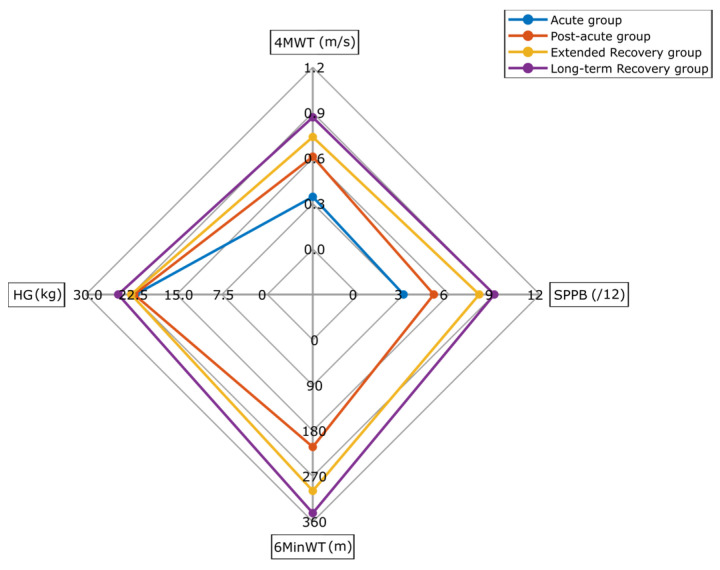 Figure 1
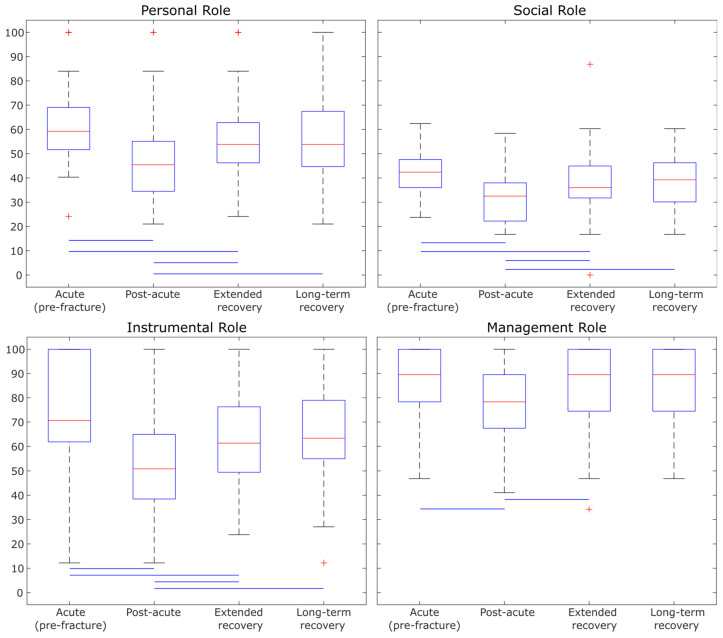 Figure 2
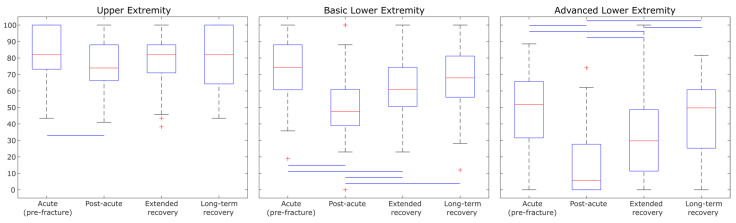 Figure 3
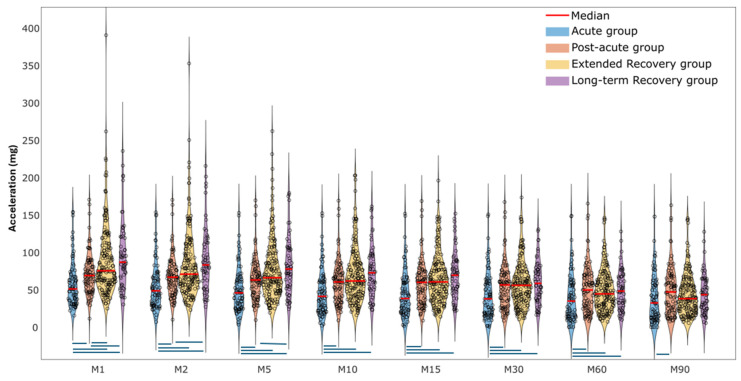 Figure 4
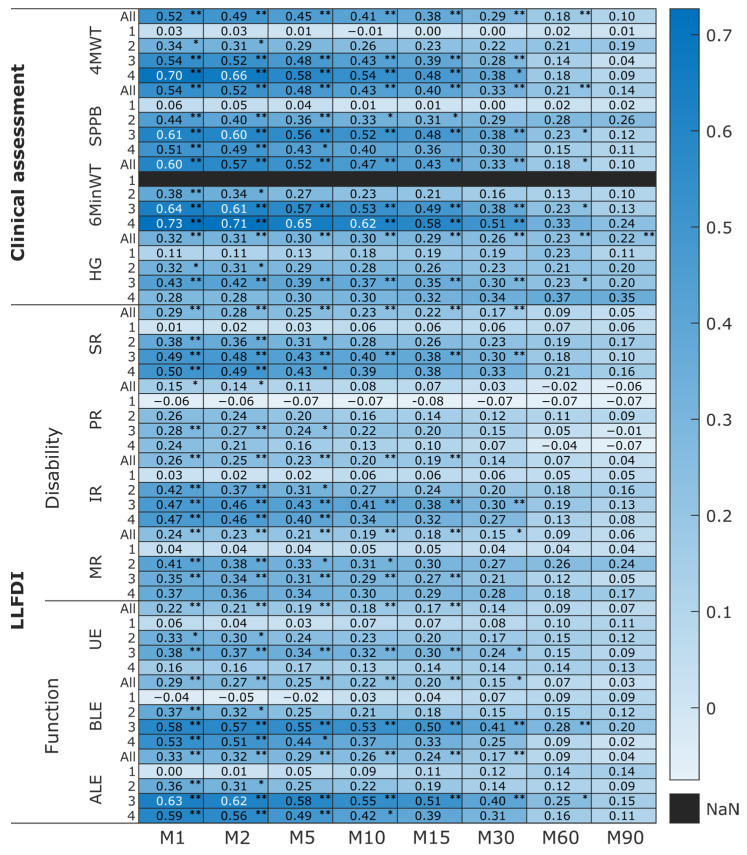 Figure 5
Peer Reviews
No public reviews on file for this paper yet. If you reviewed it on a platform where reviews are public (OpenReview, ICLR, NeurIPS, ICML), you can paste yours below so the community can read it here.
Videos
No videos yet. Explain this paper in a talk, walkthrough, or lecture? Add one.
Taxonomy
TopicsCardiovascular and exercise physiology · Physical Activity and Health · Cardiac Health and Mental Health