Environmental Suitability of Kazakhstan to Highly Pathogenic Avian Influenza Using Data on Eurasian Outbreaks, 2020–2024
Asem Zh. Abenova, Yersyn Y. Mukhanbetkaliyev, Ablaikhan S. Kadyrov, Igor I. Sytnik, Alexander B. Shevtsov, Fedor I. Korennoy, Irene Iglesias Martin, Andres M. Perez, Sarsenbay K. Abdrakhmanov

TL;DR
This study identifies areas in Kazakhstan with high risk of avian flu outbreaks and potential underreporting, using environmental and demographic data.
Contribution
The study introduces two ecological niche models to assess HPAI occurrence and reporting in Kazakhstan.
Findings
High occurrence-to-reporting ratios were found in south-western Kazakhstan near the Caspian Sea.
The models showed strong performance with test AUC scores of 0.894 and 0.869 for occurrence and reporting models, respectively.
Enhanced surveillance is needed in several regions including Pavlodar, Northern Kazakhstan, and Qyzylorda.
Abstract
Highly pathogenic avian influenza (HPAI) is a highly contagious disease of domestic, synanthropic, and wild birds that has demonstrated a sharp rise globally since 2020. This study intends to examine environmental and demographic factors most significantly associated with HPAI (H5N1 and H5N8) outbreaks in Kazakhstan, 2020–2024, and to identify areas of potential underreporting of the disease. Two ecological niche models were developed, namely an “occurrence model” (considering climatic and environmental factors influencing the likelihood of HPAI occurrence) and a “reporting model” (that assesses the probability of disease reporting based on human and poultry population demography). Both models were trained using outbreak locations in countries neighboring Kazakhstan (Afghanistan, China, Hong Kong, Iran, Iraq, Pakistan and Russia), and then tested using the HPAI outbreak locations in…
Genes, proteins, chemicals, diseases, species, mutations and cell lines named across the full text — each resolved to its canonical identifier and authoritative record.
Click any figure to enlarge with its caption.
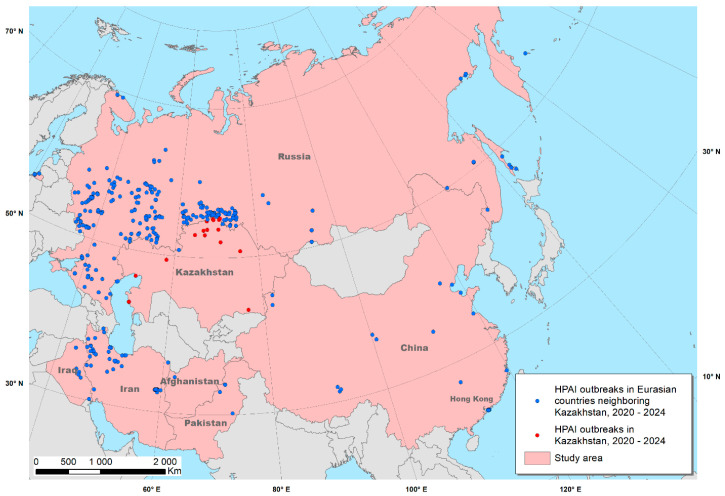 Figure 1
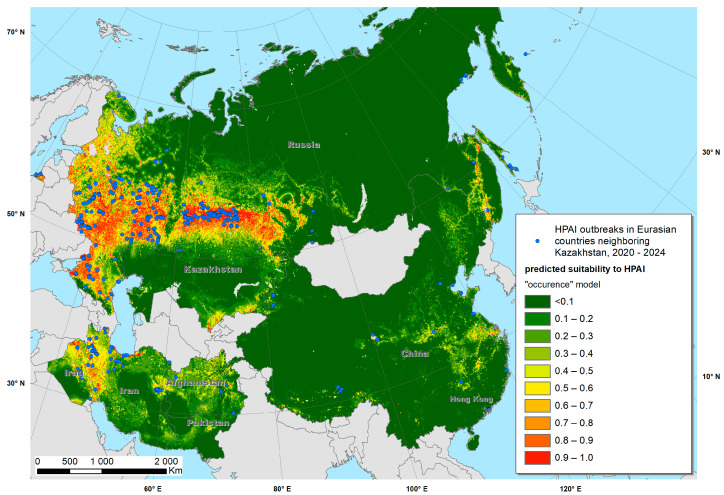 Figure 2
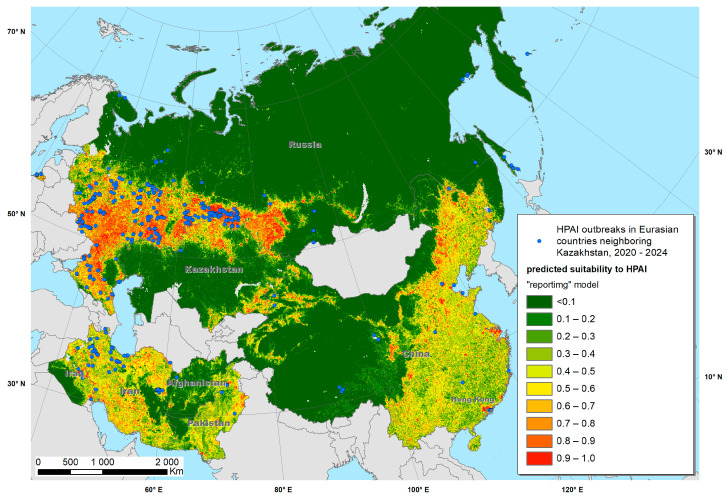 Figure 3
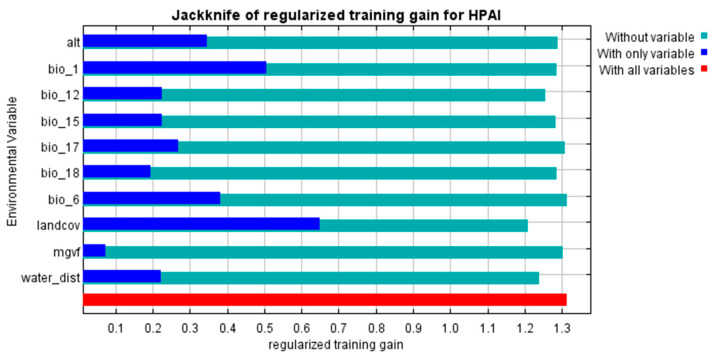 Figure 4
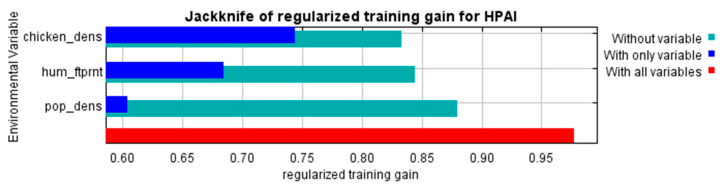 Figure 5
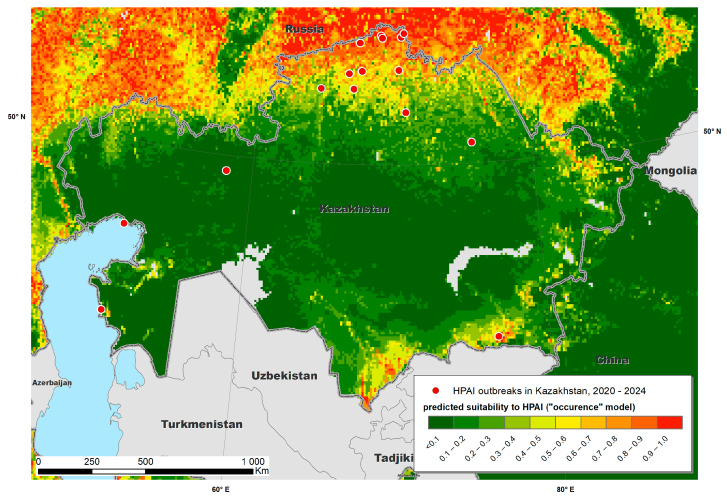 Figure 6
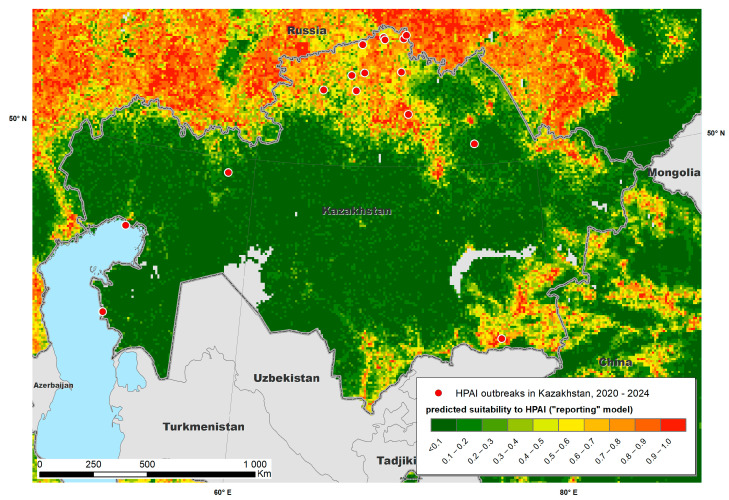 Figure 7
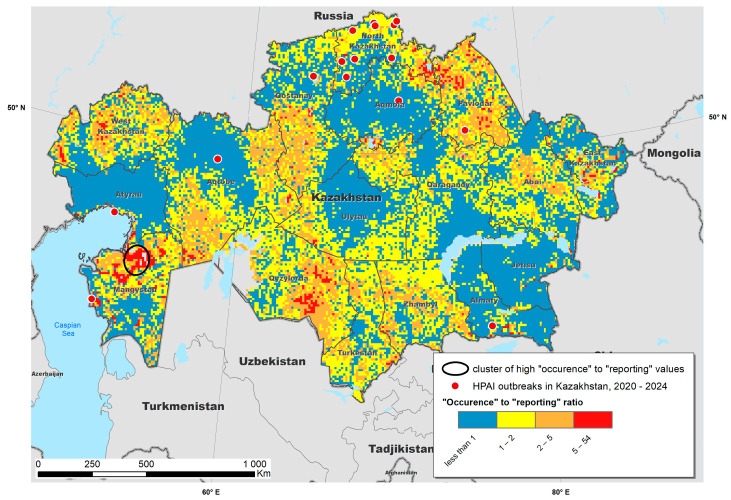 Figure 8
Peer Reviews
No public reviews on file for this paper yet. If you reviewed it on a platform where reviews are public (OpenReview, ICLR, NeurIPS, ICML), you can paste yours below so the community can read it here.
Videos
No videos yet. Explain this paper in a talk, walkthrough, or lecture? Add one.
Taxonomy
TopicsInfluenza Virus Research Studies · Viral Infections and Vectors · Zoonotic diseases and public health