Validation of Polymorphisms Associated with the Immune Response After Vaccination Against Porcine Reproductive and Respiratory Syndrome Virus in Yorkshire Gilts
Salvador Icedo-Nuñez, Rosa I. Luna-Ramirez, R. Mark Enns, Scott E. Speidel, Jesús Hernández, Xi Zeng, Miguel A. Sánchez-Castro, Carlos M. Aguilar-Trejo, Guillermo Luna-Nevárez, Martha C. López-González, Javier R. Reyna-Granados, Pablo Luna-Nevárez

TL;DR
This study identifies three genetic markers linked to improved immune response in pigs vaccinated against a costly viral disease, which could help improve vaccination outcomes in swine farming.
Contribution
The study validates three SNPs in RNF144B, XKR9, and BMAL1 as molecular markers for immune response to PRRSV vaccination in Yorkshire gilts.
Findings
Three SNPs (rs707264998, rs708860811, rs81358818) were significantly associated with the antibody response (S/P ratio) to PRRSV vaccination.
The identified SNPs showed an additive effect and were validated in two independent gilt populations.
These SNPs are proposed as candidate markers for genetic selection programs to enhance immune response in pigs.
Abstract
Over the past 30 years, global swine producers have been battling with the porcine reproductive and respiratory syndrome (PRRS), an economically important disease caused by a virus that can infect pigs of any age. Biosecurity and vaccination are the primary strategies to control the PRRS virus (PRRSV), but the immune response against the virus and vaccines have been highly variable among animals, suggesting that a genetic component is involved in regulating such a response. Recently, genomic technology has been proposed as a tool to explore the genetic architecture related to the response to vaccination against the PRRSV. In the current study, we sequentially utilized genomic and marker-assisted technologies. This strategy allowed us to identify and further validate three polymorphisms in the genes RNF144B, XKR9, and BMAL1 as potential molecular markers linked to the antibody response,…
Genes, proteins, chemicals, diseases, species, mutations and cell lines named across the full text — each resolved to its canonical identifier and authoritative record.
Click any figure to enlarge with its caption.
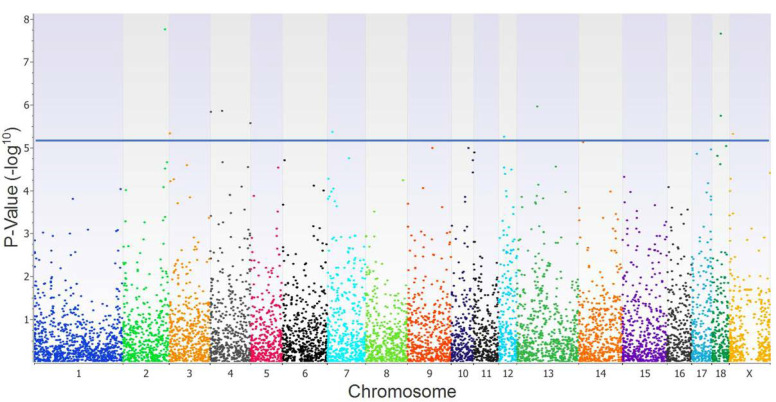 Figure 1
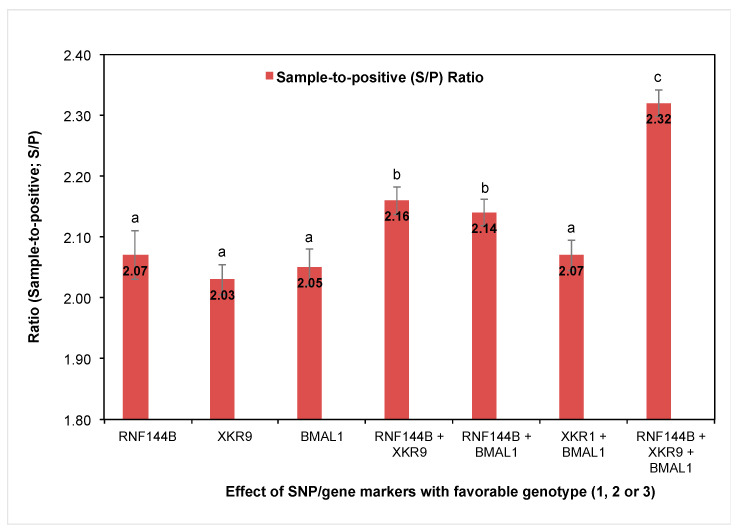 Figure 2
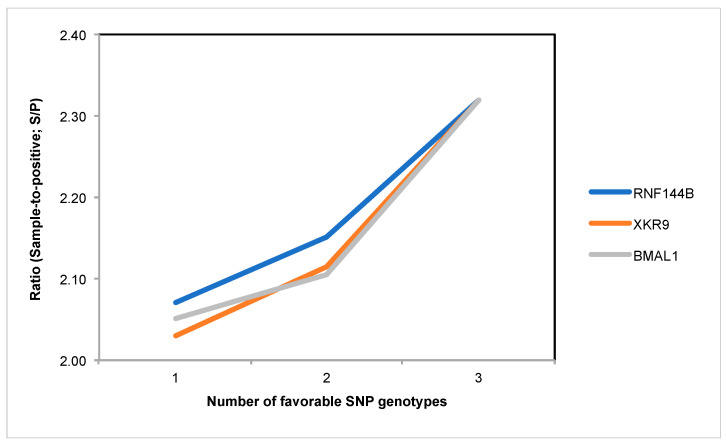 Figure 3
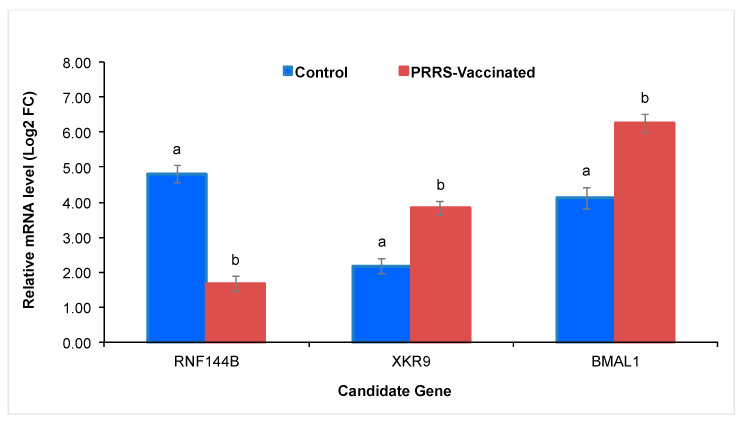 Figure 4
 Figure 5
Peer Reviews
No public reviews on file for this paper yet. If you reviewed it on a platform where reviews are public (OpenReview, ICLR, NeurIPS, ICML), you can paste yours below so the community can read it here.
Videos
No videos yet. Explain this paper in a talk, walkthrough, or lecture? Add one.
Taxonomy
TopicsAnimal Virus Infections Studies · Animal Disease Management and Epidemiology · Viral gastroenteritis research and epidemiology