Exploring the Association Between Sleep Patterns, Pubertal Health, and Phthalate Exposure—Preliminary Results from Slovakia
Martina Jahnátková, Henrieta Hlisníková, Ida Petrovičová, Branislav Kolena

TL;DR
This study explores how sleep patterns in children relate to phthalate exposure and puberty, finding possible nonlinear associations.
Contribution
The study presents preliminary evidence of nonlinear associations between phthalate metabolites and sleep quality in children.
Findings
Boys slept significantly longer than girls (8 h 44 min on average).
Nonlinear associations were observed between phthalate metabolites OH-MiNP and MnOP and sleep quality.
Associations between phthalates and sleep quality became less significant after adjusting for factors like BMI and residence.
Abstract
Background: This study aims to explore the association between sleep patterns in children and their exposure to phthalates to assess potential health implications. Methods: Participants (n = 60) completed the Pittsburgh Sleep Quality Index (PSQI) questionnaire. Consumer behavior scores (CBS) were calculated. The Tanner scale was used to monitor the stages of puberty. First-morning urine samples were analyzed by high-performance liquid chromatography–tandem mass spectrometry. Results: The average sleep duration was 8 h and 44 min, with boys sleeping significantly longer (p = 0.01). Notably, 51.7% of participants reported sleeping less than 9 h. The nonlinear effects of phthalate metabolite in association with PSQI were observed for hydroxy-mono-isononyl phthalate (OH-MiNP, p = 0.003) and MnOP (p < 0.001), indicating that the relationship does not follow a simple linear pattern. Simple…
Genes, proteins, chemicals, diseases, species, mutations and cell lines named across the full text — each resolved to its canonical identifier and authoritative record.
Click any figure to enlarge with its caption.
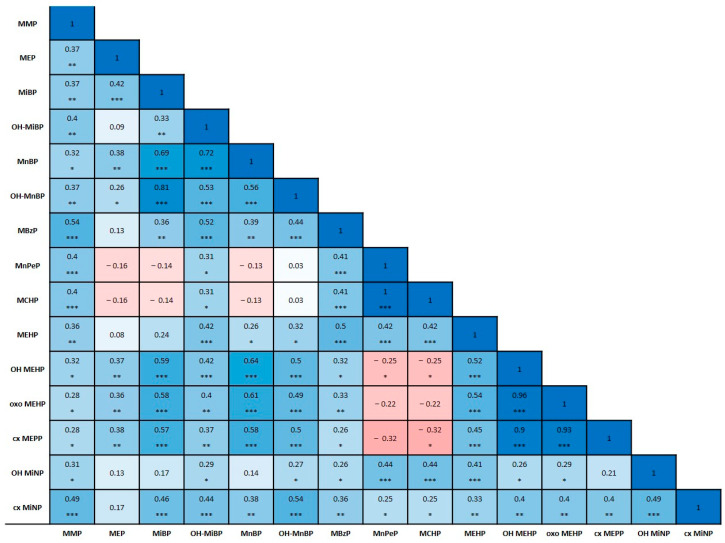 Figure 1
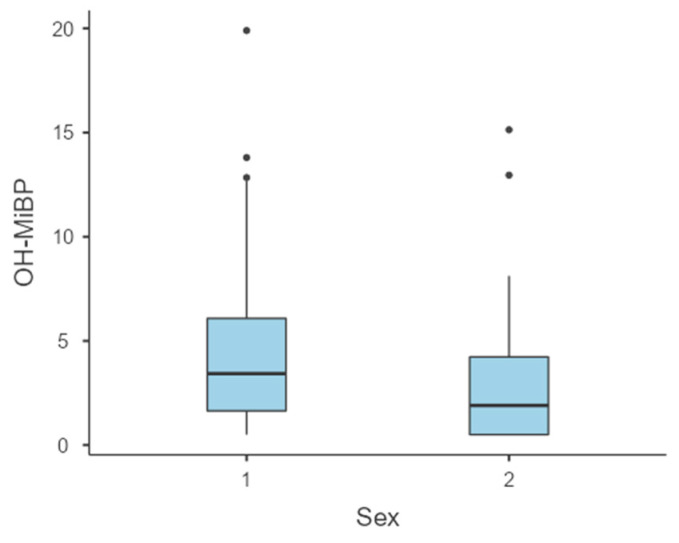 Figure 2
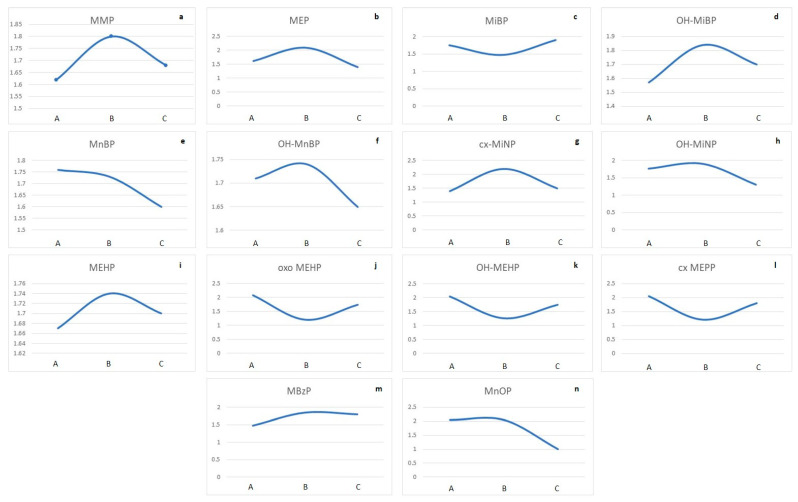 Figure 3
 Figure 4
Peer Reviews
No public reviews on file for this paper yet. If you reviewed it on a platform where reviews are public (OpenReview, ICLR, NeurIPS, ICML), you can paste yours below so the community can read it here.
Videos
No videos yet. Explain this paper in a talk, walkthrough, or lecture? Add one.
Taxonomy
TopicsEffects and risks of endocrine disrupting chemicals