Vitamin D Status and Incidence of SARS-CoV-2 Reinfections in the Borriana COVID-19 Cohort: A Population-Based Prospective Cohort Study
Salvador Domènech-Montoliu, Laura López-Diago, Isabel Aleixandre-Gorriz, Óscar Pérez-Olaso, Diego Sala-Trull, Alba Del Rio-González, Maria Rosario Pac-Sa, Manuel Sánchez-Urbano, Paloma Satorres-Martinez, Juan Casanova-Suarez, Cristina Notari-Rodriguez, Raquel Ruiz-Puig

TL;DR
This study found that low vitamin D levels are linked to a higher risk of SARS-CoV-2 reinfections, suggesting maintaining sufficient vitamin D could help prevent reinfections.
Contribution
The study provides new evidence on the relationship between vitamin D status and SARS-CoV-2 reinfection risk in a population-based cohort.
Findings
Deficient and insufficient vitamin D levels were associated with higher reinfection rates compared to sufficient levels.
A significant inverse dose–response relationship was observed between vitamin D status and reinfection risk.
Maintaining a vitamin D level of at least 30 ng/mL is recommended to reduce reinfection risk.
Abstract
A deficient vitamin D (VitD) status has been associated with SARS-CoV-2 infections, severity, and mortality. However, this status related to SARS-CoV-2 reinfections has been studied little. Our aim was to quantify the risk of reinfections considering VitD status before reinfection. Methods: We performed a population-based prospective cohort study in Borriana (Valencia Community, Spain) during 2020–2023, measuring 25-hydroxyvitamin D [25(OH)D] levels by electrochemiluminescence. Cox proportional hazards models were employed. Results: Of a total of 644 SARS-CoV-2 cases with confirmed laboratory tests, 378 (58.9%) were included in our study, with an average age of 38.8 years; 241 were females (63.8%), and 127 reinfections occurred (33.6%). SARS-CoV-2 reinfection incidence rates per 1000 person-days by VitD status were 0.50 for a deficient status (<20 ng/mL), 0.50 for an insufficient status…
Genes, proteins, chemicals, diseases, species, mutations and cell lines named across the full text — each resolved to its canonical identifier and authoritative record.
Click any figure to enlarge with its caption.
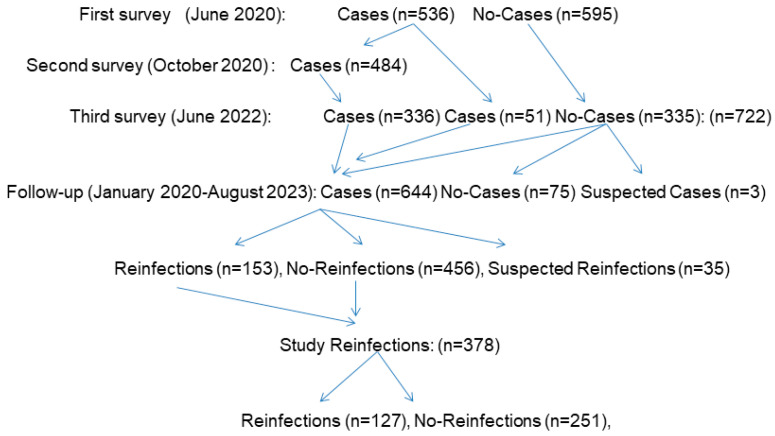 Figure 1
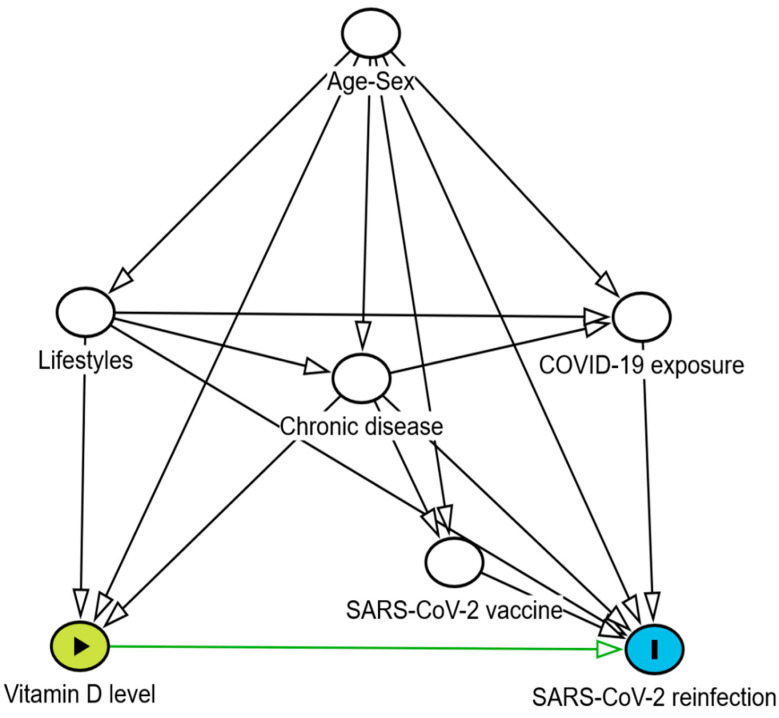 Figure 2
Peer Reviews
No public reviews on file for this paper yet. If you reviewed it on a platform where reviews are public (OpenReview, ICLR, NeurIPS, ICML), you can paste yours below so the community can read it here.
Videos
No videos yet. Explain this paper in a talk, walkthrough, or lecture? Add one.
Taxonomy
TopicsVitamin D Research Studies · Vitamin C and Antioxidants Research · COVID-19 Clinical Research Studies