Computed Tomography and a Dental Intraoral Scanner to Generate Three-Dimensional Models of the Beaks of Three Bird Species
Gabriel Corrêa de Camargo, Sheila Canevese Rahal, Reinaldo Abdala Junior, Jeana Pereira da Silva, Daniel Simões da Silva, Maria Cristina Reis Castiglioni, Ricardo Shoiti Ichikawa, Bruno Critelli Carvalho

TL;DR
This study uses CT scans and a dental scanner to create 3D models of bird beaks to help design prostheses for birds with maxillary avulsion.
Contribution
The study introduces a combined use of CT and dental scanning for 3D modeling of bird beaks to improve prosthesis design.
Findings
CT scans provided more detailed data compared to dental intraoral scanners for beak measurements.
Combining CT and dental scanning techniques is recommended for accurate beak prosthesis development.
Macroscopic and 3D imaging measurements showed variations across different bird species.
Abstract
Birds with avulsion of their maxillary portion may have difficulty prehending food and could benefit from the placement of a prosthesis. For the proper development of a prosthesis, it is important to understand the characteristics of the beak that needs to be reconstructed. Thus, the present study evaluated the beaks of Neotropical birds— parakeets, red-legged seriemas, and black vultures—using CT scans, a dental intraoral scanner, and macroscopic analysis. Beak length, width, and height were measured on 3D images from CT and the dental scanner, while macroscopic measurements were also conducted. Naris dimensions were assessed on 3D scans, and the area of the beaks in cm2 was calculated in a sagittal view using a closed polygon tool. Some variations between imaging methods were observed, with CT providing more detailed data. The combination of both techniques is recommended for the…
Genes, proteins, chemicals, diseases, species, mutations and cell lines named across the full text — each resolved to its canonical identifier and authoritative record.
Click any figure to enlarge with its caption.
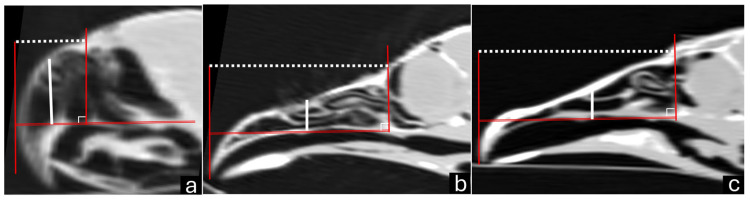 Figure 1
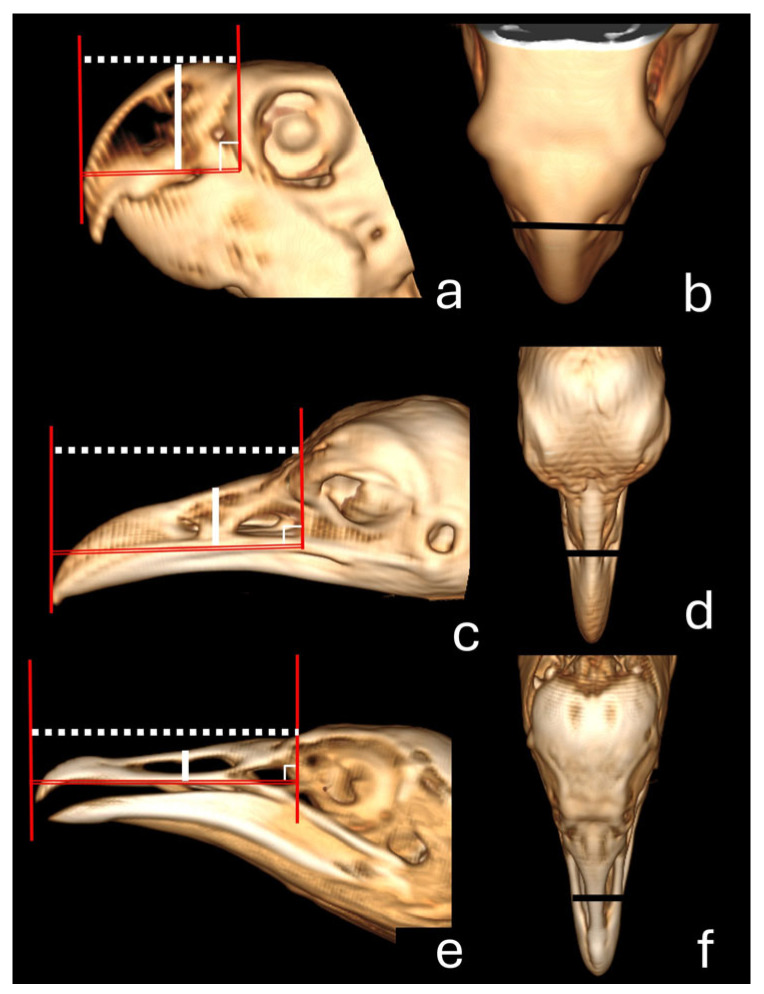 Figure 2
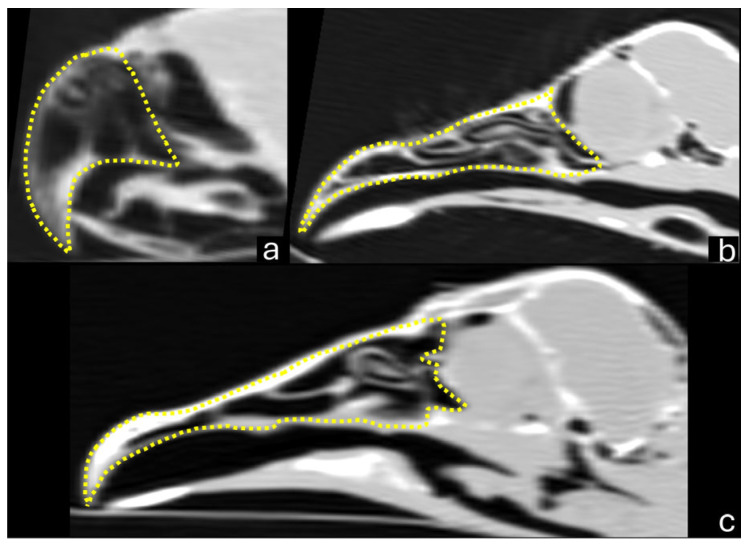 Figure 3
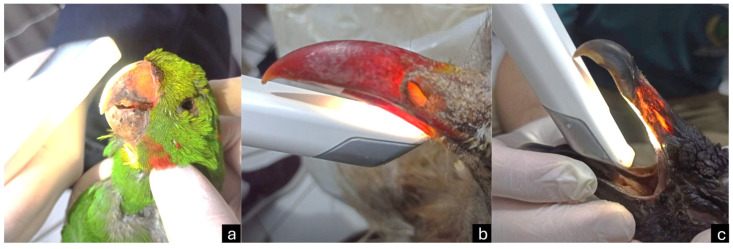 Figure 4
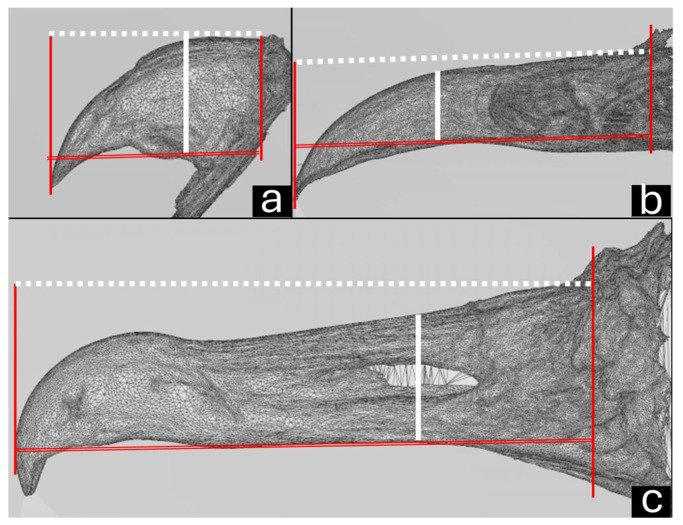 Figure 5
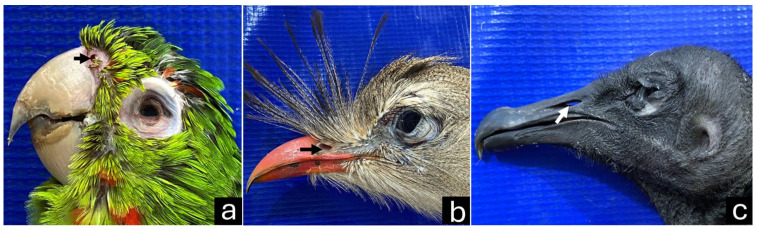 Figure 6
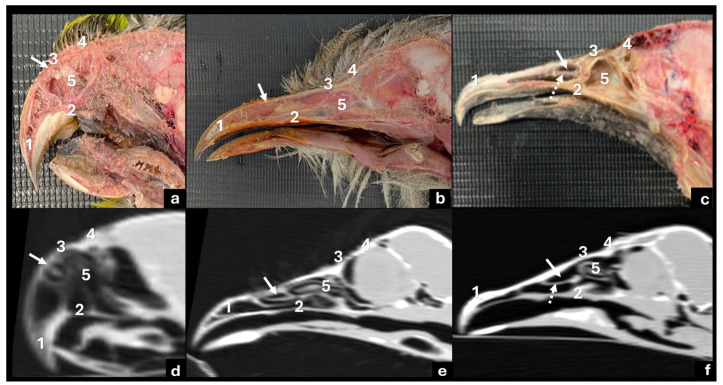 Figure 7
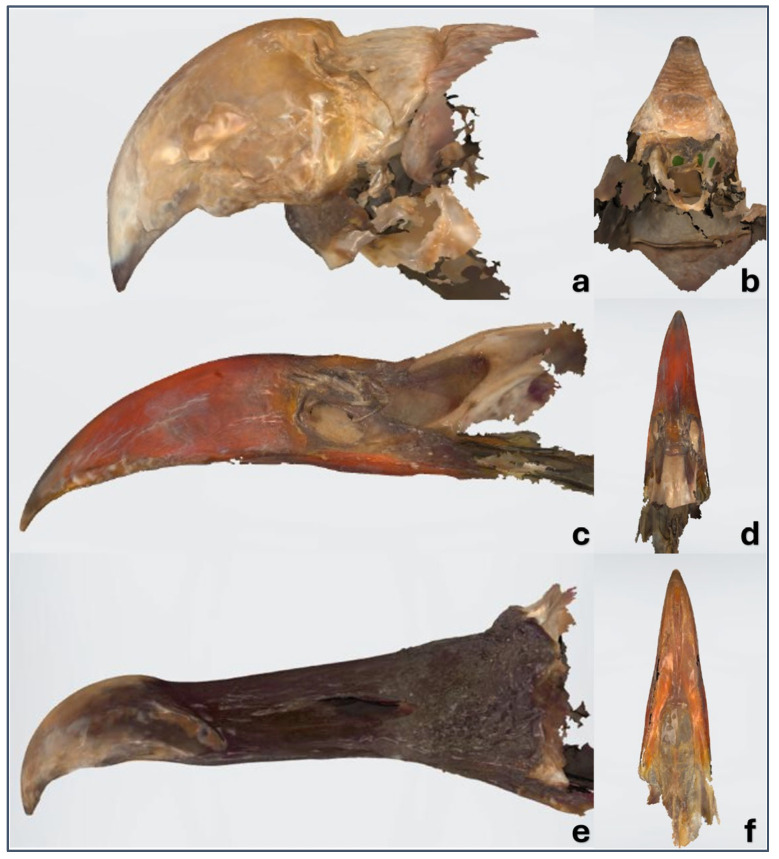 Figure 8
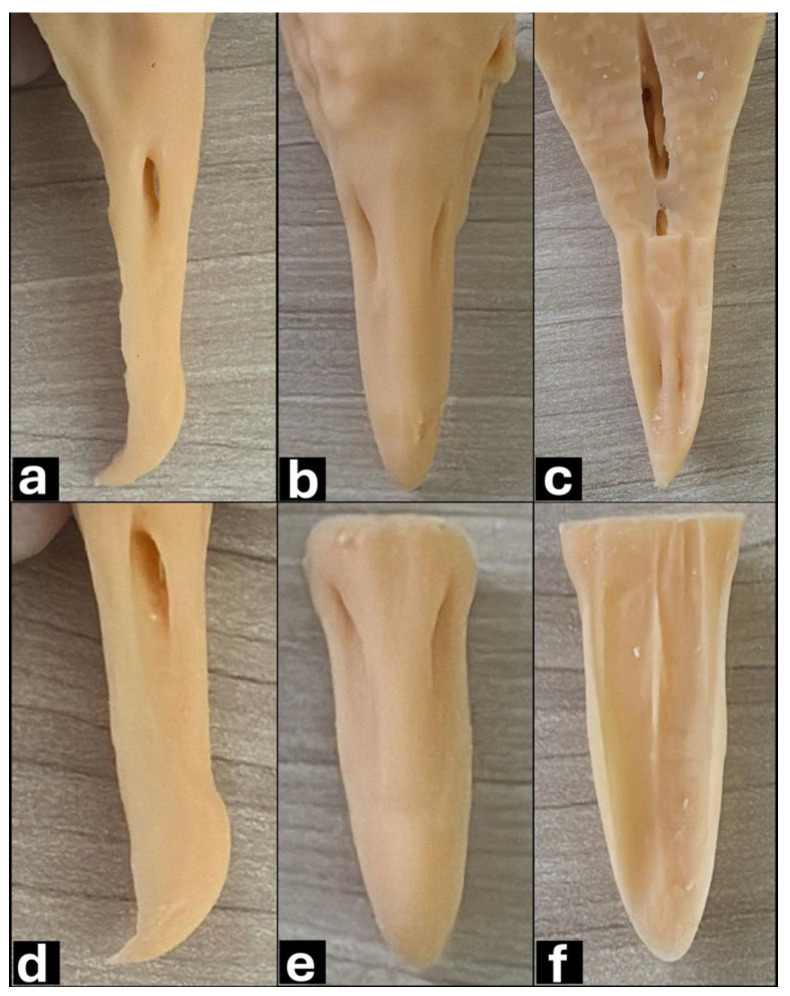 Figure 9
Peer Reviews
No public reviews on file for this paper yet. If you reviewed it on a platform where reviews are public (OpenReview, ICLR, NeurIPS, ICML), you can paste yours below so the community can read it here.
Videos
No videos yet. Explain this paper in a talk, walkthrough, or lecture? Add one.
Taxonomy
TopicsBird parasitology and diseases · Turtle Biology and Conservation · Avian ecology and behavior