Molecular Identification of Anopheles (Diptera: Culicidae) Species in Native Communities of a Northeastern Region of Peru
Eddyson Montalvo-Sabino, Marianella Villegas-Pingo, Jhon Zumaeta, Lizandro Gonzales, Rafael Tapia-Limonchi, Marta Moreno, Christian R. González, Stella M. Chenet

TL;DR
This study identifies Anopheles mosquito species in a Peruvian region and finds that An. benarrochi may be a malaria vector due to its human blood-feeding behavior and presence of Plasmodium parasites.
Contribution
The study provides the first molecular identification of Anopheles species and evidence of Plasmodium in mosquitoes from native communities in Condorcanqui, Peru.
Findings
Six specimens of An. benarrochi B were positive for Plasmodium parasites.
Four specimens tested positive for Plasmodium and human blood, indicating anthropophilic behavior.
Four Anopheles species were identified: An. benarrochi B, An. triannulatus, An. Costai, and An. nimbus.
Abstract
Background: Malaria is a severe health problem in native communities of Condorcanqui in the Amazonas region of Peru. Recently, the number of malaria cases has increased considerably following a Plasmodium falciparum outbreak in 2019. However, there is no information on the anophelines acting as Plasmodium vectors in this area. This study aimed to identify Anopheles species circulating in previously unexplored native communities of Condorcanqui. Additionally, we sought to detect the presence of DNA from P. vivax and P. falciparum parasites in mosquitoes. Methods: During three exploratory visits between March and September 2022, 453 mosquitoes were collected using Shannon traps and CDC light traps. Only specimens morphologically identified as Anopheles sp. were subjected to molecular confirmation through PCR amplification and sequencing of the Cox1 barcode region. Plasmodium parasites…
Genes, proteins, chemicals, diseases, species, mutations and cell lines named across the full text — each resolved to its canonical identifier and authoritative record.
Click any figure to enlarge with its caption.
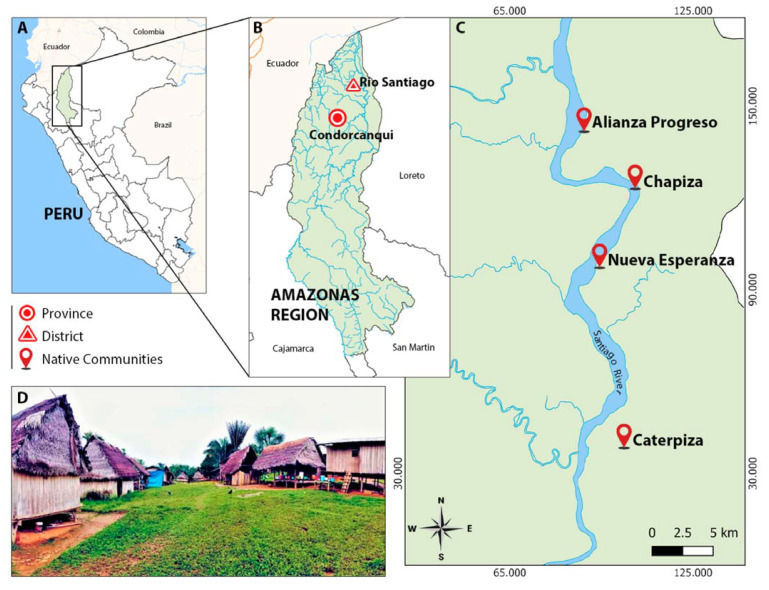 Figure 1
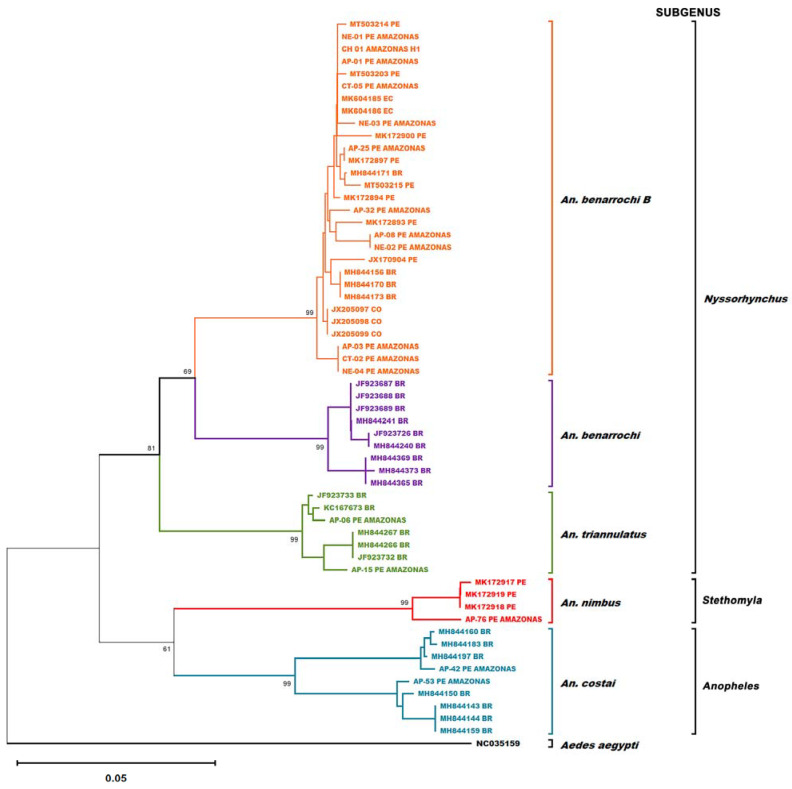 Figure 2
- —METAVEC
Peer Reviews
No public reviews on file for this paper yet. If you reviewed it on a platform where reviews are public (OpenReview, ICLR, NeurIPS, ICML), you can paste yours below so the community can read it here.
Videos
No videos yet. Explain this paper in a talk, walkthrough, or lecture? Add one.
Taxonomy
TopicsMosquito-borne diseases and control · Malaria Research and Control · Vibrio bacteria research studies
1. Background
Malaria is a potentially fatal disease caused by Plasmodium parasites, transmitted through the bites of infected Anopheles mosquitoes. In 2022, it was estimated that there were 249 million cases and around 608,000 deaths worldwide [1]. Peru reported 26,217 malaria cases in 2024, caused by Plasmodium vivax (82%) and P. falciparum (18%) infections [2]. Loreto is the most affected region in the country, accounting for 94% of cases [2]. Amazonas, a northeastern region of Peru, is the third most affected area and has reported a notable increase in the number of malaria cases in recent years. Approximately 90.6% of the cases are reported in the district of Río Santiago, Condorcanqui [3], a remote and extremely impoverished area where most native communities reside along the riverbanks with restricted medical care and no access to electricity or potable water [4].
In Peru, at least nine species of Anopheles have been identified as malaria vectors. Among these, four are considered primary vectors: Anopheles (Nyssorhynchus) darlingi Root, An. (Nys) benarrochi Gabaldón, Cova García, and López, An. (Nys) albimanus Wiedemann, and An. (Anopheles) pseudopunctipennis Theobald; the other five species are classified as secondary vectors [5,6,7,8,9]. Additionally, it has been reported that An. darlingi and An. benarrochi B are primarily distributed throughout the Peruvian Amazon [7,9].
Identifying the vectors involved in Plasmodium transmission is essential for implementing control campaigns. However, the complexity of morphological identification, combined with the high biodiversity and intraspecific variability of mosquitoes, hinders accurate identification [10,11,12,13], leading to significant errors in species classification [14]. Currently, DNA sequencing is crucial for species identification and genetic variation analysis [14,15]. The mitochondrial Cytochrome c oxidase subunit 1 (Cox1) gene is particularly useful for phylogenetic reconstruction and the study of geographic variability within species complexes [12]. This study aimed to identify Anopheles species present in native communities of Río Santiago and assess their potential role as malaria vectors through the molecular detection of Plasmodium DNA and human blood meals.
2. Methods
2.1. Study Site
The Amazonas region, located in northeastern Peru, has seven provinces, with Condorcanqui being the one located in the northern sector. This province borders Ecuador to the north and Loreto to the east. Condorcanqui has an area of 17,984.29 km^2^ and is organized into three districts: Nieva, Río Santiago, and Cenepa. It has a humid tropical climate, with temperatures that can reach up to 35 °C and a relative humidity greater than 90%. Furthermore, 95% of its inhabitants belong to the Awajún and Wampis ethnic groups [4].
Mosquitoes were collected in four native communities in the Río Santiago district: Alianza Progreso (AP), Nueva Esperanza (NE), Chapiza (CH), and Caterpiza (CT) (Figure 1) during three visits between March and September 2022. These communities were selected due to a notable increase in malaria cases in recent years. The Chapiza Health Facility, which serves these communities, reported an Annual Parasite Index (API) of 122.8 in 2020, which rose to 224.8 in 2022, with infections caused by both P. falciparum and P. vivax.
2.2. Mosquito Collection
Adult mosquitoes were captured from 18:00 to 06:00 using two CDC light traps and three Shannon traps placed at equidistant points approximately 10 m from the houses. Anopheles mosquitoes were morphologically identified to the genus level in the field using entomological keys [16] and stored in 1.5 mL cryovials containing 70% ethanol for subsequent molecular processing.
2.3. Molecular Methods for Anopheles Species Identification
Genomic DNA was extracted from whole mosquito bodies using the DNeasy Blood & Tissue Kit (Qiagen, Hilden, Germany), following the manufacturer’s instructions. The 710 bp barcode region of the Cox1 gene was then amplified using LCO1490 and HCO2198, as described by Folmer et al. [17]. Each 25 μL PCR reaction contained 1 μL of extracted DNA, 0.5 μM of each primer, 1 unit of Platinum Taq DNA polymerase (Invitrogen, Waltham, MA, USA), 0.2 mM of each deoxynucleotide triphosphate, 1X PCR buffer (Invitrogen, Waltham, MA, USA), 2.5 mM MgCl_2_, and nuclease-free water. The amplification conditions were set according to Linton et al. [18].
Appropriate controls were included in all of the PCR assays. An extraction control was used to monitor potential contamination during DNA isolation. No-template controls (NTCs) were included in each PCR run to detect contamination in reagents. A negative control was incorporated to ensure assay specificity. As a positive control, DNA from a previously sequenced and confirmed culicid mosquito was used to validate the amplification.
PCR products were visualized on 2% agarose gels stained with SafeView™ Classic (Applied Biological Materials, Richmond, BC, Canada). Amplicons were purified using the Exo-CIP™ kit (New England Biolabs, Ipswich, MA, USA) and sequenced with the BigDye™ Terminator kit (Thermo Fisher Scientific, Waltham, MA, USA). The primers for sequencing were the same as those used in the PCR. The amplified products were sequenced by capillary electrophoresis on the 3500 Genetic Analyzer (Applied Biosystems, Waltham, MA, USA).
2.4. Human Blood Meal Identification and Plasmodium Detection in Mosquitoes
The assessment of human blood meal was conducted using a previously reported procedure for human β-globin [19]. The amplification conditions consisted of an initial denaturation at 94 °C for 7 min, followed by 35 cycles of denaturation at 94 °C for 1 min, annealing at 53 °C for 1 min, and extension at 72 °C for 1 min. A final extension step at 72 °C for 5 min concluded the PCR reaction.
The nested PCR technique targeting the 18S rRNA subunit, as described by Singh et al. [20], was employed to detect P. falciparum and P. vivax parasites in mosquitoes. As a positive control for the human β-globin assays, a DNA sample extracted from human blood was used. For Plasmodium PCR assays, positive controls from P. falciparum (3D7 strain) and P. vivax (Sal1 strain) were included.
2.5. Bioinformatic Analysis
The sequence data were analyzed using Geneious Prime software v. 2022.2.1 and the Basic Local Alignment Search Tool (BLAST), with searches conducted against the GenBank database to identify the species. Anopheline sequences were aligned using the MUSCLE tool in MEGA X software v. 7.2.6.1.
For phylogenetic analysis, 41 previously reported sequences from different anopheline species were incorporated [6,21,22,23,24]. A Maximum Likelihood (ML) tree was constructed using the Kimura 2-parameter model (K-2P) and the Bootstrap method with 1000 replicates in MEGA X software v. 7.2.6.1 [25]. The Aedes aegypti Cox1 sequence (NC035159) was used as the outgroup.
3. Results
A total of 453 mosquitoes were captured, and 66 specimens were confirmed to belong to the Anopheles genus, all of them females (Table 1). Anopheles benarrochi B was the predominant species (92,4%, 61/66), followed by An. triannulatus (Neiva & Pinto) (3%, 2/66), An. costai da Fonseca & da Silva Ramos (3%, 2/66) and An. nimbus (Theobald) (1.6%, 1/66) (Table 1). The sequences obtained were deposited in GenBank (accession numbers OR729604–OR729669).
The ML tree based on the K-2P model (Figure 2) corroborated the accurate identification of specimens in this study. Anopheles benarrochi B formed a stable monophyletic clade with sequences from Loreto and other countries and a paraphyletic clade with other An. benarrochi. The phylogenetic classification aligned with the traditional subgenus groupings: An. benarrochi B, An. benarrochi, and An. triannulatus belong to the Nyssorhynchus subgenus; An. nimbus to the Stethomyia subgenus; and An. costai to the Anopheles subgenus, as previously documented [26].
Among the 66 anophelines, 23 samples of An. benarrochi B and 1 sample of An. triannulatus were positive for human β-globin, proving that they feed on human blood. Furthermore, the DNA of Plasmodium parasites was detected in six specimens of An. benarrochi B, with four samples testing positive for P. falciparum and two for P. vivax.
4. Discussion
In the eastern region of Peru, An. darlingi is the primary vector of malaria [8]. Additionally, An. triannulatus has been reported as the predominant vector in eastern Loreto, while An. benarrochi is primarily found in the western part of that region [8,27]. Our study is the first molecular report of anopheline species in native communities of Condorcanqui in the Amazonas region [28]. A total of 66 anophelines were collected, and through sequencing of the barcode region and phylogenetic analysis (Figure 2), 4 species were identified: An. benarrochi B, An. triannulatus, An. costai, and An. nimbus. An. benarrochi B was the most abundant species (n = 61), and 23 individuals, along with 1 An. triannulatus, showed human blood feeding, indicating anthropophilic behavior, as previously reported [5,9].
Anopheles benarrochi s.s. and An. benarrochi B are part of a species complex [13,14,24]. Anopheles benarrochi B has been strongly implicated as one of the primary vectors of Plasmodium in Peru [5,8,9,29], and its vectorial role has been attributed to geographic areas where An. darlingi is absent [30]. However, its importance as a malaria vector is not clear, as it is based on circumstantial evidence or the identification of circumsporozoite protein (CSP) of P. vivax (genotypes VK210 and VK247) and P. falciparum [6,8]. In our study, we identified Plasmodium DNA in six specimens of this species, with four samples testing positive for P. falciparum and two for P. vivax. These mosquitoes were collected in Alianza Progreso, a native community further north than the four previously studied. Although this study has a limited number of samples, the identification of Plasmodium DNA in An. benarrochi B, its anthropophilic and domestic behavior [6], along with the increase in malaria cases in the studied native communities suggest its role as a vector of Plasmodium in the region. Additionally, the detection of human β-globin in 23 An. benarrochi B specimens reinforces its anthropophilic nature and potential role in malaria transmission. This finding further supports the need for continued entomological and epidemiological studies to assess An. benarrochi B vectorial capacity in the region.
The phylogenetic tree showed that the sequences of An. benarrochi B were closely related to those from Ecuador, Colombia [24], Peru [24,31], and Brazil [32]. This confirms the identity of the collected specimens and demonstrates the broad geographic distribution of the species, suggesting gene flow between these countries.
Although An. triannulatus primarily feeds on animals (zoophilic), it has also been suggested as a vector of Plasmodium given its role in Brazil [33,34,35], Peru [36], and Colombia [37]. This species is part of a complex with An. halophylus and the putative species An. triannulatus C, that may differ in vectorial capacity [12,37].
Anopheles costai and An. nimbus, which belong to the subgenera Anopheles and Stethomyia, respectively, are not considered malaria vectors [26,38]. However, An. costai feeds on human blood and may be confused with An. mediopunctatus, a species implicated as a potential vector of Plasmodium [26,39].
Further longitudinal studies should explore seasonal variations in Anopheles species composition and malaria transmission dynamics. Emphasis on sporozoite detection would help to confirm vector competence, while blood meal analysis could provide insights into host preferences and transmission patterns in the region.
This study represents the first report of An. benarrochi B as a possible malaria vector in the native communities of Condorcanqui. However, the limited number of samples highlights the need for further research to assess the involvement of other Anopheles species.
5. Conclusions
In conclusion, this study represents the first molecular investigation for the identification of Anopheles species in the Amazonas region of Peru. Although the sample size is limited, the detection of Plasmodium DNA in An. benarrochi B mosquitoes collected from native communities, combined with their anthropophilic and domestic behavior, as well as the rising malaria cases in these communities, provides strong evidence supporting An. benarrochi B’s potential role as a vector of Plasmodium in the region.
The reference list from the paper itself. Each links out to its DOI / PubMed record.
- 1WHO Malaria Available online: https://www.who.int/health-topics/malaria(accessed on 1 August 2023)
- 2CDC-MINSA Boletines Epidemiológicos–CDC MINSA Available online: https://www.dge.gob.pe/portalnuevo/publicaciones/boletines-epidemiologicos/(accessed on 2 December 2024)
- 3CDC-MINSA Sala de situación nacional CDC MINSA 2024 Available online: https://www.dge.gob.pe/portalnuevo/salas-situacionales/sala-de-situacion-nacional/(accessed on 2 December 2024)
- 4Gobierno Regional de Amazonas Estudio de Diagnóstico y Zonificación Para El Tratamiento de La Demarcación Territorial de La Provincia Condorcanqui Amazon. Dir. Nac. Técnica De Demarcación Territ.20141 Available online: https://cdn.www.gob.pe/uploads/document/file/2867803/EDZ%20UTCUBAMBA.pdf.pdf?v=1646328078(accessed on 2 December 2024)
- 5Calderón G. Fernández R. Valle J. Especies de La Fauna Anofelina, Su Distribución y Algunas Consideraciones Sobre Su Abundancia e Infectividad En El PerúRev. Peru. Entomol 19958 Available online: https://sisbib.unmsm.edu.pe/B Vrevistas/epidemiologia/v 08_n 1/articulo 01.htm(accessed on 2 December 2024)
- 6Conn J.E. Bickersmith S.A. Saavedra M.P. Morales J.A. Alava F. Diaz Rodriguez G.A. del Aguila Morante C.R. Tong C.G. Alvarez-Antonio C. Daza Huanahui J.M. Natural Infection of Nyssorhynchus darlingi and Nyssorhynchus benarrochi B with Plasmodium during the Dry Season in the Understudied Low-Transmission Setting of Datem Del Marañon Province, Amazonian Peru Am. J. Trop. Med. Hyg.202310928829510.4269/ajtmh.23-005837364858 PMC 10397451 · doi ↗ · pubmed ↗
- 7Fernández R. Vera H. Calderón G. Revisión Histórica de La Distribución de Anopheles (Nyssorhynchus) darlingi (Diptera: Culicidae) En La Amazonía Peruana Rev. Peru. De Med. Exp. Y Salud Publica 20143131031810.17843/rpmesp.2014.312.5225123872 · doi ↗ · pubmed ↗
- 8Flores-Mendoza C. Fernández R. Escobedo-Vargas K.S. Vela-Perez Q. Schoeler G.B. Natural Plasmodium Infections in Anopheles darlingi and Anopheles benarrochi (Diptera: Culicidae) from Eastern Peru J. Med. Entomol.20044148949410.1603/0022-2585-41.3.48915185955 · doi ↗ · pubmed ↗