Occurrence and Molecular Characterization of Cryptosporidium spp. in Beef Cattle in Yunnan Province, China
Dongxu Li, Liujia Li, Jianfa Yang, Junjun He, Fengcai Zou, Fanfan Shu

TL;DR
This study identifies and characterizes Cryptosporidium parasites in beef cattle in Yunnan, China, revealing infection rates and genetic diversity.
Contribution
First documentation of Cryptosporidium spp. occurrence and genetic diversity in beef cattle in Yunnan Province.
Findings
Cryptosporidium spp. infected 22.4% of beef cattle in Yunnan, with significant variation across breeds and regions.
Four species (C. andersoni, C. bovis, C. ryanae, C. occultus) and multiple subtypes were identified.
Younger cattle had higher infection rates, and male cattle were more susceptible than females.
Abstract
Cryptosporidium spp. are protozoan pathogens that are widespread within mammals. In recent years, extensive molecular epidemiology studies on Cryptosporidium in dairy cattle have been conducted in Yunnan and worldwide. However, the infection status of these pathogens in beef cattle in Yunnan remains unclear. To examined the occurrence of Cryptosporidium spp. in beef cattle in Yunnan Province, China, we collected 735 fecal samples from six breeds of beef cattle in five regions of Yunnan. Nested PCR and DNA sequencing revealed the infection, species, and genotypes of Cryptosporidium spp. in these animals. The occurrence of Cryptosporidium spp. in Simmental cattle, Brahman cattle, Aberdeen Angus cattle, Yunnan Yellow cattle, Dulong cattle, and Hereford cattle was 32.9% (137/416), 3.8% (4/106), 24.4% (20/82), 3.8% (3/79), 3.2% (1/31), and 0% (0/21), respectively, with an overall rate of…
Genes, proteins, chemicals, diseases, species, mutations and cell lines named across the full text — each resolved to its canonical identifier and authoritative record.
Click any figure to enlarge with its caption.
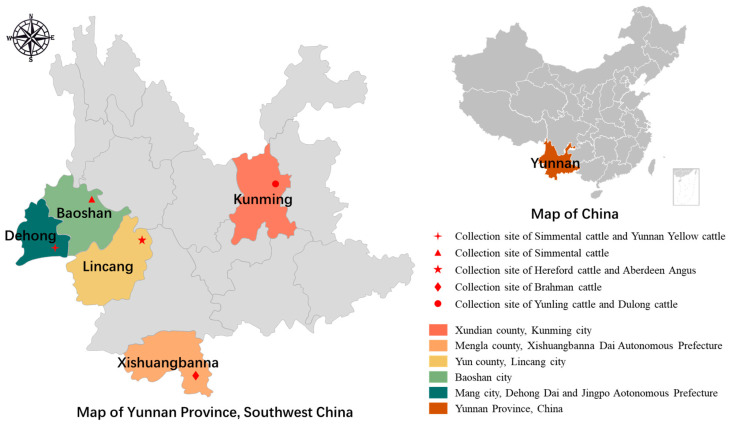 Figure 1
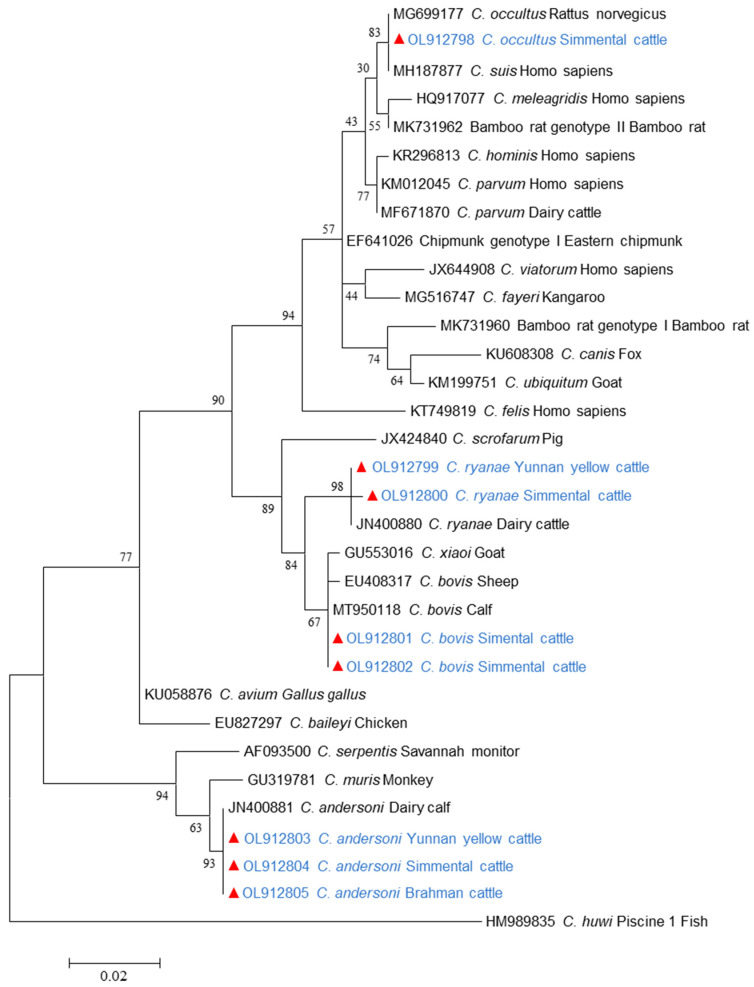 Figure 2
- —Yunnan Key Laboratory of Veterinary Etiological Biology
- —International Science and Technology Commissioner Program
Peer Reviews
No public reviews on file for this paper yet. If you reviewed it on a platform where reviews are public (OpenReview, ICLR, NeurIPS, ICML), you can paste yours below so the community can read it here.
Videos
No videos yet. Explain this paper in a talk, walkthrough, or lecture? Add one.
Taxonomy
TopicsParasitic Infections and Diagnostics
1. Introduction
Cryptosporidium spp. are important zoonotic protozoa that infect a wide range of vertebrates worldwide, including humans and domestic and wild animals [1,2]. Cryptosporidium oocysts are widely distributed in the environment, and can be ingested by susceptible humans and animals, resulting in cryptosporidiosis [3]. The main clinical feature of cryptosporidiosis is persistent diarrhea, and the disease has been reported in over 40 countries worldwide [4]. Bovine species are common hosts of these pathogens [5]. In beef cattle, cryptosporidiosis often results in high neonatal mortality rates and increased pharmaceutical costs, leading to significant economic losses in the livestock industry [6].
To date, approximately 44 valid species and 120 genotypes of Cryptosporidium spp. have been reported, with C. andersoni, C. bovis, C. ryanae, and C. parvum being the four major species found in cattle [7]. The prevalence of Cryptosporidium spp. in cattle varies globally, ranging from 6.25% to 39.6% [8]. Several factors influence the occurrence of Cryptosporidium spp. in cattle, including geographical location, climate, host age, herd management, food and water sources, sanitation, and rodent control [9].
Several subtyping tools for Cryptosporidium spp. play important roles in epidemiological studies [10,11]. The 60-kDa glycoprotein (gp60) gene-targeted subtyping method and multilocus sequence typing (MLST) have been reported as the most widely used tools for subtype identification of these pathogens [12,13]. Thus far, at least twenty, eight, and six different gp60 subtypes have been identified in C. parvum, C. ryanae, and C. bovis, respectively [14,15,16]. In addition, more than 10 MLST subtypes of C. andersoni have been reported in cattle in China [17]. These diagnostic tools have been widely applied to study the transmission and diversity of Cryptosporidium spp. [18].
Yunnan Province, located in southwestern China, provides a high-quality production environment for beef cattle, due to its suitable geographical and climatic conditions [19]. As the largest beef cattle production province in China, it maintained over 9 million head of cattle in 2023, and is home to at least 15 different cattle breeds [19]. In previous studies, an indigenous breed of cattle (i.e., Yunling cattle) in Yunnan Province was found to be infected with C. andersoni and C. ryanae in a small-scale survey of animals [20]. However, the occurrence of these parasites in other beef cattle in Yunnan Province remains unknown. The “One Health” framework emphasizes integrated approaches to reduce disease risks at the human–animal–environment interface. A better understanding of Cryptosporidium species in beef cattle and their transmission potential can lead to better control strategies. These measures would improve animal health and production efficiency, thus supporting the growing demand for sustainable food production. Therefore, the aim of our study was to investigate the occurrence of Cryptosporidium spp. in six breeds of cattle from five regions in Yunnan, and to determine their species and subtypes in order to assess the transmission risks.
2. Materials and Methods
2.1. Sample Collection and Sampling Area
A total of 735 fecal samples from six breeds of beef cattle (i.e., Simmental cattle, Brahman cattle, Aberdeen Angus cattle, Yunnan Yellow cattle, Dulong cattle, Hereford cattle) from five regions in Yunnan Province, China, were used for sampling (Table 1 and Figure 1). Sampling in Baoshan, Dehong, and Xishuangbannna took place in June, while sampling in Lincang took place in September, and sampling in Kunming occurred in October 2024. All sampling periods coincided with the rainy season in Yunnan Province. Six representative breeds of beef cattle were selected for this study. Among them, Simmental and Aberdeen Angus are extensively raised in Yunnan, and serve as the main source of income for local farms. Yunnan Yellow, Hereford cattle, and Dulong cattle, known for their excellent meat quality, are primarily raised in small-scale farms in Yunnan. Additionally, Brahman cattle, imported from Laos due to their low cost, are temporarily raised in farms in Yunnan before being sold.
In the study regions, Simmental cattle and Aberdeen Angus cattle are managed in intensive farms with herd sizes of more than 1000 head. Yunnan Yellow, Hereford cattle, and Dulong cattle are managed in small-scale farms with herd sizes of less than 400 head. These animals are kept in confined places, and are fed a diet consisting of self-produced silage and commercially purchased concentrated feed. Brahman cattle are grazed in a special area of Xishuangbanna. In the Dehong and Kunming regions, cattle of two different breeds were sampled from two separate farms. The average annual rainfall in these five regions ranged from 720 mm to 1441 mm in 2024 (Table 1). Except for Xishuangbanna, which has a tropical climate, the other regions have a subtropical climate (Table 1).
Rectal sampling was performed separately for each beef cattle breed to avoid contamination. Each sample was placed in a separate self-sealing bag with clear information, such as the distribution, breed of cattle, date of birth, and gender. Collected samples were transported to a laboratory at 2 °C to 8 °C for no more than 72 h and stored in 2.5% potassium dichromate at 4 °C until DNA extraction.
2.2. DNA Extraction
Prior to the extraction of genomic DNA, 200 mg of fecal sample was placed in a centrifuge tube and centrifuged (2000× g, 10 min), washed with distilled water, and the supernatant was discarded to remove potassium dichromate. DNA was extracted from the pellet using a FastDNA Spin Kit for Soil (MP Biomedicals, Solon, OH, USA), as previously described [21]. The extracted DNA from the collected fecal samples was stored at −20 °C until analysis by PCR.
2.3. PCR Amplification
Nested PCR based on the small ribosomal subunit RNA (SSU rRNA) gene was used to detect and identify Cryptosporidium species in all DNA samples, with a target product size of approximately 830 bp [22]. Nested PCR was also employed for subtype identification of C. bovis and C. ryanae based on the gp60 gene, with product sizes of approximately 1300 bp and 1000 bp [15,16]. C. andersoni was subtyped by analyzing four minisatellite/microsatellite targets (MS1, MS2, MS3, MS16) according to previous studies [17].
2.4. Sequence Analysis
Based on the gel electrophoresis results, all secondary positive PCR products were sent to Sangon Biotech (Kunming, China) for bidirectional sequencing on an ABI 3730 sequencer (Applied Biosystems, Foster City, CA, USA). Each raw sequence was assembled using ChromasPro 2.1.5.0 (http://technelysium.com.au/ChromasPro.html/, accessed on 23 October 2024). Assembled sequences were compared with GenBank dates to select appropriate reference sequences. ClustalX software 2.1.5.0 (http://clustal.org/, accessed on 23 October 2024) was used for comparative analysis between the sample sequences and the reference sequences. Detailed corrections of the sequences were performed using BioEdit 7.1 software (http://thalljiscience.github.io, accessed on 23 October 2024) to accurately determine the species and subtype of Cryptosporidium spp. in the samples [23]. A phylogenetic tree was constructed using MEGA 7.0 software (http://www.megasoftware.net/, accessed on 24 December 2024) based on the maximum likelihood method. The genetic relationship and reliability of the phylogenetic tree were assessed using the general time-reversible model and by bootstrapping with 1000 replicates, with values greater than 50% marked at the nodes [24]. The representative sequences were deposited in GenBank under accession numbers OL912798-OL912805, OM066896-OM066904, ON890790, and ON890791.
2.5. Statistical Analysis
The frequency of Cryptosporidium spp. occurrence among regions, breeds, ages, and genders were calculated using chi-squared tests implemented in SPSS20.0 (IMB SPSS Int, Chicago, IL, USA) and SAS9.1 (SAS Institute Inc., Cary, NC, USA). Statistical difference was considered significant at p < 0.05. Odds ratios (ORs) with 95% confidence intervals (CIs) were calculated to assess whether the associated factors were risk factors.
3. Results
3.1. Occurrence of Cryptosporidium Species
Cryptosporidium spp. were found in 165 (22.4%) of the 735 beef cattle fecal samples from five cities in Yunnan Province (Table 2). Among them, the infection rate in Baoshan (41.8%) was significantly higher than in Kunming (28.6%, χ^2^ = 6.787, p = 0.01114), Lincang (19.4%, χ^2^ = 15.146, p = 0.00011), Dehong (6.7%, χ^2^ = 57.73, p < 0.00001), and Xishuangbanna (3.8%, χ^2^ = 49.054, p < 0.00001). The occurrence in the six beef cattle breeds ranged from 0% to 32.9%. The detection rate in Simmental cattle (32.9%) was significantly higher than in Aderdeen Angus cattle (24.4%, χ^2^ = 2.315, p = 0.1526), Yunnan Yellow cattle (3.8%, χ^2^ = 27.784, p < 0.00001), Brahman cattle (3.8%, χ^2^ = 36.431, p < 0.00001), Dulong cattle (3.2%, χ^2^ =11.930, p = 0.00017), and Hereford cattle (0%).
The occurrence in pre-weaned calves (62.1%, χ^2^ = 89.090, p < 0.00001), post-weaned calves (52.6%, χ^2^ = 92.789, p < 0.00001), and juvenile cattle (42.7%, χ^2^ = 112.391, p < 0.00001) was significantly higher than in adults (7.7%). In terms of gender, the infection rate in male cattle (28.0%, χ^2^ =15.709, p = 0.0008) was significantly higher than in female cattle (15.7%). Thus, all the studied factors (i.e., location, breed, age and sex) significantly influenced the occurrence of Cryptosporidium spp. in beef cattle in Yunnan.
3.2. Identification of Cryptosporidium Species
Small subunit rRNA (SSU rRNA) sequence analysis was conducted on Cryptosporidium-positive specimens. As shown in Table 3, C. andersoni was identified in 19.8%, (146/735) of the samples, while C. bovis accounted for 1.4% (11/735), C. ryanae for 0.9% (7/735), and C. occultus for 0.1% (1/735) in beef cattle fecal samples collected from the five regions in Yunnan Province. C. andersoni was detected in all areas; C. bovis and C. ryanae were found in Baoshan, Dehong, and Kunming; and C. occultus was exclusively identified in Baoshan. By breed, C. andersoni was the most prevalent species in four beef cattle breeds, whereas C. ryanae was found only in Simmental cattle and Yunnan yellow cattle. In contrast, C. bovis and C. occultus were exclusively found in Simmental cattle. Meanwhile, both C. andersoni and C. bovis were detected across all age groups, whereas C. ryanae was absent in juveniles, and C. occultus was found only in juveniles. Additionally, C. andersoni, C. bovis, and C. ryanae were detected in both male and female cattle, while C. occultus was exclusively found in male cattle. The nucleotide sequences obtained from C. andersoni, C. bovis, C. ryanae, and C. occultus were identical to GenBank sequences JN400881, MT950118, JN400880, and MK982467, respectively. As expected, these Cryptosporidium spp. sequences were placed in relation to their reference sequence in the phylogenetic analysis of the SSU rRNA gene (Figure 2).
3.3. Subtyping of Cryptosporidium spp.
A total of 146 C. andersoni positive samples were subtyped using MLST at four loci (i.e., MS1, MS2, MS3, and MS16). From these, 45 C. andersoni specimens were successfully classified into four distinct MLST subtypes. The most prevalent subtype identified was A4A4A4A1 (n = 23), which was predominantly found in Simmental cattle and Aderdeen Angus cattle. This was followed by the subtypes A5A4A4A1 (n = 11) and A4A4A2A1 (n = 9), and A1A4A4A2 (n = 2), in Simmental cattle and Brahman cattle (Table 2). The subtype A1A4A4A2 (n = 2) was detected in female cattle, while the other three subtypes were found in both male and female cattle. Moreover, samples positive for C. bovis and C. ryanae were analyzed using the gp60 locus for subtyping. Of the eleven C. bovis-positive samples collected in Simmental cattle from Kunming and Baoshan, six were successfully categorized into three genetic groups: XXVIc (n = 4), XXVId (n = 1), and XXVIe (n = 1). For C. ryanae, four out of seven positive samples were identified, with only one subtype, XXIb, detected in Simmental cattle from Kunming (Table 3).
4. Discussion
Our results suggest that Cryptosporidium spp. are prevalent in beef cattle in Yunnan Province. The occurrence of Cryptosporidium spp. in this study (22.4%) was higher than that reported in Bangladesh (5.0%) [25] and Egypt (10.2%) [26], but lower than that reported in Japan (77.5%) [27], Scotland (59.3%) [28], Italy (38.8%) [29], and Estonia (23.0%) [30], as well as being lower than the global prevalence of bovine cryptosporidiosis (29.1%) [31]. Within China, our findings were lower than those in Taiwan (37.6%) [32] and Henan (26.5%) [33], but higher than those in Shaanxi (20.2%) [34], Heilongjiang (17.5%) [35], Hubei (15.6%) [36], Jiangxi (12.8%) [37], Shanxi (11.1%) [38], and the two reports of pooled prevalence in China (14.5% and 8.0%) [24,39]. Cryptosporidium spp. infection rates demonstrated regional variability, influenced by factors such as geographical location, herd size, animal age, sampling time, total sample size, study design, climate, and sanitation conditions [40,41].
The occurrence of Cryptosporidium spp. in calves aged 0–18 months was significantly higher than that in adult cattle, with the highest positive rate observed in pre-weaned calves. This suggests that younger animals are more prone to infection, which is consistent with previous studies [42,43]. Furthermore, a significantly higher incidence of Cryptosporidium spp. was detected in Simmental cattle and Aberdeen Angus cattle than in other local beef breeds. This might be due to the fact that these two common beef breeds were reared in intensive farming systems, whereas other local beef breeds were reared mainly on small-scale farms or under free-range conditions. Several previous reviews have reported that concentrated animal feeding operations have been shown to be conducive to the transmission of pathogens, due to large numbers of susceptible animals in confined spaces, together with low genetic diversity of animals [44,45]. In recent years, Simmental cattle have been the dominant beef cattle breed and widely distributed in Yunnan Province [46]. This study collected a larger number of samples from this breed in three regions, which may be a contributing factor to the observed higher occurrence. In further studies, we need to balance sample sizes across breeds to better understand the role of breed-specific factors in Cryptosporidium spp. infection. Most studies have shown that the occurrence of Cryptosporidium spp. is highly sensitive to climatic conditions, such as temperature, rainfall, and humidity [47]. However, we did not observe a similar phenomenon in this study. In Xishuangbanna, a region with a tropical climate characterized by higher temperature and humidity, the occurrence of Cryptosporidium spp. in cattle was the lowest. This may be because the factors influencing infection rates are multifaceted.
Four Cryptosporidium species were identified, including C. andersoni, C. bovis, C. ryanae, and C. occultus. Among these, C. andersoni was the dominant species in beef cattle, which is consistent with previous findings from many regions of China, India, and Spain [48,49,50]. In contrast, C. bovis has been identified as the predominant species in beef cattle in other countries [51,52,53]. Compared to calves, C. andersoni was more prevalent in adult cattle [54]. Infections caused by this species could lead to gastritis, poor weight gain, and adverse effects on production efficiency [55]. However, the present study showed that C. andersoni was the dominant species in all age groups of beef cattle, a phenomenon that may be attributed to the mixed housing of adult cattle with calves. In addition, C. occultus has been reported in humans, dairy cattle, water buffalo, yaks, and rats [56,57,58,59,60]. Among these, rodents might serve as the primary host for C. occultus [61]. Some studies have found that the presence of C. occultus in cattle is attributed to their consumption of food contaminated with rodent feces [62]. Therefore, despite the low detection rate of C. occultus in this study, it is indicative of inadequate rodent control measures on farms. Although C. parvum was one of the top four species infecting cattle worldwide, no cases of C. parvum were detected in our study. Previous research has suggested that C. parvum is more prevalent in certain dairy farms, because of the relatively short history of intensive livestock production in China [63].
A common diversity of Cryptosporidium spp. was detected in this study, with four MLST subtypes of C. andersoni identified. One MLST subtype (A4,A4,A4,A1) was the dominant subtype in beef cattle, which was also prevalent in dairy cattle in this province [64]. This confirms previous findings that the (A4,A4,A4,A1) subtype was the most prevalent in China, including in the Guangdong [65], Heilongjiang [36], and Shaanxi Provinces [66]. The three MLST subtypes (A5A4A4A1, A4A4A2A1, and A1A4A4A1) detected in the present study have also been reported in dairy cattle from Xinjiang Province [67] and Yunnan Province [68]. The present study also reported three C. bovis subtype families (XXVId, XXVIc, and XXVIe) that are similar to those reported in Henan Province [16]. This finding corroborates other observations of a lack of geographical segregation and host adaptation in C. bovis [16]. The C. bovis subtype XXVIc was prevalent in both pre-weaned and post-weaned calves in the present study, aligning with previous longitudinal studies conducted in Guangzhou [68]. This indicates that the distribution of C. bovis subtypes is influenced by host age and subtype-specific immunity [43]. To date, only two subtypes of C. ryanae (XXIa, XXIf) have been reported in beef cattle in Shijiazhuang [15], with XXIa identified for the first time in this study. Compared to dairy cattle in Yunnan, a low diversity of C. bovis and C. ryanae has been detected in beef cattle in this province [69].
To meet the growing demand for meat products, Yunnan Province has significantly expanded the beef cattle industry. However, large numbers of animals in confined spaces could promote the transmission of Cryptosporidium spp. Both farmers and consumers should be aware of cattle-associated Cryptosporidium species, as these pathogens can spread through fecal contamination of water, soil, and food, potentially exposing humans to infectious oocysts. This poses a particular risk to immunocompromised individuals, as there is no effective treatment against cryptosporidiosis. Our study identified key risk factors, including overcrowding, poor sanitation, and insufficient rodent control, all of which contribute to the transmission of Cryptosporidium spp. in beef cattle. Only through implementing the “One Health” approach, which emphasizes human–animal–environment interactions, can Cryptosporidium infections be effectively mitigated [70].
5. Conclusions
The results of this study reveal a higher prevalence of Cryptosporidium spp. in Yunnan beef cattle, with C. andersoni as the dominant species. Infection rates were significantly higher in Simmental cattle, pre-weaned calves, and male cattle, highlighting breed, age, and sex as key risk factors. The four C. andersoni subtypes (A4,A4,A4,A1, A5,A4,A4,A1, A4,A4,A2,A1, and A1,A4,A4,A1), three C. bovis subtypes (XXVId, XXVIc, and XXVIe) and one C. ryanae subtype (XXIa) were identified in this province. The precise differentiation of these subtypes facilitates a more profound comprehension of the transmission mechanisms and pathogenic characteristics of pathogens. These results improve our understanding of the occurrence of Cryptosporidium spp. in beef cattle in Yunnan, providing a fundamental dataset for the control of the transmission of these pathogens in the province.
The reference list from the paper itself. Each links out to its DOI / PubMed record.
- 1Checkley W. White A.C.Jr. Jaganath D. Arrowood M.J. Chalmers R.M. Chen X.M. Fayer R. Griffiths J.K. Guerrant R.L. Hedstrom L. A review of the global burden, novel diagnostics, therapeutics, and vaccine targets for cryptosporidium Lancet Infect. Dis.201515859410.1016/S 1473-3099(14)70772-825278220 PMC 4401121 · doi ↗ · pubmed ↗
- 2Ryan U.M. Feng Y. Fayer R. Xiao L. Taxonomy and molecular epidemiology of Cryptosporidium and Giardia—A 50 year perspective (1971–2021)Int. J. Parasitol.2021511099111910.1016/j.ijpara.2021.08.00734715087 · doi ↗ · pubmed ↗
- 3Chen Y. Huang J. Qin H. Zhang K. Fu Y. Li J. Wang R. Chen K. Xiong J. Miao W. Chromosome-level genome assembly of Cryptosporidium parvum by long-read sequencing of ten oocysts Sci. Data 20241112873959264210.1038/s 41597-024-04150-x PMC 11599830 · doi ↗ · pubmed ↗
- 4Feng Y. Ryan U.M. Xiao L. Genetic Diversity and Population Structure of Cryptosporidium Trends Parasitol.20183499710113010802010.1016/j.pt.2018.07.009 · doi ↗ · pubmed ↗
- 5Björkman C. Lindström L. Oweson C. Ahola H. Troell K. Axén C. Cryptosporidium infections in suckler herd beef calves Parasitology 2015142110811142589955510.1017/S 0031182015000426 PMC 4453919 · doi ↗ · pubmed ↗
- 6Shaw H.J. Innes E.A. Morrison L.J. Katzer F. Wells B. Long-term production effects of clinical cryptosporidiosis in neonatal calves Int. J. Parasitol.20205037137610.1016/j.ijpara.2020.03.00232277986 PMC 7194893 · doi ↗ · pubmed ↗
- 7Feng Y. Xiao L. Molecular Epidemiology of Cryptosporidiosis in China Front. Microbiol.2017817012893221710.3389/fmicb.2017.01701 PMC 5592218 · doi ↗ · pubmed ↗
- 8Gattan H.S. Alshammari A. Marzok M. Salem M. Al-Jabr O.A. Selim A. Prevalence of Cryptosporidium infection and associated risk factors in calves in Egypt Sci. Rep.2023131775510.1038/s 41598-023-44434-737853002 PMC 10584872 · doi ↗ · pubmed ↗