Discovery of Lignans from the Herbs of Peperomia heyneana with Inhibitory Activities on BPH-1 Cells
Yufei Xi, Juan Liu, Congcong Gao, Mingxuan Zhu, Baomin Feng, Xuan Lu

TL;DR
Researchers found new lignan compounds in Peperomia heyneana herbs that may inhibit BPH-1 cells.
Contribution
The discovery of two new lignans, peperomianan A and B, with potential anti-prostate cancer activity.
Findings
Two new lignans, peperomianan A and B, were isolated from Peperomia heyneana.
The absolute configuration of peperomianan A was determined using ECD spectra.
The compounds were tested for their inhibitory effects on BPH-1 cells.
Abstract
Chemical investigation on the whole herb of Peperomia heyneana Miq. resulted in the isolation of six lignans, including two previously undescribed compounds, named peperomianan A and B (1–2), and four known compounds, 1,2-cyclobutanedicarboxylic acid (3), (+)-medioresinol (4), (+)-pinoresinol (5), and (+)-yangambin (6). Their structures were established by extensive spectroscopic analyses. The absolute configuration of compound 1 was determined by comparison of the experimental and calculated electronic circular dichroism (ECD) spectra. Subsequently, the effects of all isolates on BPH-1 cells were evaluated in vitro by MTT assay.
Genes, proteins, chemicals, diseases, species, mutations and cell lines named across the full text — each resolved to its canonical identifier and authoritative record.
Click any figure to enlarge with its caption.
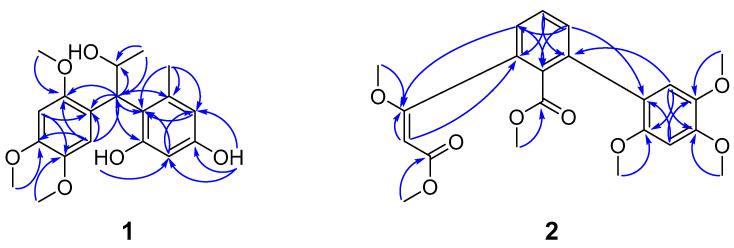 Figure 1
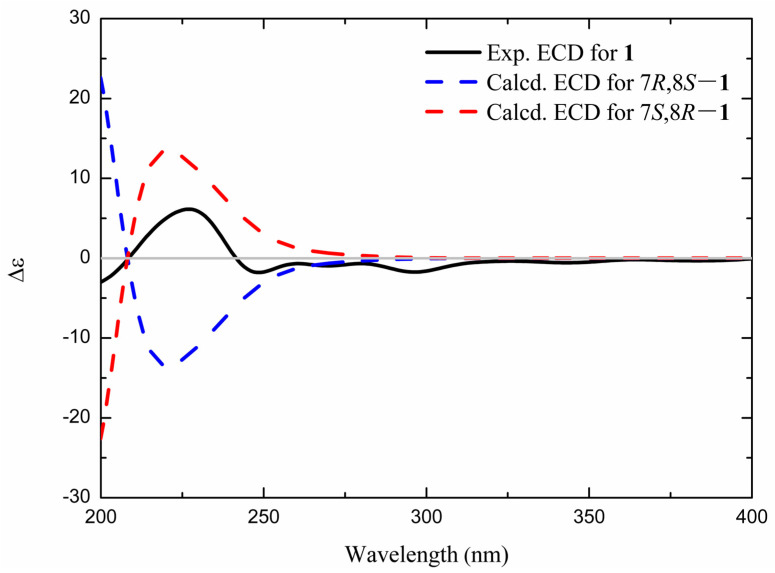 Figure 2
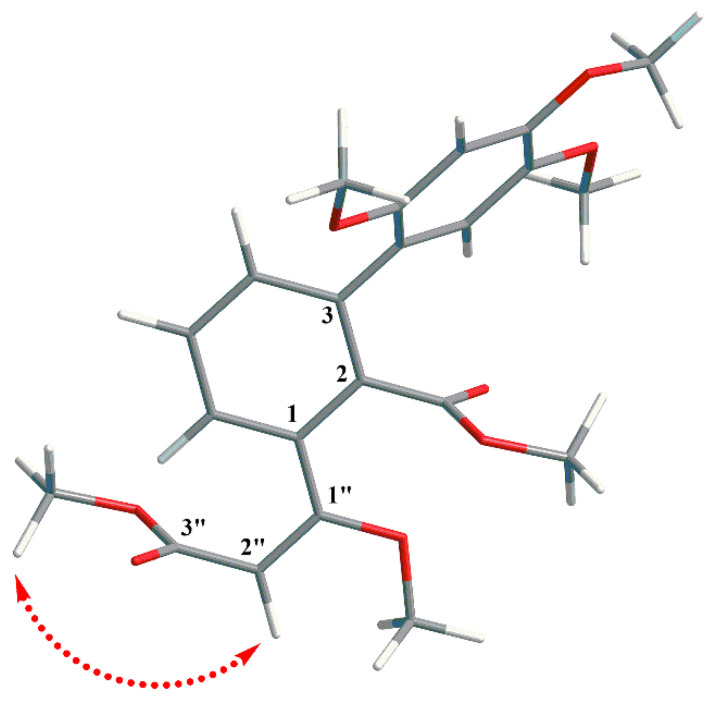 Figure 3
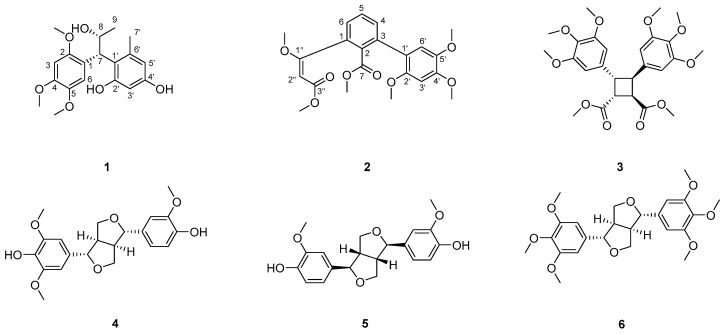 Figure 4
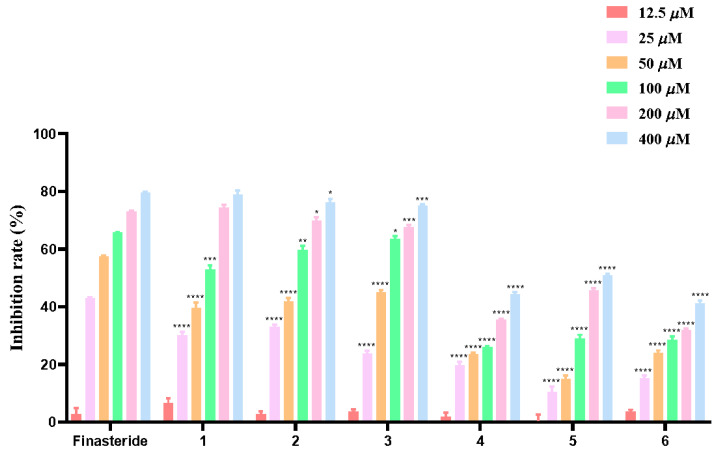 Figure 5
- —Dalian Science and Technology Talent Innovation Support Policy Project Plan
- —Dalian Science and Technology Innovation Fund Project
- —Dalian University Research Platform Project
- —Key project at central government level: The ability establishment of sustainable use for valuable Chinese medicine resources
- —Liaoning Province Science and Technology Plan Joint Program
- —Liaoning Provincial Department of Education Service Local Project
Peer Reviews
No public reviews on file for this paper yet. If you reviewed it on a platform where reviews are public (OpenReview, ICLR, NeurIPS, ICML), you can paste yours below so the community can read it here.
Videos
No videos yet. Explain this paper in a talk, walkthrough, or lecture? Add one.
Taxonomy
TopicsPiperaceae Chemical and Biological Studies · Essential Oils and Antimicrobial Activity · Biochemical Analysis and Sensing Techniques
1. Introduction
Benign prostate hyperplasia (BPH) is a common urinary disorder in men, typically presenting with symptoms such as prostate enlargement, bladder outlet obstruction, lower urinary tract symptoms, and dysuria [1]. There are many drugs that can be used to treat BPH [2], such as 5α-reductase inhibitors and α-blockers; however, these drugs have many side effects, such as headaches and weakness [3], so it is crucial to look for drugs with lower side effects from natural plants.
Peperomia ruiz & pav. is one of the largest genera of angiosperms, with approximately 1600 species [4], usually consisting of perennial herbaceous plants with a pantropical distribution of species, with maximum biodiversity in the neotropics [5]. Previous studies on peperomia genus resulted in the isolation of different types of chemical constituents, such as lignans [6,7], polyketides [8], benzopyranones [9], benzopyrans [10], benzoquinones [11], and phenylpropanoids [12], which have a variety of biological activities, including antimicrobial [13], anti-inflammatory [14], and antitumor [15,16].
Lignans are widely found in plants of the Peperomia ruiz & pav. and have a variety of biological activities, such as anti-prostate cancer [17], antitumor [18], anti-inflammatory [19], anti-trypanosomia [20], and other activities. Lignans have previously been identified from the Peperomia heyneana Miq. of this genus and anti-HIV activity of the compounds has been evaluated [21], but no studies have been done related to BPH disease. Therefore, we conducted phytochemical studies and studied the activity of the plant against BPH using the MTT (3-(4,5-dimethylthiazol-2-yl)-2,5-diphenyltetrazolium bromide) assay, as a result, six lignans were obtained, several of which showed good biological activity against BPH diseases.
2. Results and Discussion
Peperomianan A (1), brown oil, [α]20 D −10.0 (c 0.1, MeOH), has a molecular formula of C_19_H_24_O_6_ (8 degrees of unsaturation) based on its HRESIMS (high-resolution electrospray ionization mass spectroscopy) data ([M + Na]^+^ at m/z 371.1466, calcd for C_19_H_24_O_6_Na, 371.1471). The ^1^H NMR spectrum and HSQC (heteronuclear single quantum correlation) NMR spectroscopic data (Table 1) suggested the presence of a 1,2,4,5-tetrasubstituted benzene ring at δH 6.63 (1H, s, H-3), 6.94 (1H, s, H-6), a 1,2,4,6-tetrasubstituted benzene ring at δH 6.09 (1H, br d, J = 2.5 Hz, H-3′), 6.04 (1H, br d, J = 2.5 Hz, H-5′), three hydroxyl protons at δH 10.25 (1H, s, 2′-OH), 8.90 (1H, br s, 4′-OH), 5.86 (1H, br s, 8-OH), three methoxy groups at δH 3.54 (3H, s, 5-OCH_3_), 3.75 (3H, s, 4-OCH_3_), 3.78 (3H, s, 2-OCH_3_), two methyl groups at δH 1.03 (3H, d, J = 6.0 Hz, H-9), 2.06 (3H, s, H-7′) as well as two methines at δH 4.39 (1H, d, J = 5.0 Hz, H-7), 4.43 (1H, m, H-8). The ^13^C NMR of 1 (Table 1) displayed 19 carbon signals corresponding to twelve aromatic carbons (δC 156.8, 155.9, 150.8, 147.8, 142.1, 139.2, 122.2, 116.5, 115.8, 109.0, 101.9, 98.1), two methine carbons (δC 67.5 and 44.4), two methyl carbons (δC 22.0 and 21.0) and three methoxy carbons (δC 56.5, 56.3 and 55.8).
The HMBCs (heteronuclear multiple bond correlations) (Figure 1) of H-7/C-1, C-2, C-8, C-1′, C-2′ and C-6′, H-9/C-7 and C-8 indicated a 1,2,4,5-tetrasubstituted benzene ring shared a common atom at C-7 (δC 44.4) with the 1,2,4,6-tetrasubstituted benzene ring. The presence of propan-2-ol moiety was supported by the HMBCs of H-9/C-7 and C-8. The methyl group was located at C-6′ on the basis of the correlations of H-7′/C-1′, C-5′, and C-6′. The correlations from the methoxy protons (δH 3.78) to C-2, the methoxy protons (δH 3.75) to C-4 along with the methoxy protons (δH 3.54) to C-5 demonstrated a 2,4,5-trimethoxyphenyl moiety. The 6-methylbenzene-2,4-diol moiety was unambiguously confirmed by the cross-peaks of hydroxyl protons (δH 10.25)/C-3′, δH 8.90/C-3′, C-4′ and C-5′. The relative configurations of 1 can be demonstrated by the small coupling constant of JH-7, H-8 = 5.0 Hz.
The absolute configuration of 1 was determined by comparing the experimental ECD (electronic circular dichroism) spectrum with those predicted from quantum mechanical TDDFT (time-dependent density functional theory) calculations. As shown in Figure 2, the calculated ECD of 7S, 8R-1 matched with the experimental ECD of 1. Thus, 1 was assigned as peperomianan A.
Peperomianan B (2) was isolated as a yellow-green solid and its molecular formula of C_22_H_24_O_8_ was analyzed by the HR-ESI-MS at m/z 439.1361 [M + Na]^+^ (Calcd. for C_22_H_24_O_8_Na, 439.1369), accounting for eleven double bond equivalents (DBEs). The ^1^H NMR spectrum and HSQC NMR spectroscopic data (Table 1) suggested the presence of a 1,2,3-trisubstituted benzene ring at δH 7.39 (1H, d, J = 7.7 Hz, H-4), 7.48 (1H, t, J = 7.7 Hz, H-5), 7.29 (1H, d, J = 7.7 Hz, H-6), a 1,2,4,5-tetrasubstituted benzene ring at δH 6.70 (1H, s, H-3′), 6.73 (1H, s, H-6′), an olefinic proton at δH 5.36 (1H, s, H-2″) together with six methoxy groups at δH 3.71 (3H, s, 1″-OCH_3_), 3.48 (3H, s, 3″-OCH_3_), 3.51 (3H, s, 7-OCH_3_), 3.83 (3H, s, 2′-OCH_3_), 3.63 (3H, s, 4′-OCH_3_), and 3.71 (3H, s, 5′-OCH_3_).
Analysis of the ^13^C NMR data (Table 1) revealed 22 carbon signals including a 1,2,3-trisubstituted aromatic moiety (δC 137.0, 134.2, 132.2, 132.1, 129.0, 128.5), a 1,2,4,5-tetrasubstituted aromatic moiety (δC 150.0, 149.2, 142.5, 119.6, 114.7, 97.8), two carbonyl carbons (δC 167.6, 165.9), two olefinic carbons (δC 170.6, 92.5) as well as six methoxy carbons (δC 56.9, 56.2, 55.8, 55.7, 51.5, 50.5).
The 1,2,3-trisubstituted benzene ring was bound to a methyl-3-methoxybut-2-enoate moiety at C-1″, which was supported by the HMBCs (Figure 1) of H-6/C-1″, H-2″/C-1″ and C-1, the methoxy protons (δH 3.71)/C-1″, and the methoxy protons (δH 3.48)/C-3″. The correlations of H-4/C-1′ and H-6′/C-3 determined the C-3 of the 1,2,3-trisubstituted benzene ring was linked to the C-1′ of the 1,2,4,5-tetrasubstituted benzene ring. In addition, the correlations of methoxy protons (δH 3.51)/C-7 and the methoxy protons (δH 3.71)/C-5′, δH 3.63/C-4′, δH 3.83/C-2′ illustrated the location of each methoxy group. The NOESY (nuclear overhauser effect spectroscopy) correlations (Figure 3) were carried out to determine the configuration of a double bond between C-1″ and C-2″, which was confirmed to be E-configuration based on the correlation of H-2″ with δH 3.71 (1″-OCH_3_). Consequently, the aforementioned analysis allowed the determination of the gross structure of 2, which was given the trivial name peperomianan B.
In addition, four known lignans (3–6) were isolated from P. heyneana and defined as 1,2-cyclobutanedicarboxylic acid (3) [22], (+)-medioresinol (4) [23], (+)-pinoresinol (5) [24], and (+)-yangambin (6) [25], respectively (Figure 4).
All the isolates were evaluated for their effects on BPH-1 cells by MTT assay. A positive drug, finasteride, which is very effective against BPH disease, was used as a positive control. As shown in Figure 5, the inhibitory effects of tested compounds on BPH-1 cell proliferation were dose-dependent within a certain concentration range.
The IC_50_ values of the test compounds were calculated. The results showed that the IC_50_ values of compounds 1, 2, and 3 were close to that of the positive drug-finasteride (IC_50_ = 62.96 μM), being 82.10, 82.40, and 85.36 μM, respectively (Table 2), indicating that among the test compounds, they exhibit better effects on BPH-1 cells. Among the tested compounds, 1 showed better inhibitory effects in vitro at the concentration of 12.5 μM, while the positive control finasteride showed an inhibition rate of 2.63% at the same concentration.
3. Materials and Methods
3.1. General Experimental Procedures
The Fresh whole herb of Peperomia heyneana Miq. was freeze-dried in a freeze dryer (Lyovapor L-200, BUCHI, Flawil, Switzerland). The organic solvents were distilled prior to the separation process. The NMR spectra were recorded by Bruker Avance II 500M nuclear magnetic resonance spectrometers (Bruker AvanceII, Woltersbach, Berlin, Germany). HRESIMS were acquired on an AB Sciex QTOF 4600 mass spectrometer (AB Sciex, Boston, MA, USA) in positive-ion mode. Optical rotation values were measured on an Autopol IV digital polarimeter (Autopol IV, Rudolph Research Analytica, Hackettstown, NJ, USA). ECD spectra were conducted on a Bio-Logic MOS 450 detector (Bio-Logic, Grenoble, France). HPLC was performed on a system composed of Agilent 1260 (XB C18 10 mm × 250 mm, 5 μM) (Agilent Technologies Inc., Santa Clara, CA, USA) and Shimadzu LC-20AR (XB C18 10 mm × 250 mm, 5 μm) (Shimadzu, Kyoto, Japan). Gel LH-20 (Sephadex, Sweden) and silica gel (Qingdao Ocean Chemical Co., Ltd., Qingdao, China) were used for column chromatography (CC). TLC was performed on precoated silica gel GF254 (Qingdao Marine Chemistry Co., Ltd., Qingdao, China) plates. MTT assays were performed on a Varioskan Flash Multimode Reader (Thermo Scientific Co., Waltham, MA, USA). BPH-1 cell lines were obtained from Applied Biological Materials Inc. (Zhenjiang, China). Fetal bovine serum (FBS) was purchased from Gibco Company (Grand Island, NY, USA).
3.2. Plant Material
The whole herb of Peperomia heyneana Miq. was collected from Mengzi City (Yunnan Province) in China in November 2022 and authenticated by Professor Sheng-Ji Pei (Kunming Institute of Botany, Chinese Academy of Sciences, China). A voucher specimen (No. 20221128) of the plant is stored at the School of Life and Health, Dalian University.
3.3. Extraction and Isolation
The fresh whole plants of Peperomia heyneana Miq. (4.0 kg) were dried using a freeze dryer and ground to powder form (456.4 g). The powdered material was extracted with 95% (v/v) industrial EtOH (ethyl alcohol) three times (3 h/time), and the ethanol liquid (1 kg) was collected. After filtering out the residue, the extract was combined and concentrated under reduced pressure to get the EtOH extract (96 g). The EtOH extract was suspended in hot water and extracted with PE (petroleum ether), EtOAc (ethyl acetate), and n-BuOH (n-Butanol) six times to obtain PE extract (15.4 g), EtOAc extract (11.4 g), and n-BuOH extract (34.4 g), respectively. The EtOAc extract was separated by silica gel CC (CH_2_Cl_2_/MeOH, 100:0–0:100, v/v) to obtain fractions 1–9, according to the results of TLC, and combined with the same fractions. Fraction 3 was prepared by semi-preparative HPLC (MeOH/H_2_O, 35:65, flow rate 3.0 mL/min, detection wavelength UV at 210 nm) to yield compound 1 (1.2 mg, tR = 20 min). Fractions 1 and 2 were prepared by semi-preparative HPLC (MeOH/H_2_O, 45:55, flow rate 3.0 mL/min, detection wavelength UV at 210 nm) to afford compounds 4 (5.4 mg, tR = 30 min) and 5 (6.0 mg, tR = 28 min). Fraction 5 was prepared by semi-preparative HPLC (CH_3_CN/H_2_O, 48:52, flow rate 3.0 mL/min, detection wavelength UV at 210 nm) to yield compounds 2 (1.4 mg, tR = 25 min) and 6 (1.5 mg, tR = 35 min). Fraction 6 was separated by semi-preparative HPLC (CH_3_CN/H_2_O, 45:55, flow rate 3.0 mL/min, detection wavelength UV at 210 nm) to acquire compound 3 (1.2 mg, tR = 15 min).
Peperomianan A (1): Brown oil, [α]20 D −10.0 (c 0.1, MeOH); UV (MeOH) λmax (log ε) 209.0 (2.59) nm; ECD (MeOH) λmax (Δε) 194 (−3.59), 227 (+6.14) nm. ^1^H and ^13^C NMR data see Table 1; HRESIMS: m/z 371.1466 [M + Na]^+^ (calcd for C_19_H_24_O_6_Na, 371.1471).
Peperomianan B (2): Yellow-green solid. [α]20 D −2.0 (c 0.1, MeOH); UV (MeOH) λmax (log ε) 215.0 (3.53) nm; ^1^H and ^13^C NMR data see Table 1; HRESIMS: m/z 439.1361 [M + Na]^+^ (calcd for C_22_H_24_O_8_Na, 439.1369).
3.4. ECD Calculations
Conformational analysis of compound 1 was carried out with the MMFF94 force field in CONFLEX software (version: CONFLEX 9). All the conformers obtained were screened based on the energy of optimized structures at the B3LYP/6-31G(d) level with an energy window of 10 kcal/mol on the Gaussian 09 program package [26]. Then, the theoretical ECD calculations of the conformations of compound 1 were performed by the TDDFT method at the B3LYP/6-311++G (2d, p) level with the CPCM (conductor-like polarizable continuum model) model in methanol solution. Finally, the calculated ECD curve was generated by SpecDis 1.51 [27].
3.5. Cell Culture
BPH-1 cell lines were obtained from Applied Biological Materials Inc. (Zhenjiang, China) and cultured in RPMI-1640 medium (Hyclone, Logan, UT, USA), which was supplemented with 10% fetal bovine serum (FBS, Gibco, Gaithersburg, MD, USA) and 1% bispecific antibodies (Gibco, Gaithersburg, UD, USA) in a humidified atmosphere containing 5% CO_2_ at 37 °C. Logarithmically growing cells were used in all the experiments.
3.6. Cytotoxicity Assay and Statistical Analysis
The effect of all isolated compounds against BPH-1 cells was examined following the reported procedures [28]. In brief, antiproliferative of the compounds were investigated by MTT(3-(4,5-dimethylthiazol-2-yl)-2,5-diphenyltetrazolium bromide)-based cell viability assays. Obtain well-grown BPH-1 cells in the logarithmic phase from the cell culture incubator, discard the old culture medium in the culture flask and wash with PBS (2 mL), discard, add trypsin (1.5 mL) to digest for 2 min, add RPMI-1640 complete medium (3 mL, 10% fetal bovine serum, 1% bispecific antibody) and centrifuge to separate, seed the cells into a 96-well plate (NEST, Wuxi, China), control the number of cells at 5 × 10^3^ per well, 100 μL culture medium per well, After plating the cells, they are placed in the incubator and cultured for 24 h until the cells are fully adherent. Prepare a certain amount of compounds 1, 2, and positive drug (Finasteride), based on 20 μL DMSO stock solutions, the compounds were serially diluted in standard growth media to reach final concentrations of 400 μM, 200 μM, 100 μM, 50 μM, 25 μM, and 12.5 μM for cell treatment, data were determined in setting up 6 concentration gradients and 6 replicates, continue to culture for 24 h after sequential dosing.
For the MTT assay, add 20 μL of MTT solution (5 mg/mL) to each well in the dark, and continue to incubate for 4 h, after discarding the MTT solution, DMSO was added in order to dissolve the formed formazan, followed by measuring formazan absorbance with a microplate reader (Varioskan LUX, Thermo Fisher Scientific, Bend, OR, USA) at 490 nm, then calculate the growth inhibition rate and IC_50_ of the cells according to the obtained absorbance (OD). The results are shown as a percentage of the control values obtained from untreated cultures, i.e., cell viability in percent.
All results and data were confirmed in at least three separate experiments. Data are expressed as means ± SD. The level of statistical significance was determined by analysis of one-way ANOVA using GraphPad Prism 6 from GraphPad Software (San Diego, CA, USA). p < 0.05 was considered statistically significant.
4. Conclusions
In conclusion, six lignans including two undescribed ones were isolated from aerial parts of P. heyneana. Their structures were determined by extensive NMR and HRESIMS analyses. The absolute configuration of 1 was defined with the help of the comparison of the experimental and calculated ECD spectra. Furthermore, the anti-BPH effects of all isolates were evaluated in vitro by MTT assay. As a result, the inhibitory effect of all tested compounds increases in a dose-dependent manner. In addition, the inhibition rates of compounds 1, 3, and 6 were higher than that of the positive control at the concentration of 12.5 μM. The IC_50_ values of compounds 1, 2, and 3 were 82.10, 82.40, and 85.36 μM, respectively, which were relatively close to that of the positive drug finasteride (IC_50_ = 62.96 μM), compared with the other three compounds, they showed better inhibitory effects on BPH-1 cells. The study provided new insight into the development and utilization of P. heyneana in anti-BPH medicinal products.
The reference list from the paper itself. Each links out to its DOI / PubMed record.
- 1Zabbarova I.V. Ikeda Y. Kozlowski M.G. Tyagi P. Birder L.A. Chakrabarty B. Perera S.K. Dhir R. Straub A.C. Sandner P. Benign prostatic hyperplasia/obstruction ameliorated using a soluble guanylate cyclase activator J. Pathol.202225644245410.1002/path.585934936088 PMC 8930559 · doi ↗ · pubmed ↗
- 2Stephen S.C. John M.F. Medical treatment of benign prostatic hyperplasia Postgrad Med. J.20078373781730820810.1136/pgmj.2006.050724 PMC 2805943 · doi ↗ · pubmed ↗
- 3Wang X.P. Network meta-analysis of the efficacy of α adrenergic receptor antagonists in the treatment of BPH drugs Chin. J. Androl.20182424725330161312 · pubmed ↗
- 4Infante G.E.P. Samain M.S. Castillo J.A.A. Collazos L.E.A.A. Species of Peperomia (Piperaceae) from the Saña River Valley, Peru Phyto Keys 202322514010.3897/phytokeys.225.9927737252325 PMC 10209506 · doi ↗ · pubmed ↗
- 5Shu C.H.J. Peperomia (Ruiz & Pavon, Fl. Peruv. Prodr. 8: 8. 1794)Flora China 19994129131
- 6Govindachari T.R. Krishna Kumari G.N. Partho P.D. Two secolignans from Peperomia dindigulensis Phytochemistry 1998492129213110.1016/S 0031-9422(98)00393-8 · doi ↗
- 7Cheng M.J. Lee S.J. Chang Y.Y. Wu S.H. Tsai I.L. Jayaprakasam B. Chen I.S. Chemical and cytotoxic constituents from Peperomia sui Phytochemistry 20036360360810.1016/S 0031-9422(03)00183-312809722 · doi ↗ · pubmed ↗
- 8Seeram N.P. Lewis A.W. Jacobs H. Nair M.G. Mc Lean S. Reynolds W.F. Proctoriones A-C: 2-acylcyclohexane-1,3-dione derivatives from Peperomia proctorii J. Nat. Prod.20006339940210.1021/np 990447 p 10757730 · doi ↗ · pubmed ↗