Effects of Cu Substituting Mo in Sr2Fe1.5Mo0.5O6−δ Symmetrical Electrodes for CO2 Electrolysis in Solid Oxide Electrolysis Cells
Wanting Tan, Pengzhan Hu, Tianxiang Feng, Siliang Zhao, Shuai Wang, Hui Song, Zhaoyu Qi, Wenjie Li

TL;DR
This study improves CO2 electrolysis performance by substituting Cu for Mo in a perovskite material used in solid oxide electrolysis cells.
Contribution
Cu substitution enhances electrochemical performance by increasing oxygen vacancies and reducing polarization resistance in CO2 electrolysis.
Findings
Cu doping increases oxygen vacancies and lowers polarization resistance in the SFMC0.1 electrode.
SFMC0.1 achieved a current density of 202.20 mA cm−2 at 800 °C and 1.8 V, outperforming SFM electrodes.
Cu substitution promotes CO2 adsorption, dissociation, and oxygen ion migration, confirmed by theory calculations.
Abstract
Solid oxide electrolysis cells (SOECs) are considered one of the most promising technologies for carbon neutralization, as they can efficiently convert CO2 into CO fuel. Sr2Fe1.5Mo0.5O6−δ (SFM) double perovskite is a potential cathode material, but its catalytic activity for CO2 reduction needs further improvement. In this study, Cu ions were introduced to partially replace Mo ions in SFM to adjust the electrochemical performance of the cathode, and the role of the Cu atom was revealed. The results show Cu substitution induced lattice expansion and restrained impurity in the electrode. The particle size of the Sr2Fe1.5Mo0.4Cu0.1O6−δ (SFMC0.1) electrode was about 500 nm, and the crystallite size obtained from the Williamson–Hall plot was 75 nm. Moreover, Cu doping increased the concentration of oxygen vacancies, creating abundant electrochemical active sites, and led to a reduction in…
Genes, proteins, chemicals, diseases, species, mutations and cell lines named across the full text — each resolved to its canonical identifier and authoritative record.
Click any figure to enlarge with its caption.
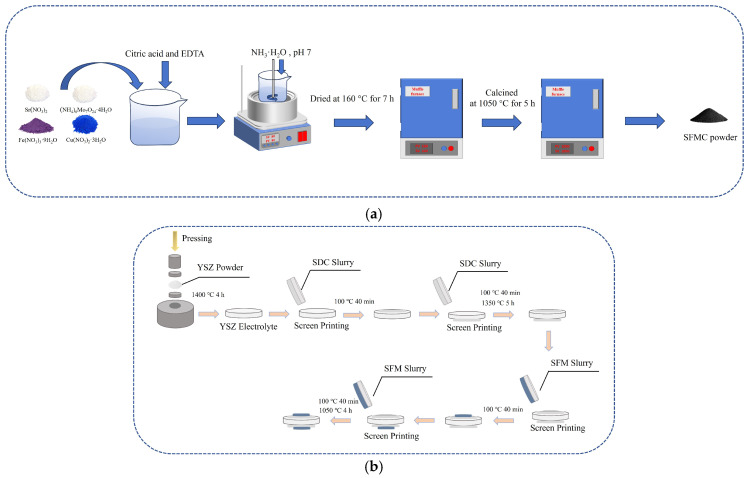 Figure 1
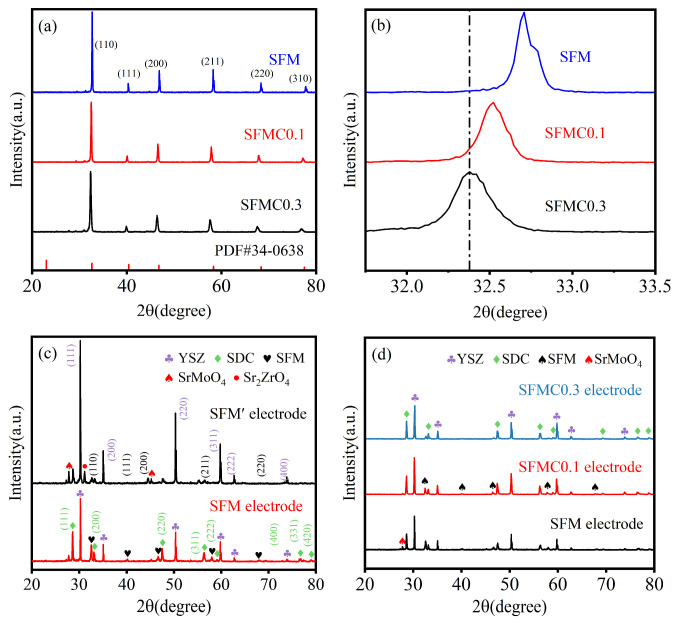 Figure 2
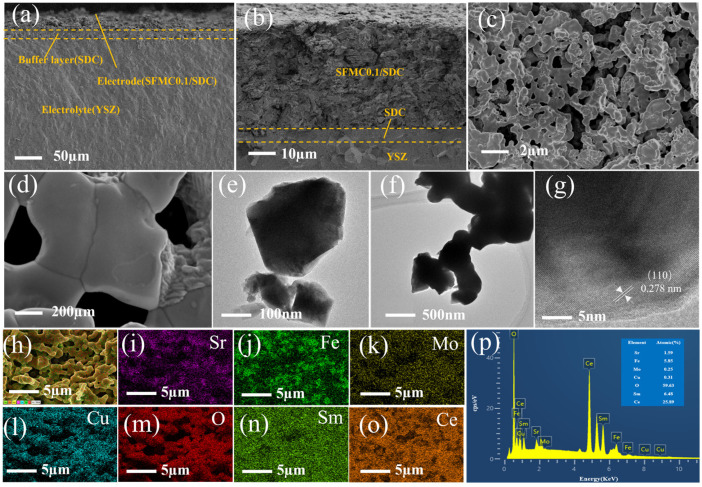 Figure 3
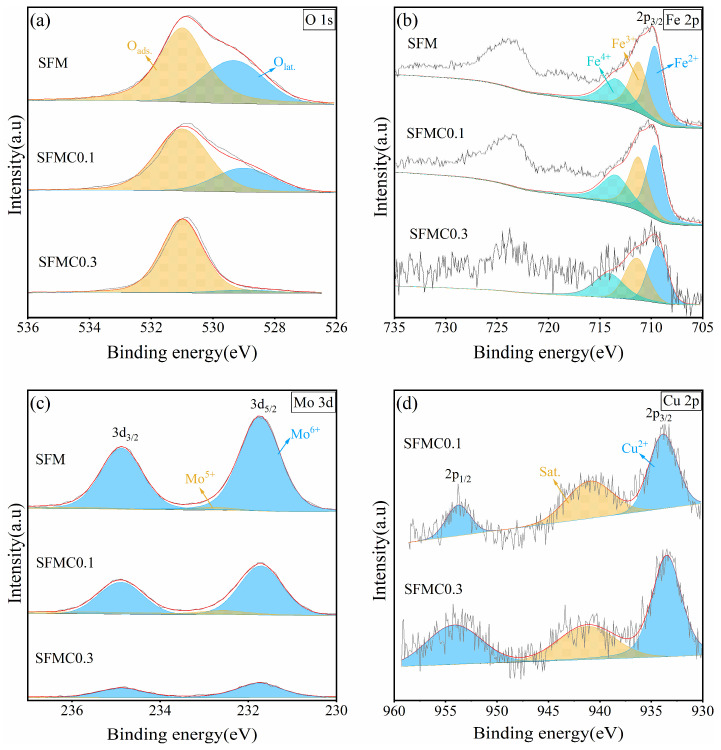 Figure 4
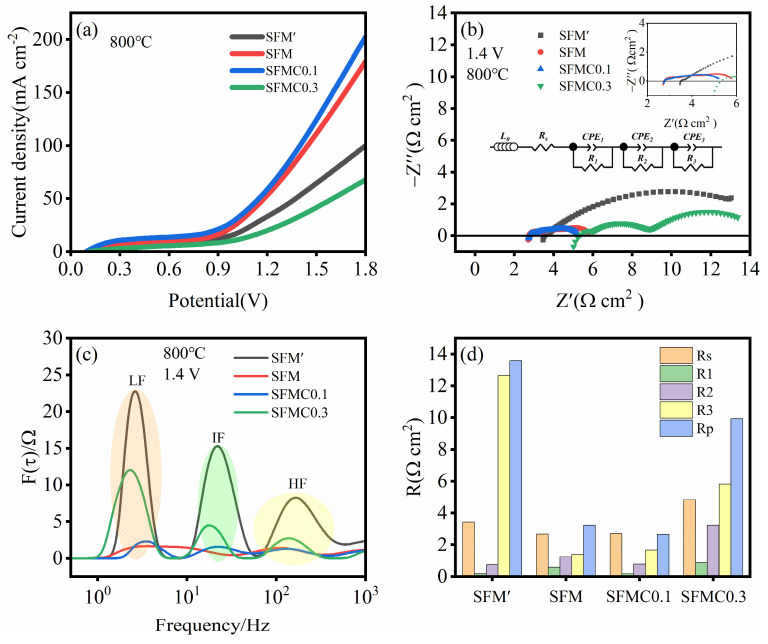 Figure 5
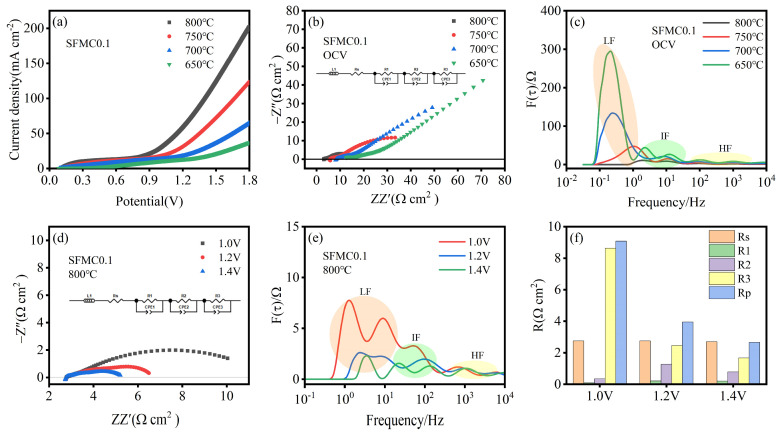 Figure 6
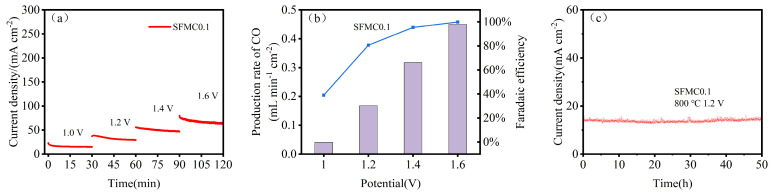 Figure 7
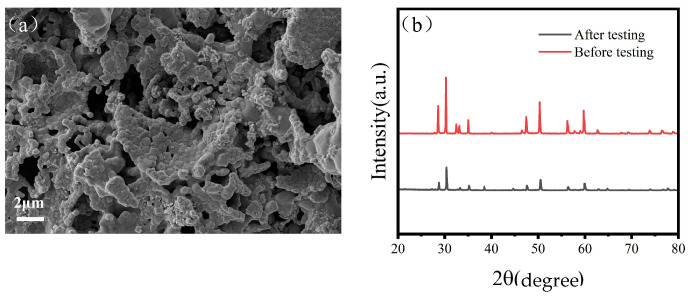 Figure 8
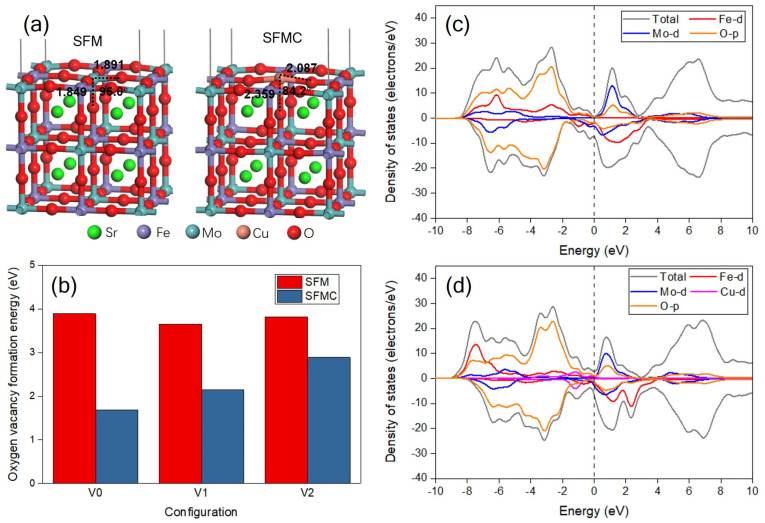 Figure 9
Peer Reviews
No public reviews on file for this paper yet. If you reviewed it on a platform where reviews are public (OpenReview, ICLR, NeurIPS, ICML), you can paste yours below so the community can read it here.
Videos
No videos yet. Explain this paper in a talk, walkthrough, or lecture? Add one.
Taxonomy
TopicsAdvancements in Solid Oxide Fuel Cells · Catalysis and Oxidation Reactions · CO2 Reduction Techniques and Catalysts