6-Chlorocoumarin Conjugates with Nucleobases and Nucleosides as Potent Anti-Hepatitis C Virus Agents
Shu-Yu Lin, Wen-Chieh Huang, Shwu-Chen Tsay, Johan Neyts, Pieter Leyssen, Chun-Cheng Lin, Kuo Chu Hwang, Jia-Cherng Horng, Jih Ru Hwu

TL;DR
Scientists created new compounds by linking 6-chlorocoumarin to nucleobases and nucleosides, which effectively inhibit hepatitis C virus replication in cells.
Contribution
The study introduces novel 6-chlorocoumarin conjugates with nucleobases and nucleosides as potent anti-HCV agents.
Findings
Three compounds showed strong inhibition of HCV replicon replication with EC50 values between 6.6 and 9.4 μM.
The compounds exhibited selectivity indexes ranging from 16 to 41.
Structure–activity relationships revealed the importance of coumarin attachment positions on purines and pyrimidines.
Abstract
On the basis of a “chemo-combination strategy”, (6-chloro)coumarin was incorporated to purines and pyrimidines, as well as their corresponding nucleosides, with a –SCH2– linker at different positions under alkaline conditions. These conjugates were found to exert an antiviral effect on the 1b subgenomic replicon replication of the hepatitis C virus (HCV) in Huh 5-2 and Huh 9-13 cells. In this compound library containing 14 new compounds, 6-[(6′-chlorocoumarin-3′-yl)methylthio]purine, 6-(6′-chlorocoumarin-3′-yl)methylthio-9-(β-D-ribofuranos-1″-yl)purine, and 2-[(6′-chlorocoumarin-3′-yl)methylthio]uracil showed great inhibitory abilities, with EC50 values between 6.6 and 9.4 μM and selectivity indexes >16–41. Moreover, the structure–activity relationship between purines and pyrimidines is elucidated, which reveals the critical factor of the attachment of the coumarin moiety at different…
Genes, proteins, chemicals, diseases, species, mutations and cell lines named across the full text — each resolved to its canonical identifier and authoritative record.
Click any figure to enlarge with its caption.
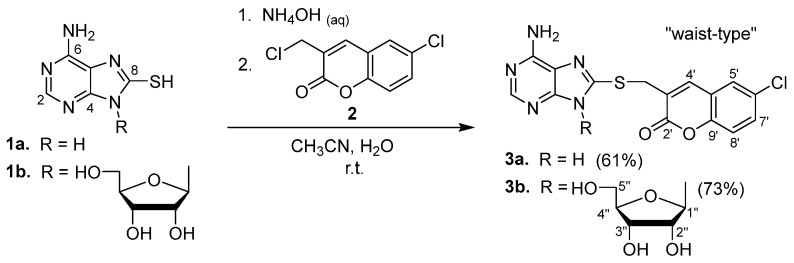 Figure 1
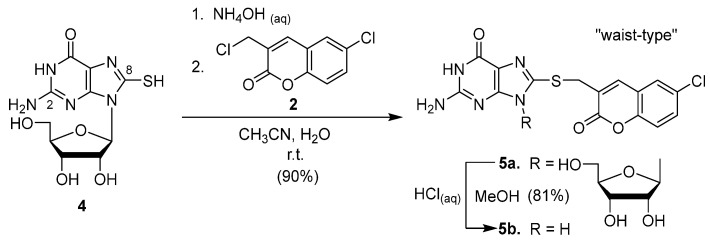 Figure 2
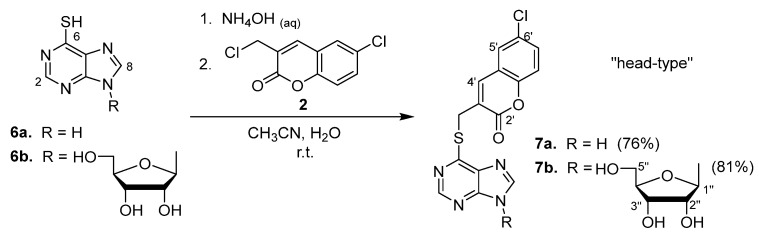 Figure 3
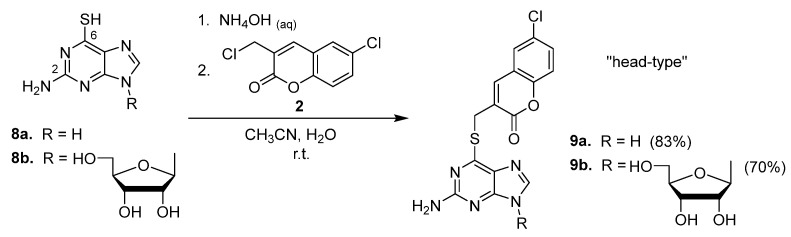 Figure 4
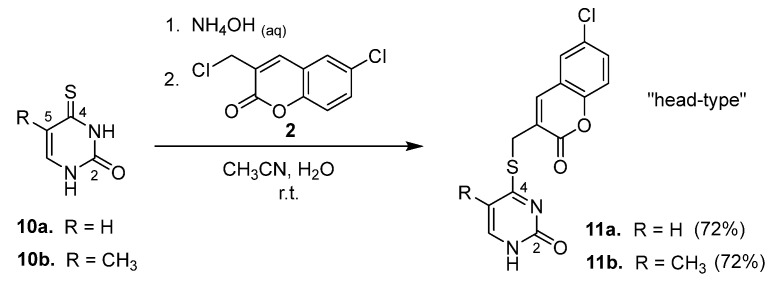 Figure 5
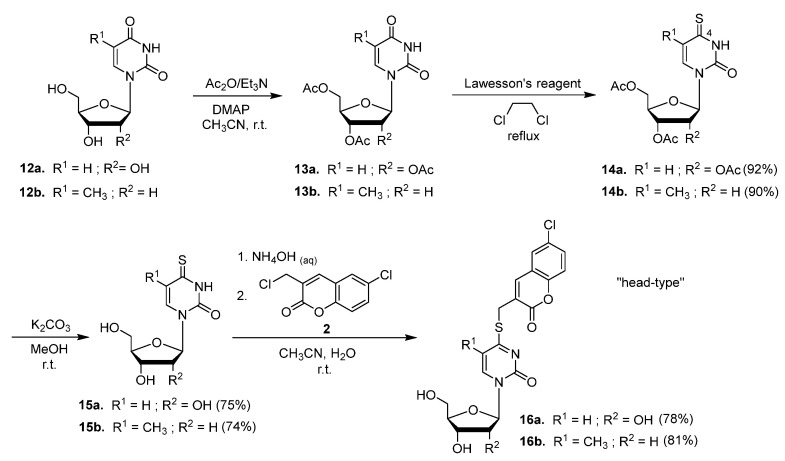 Figure 6
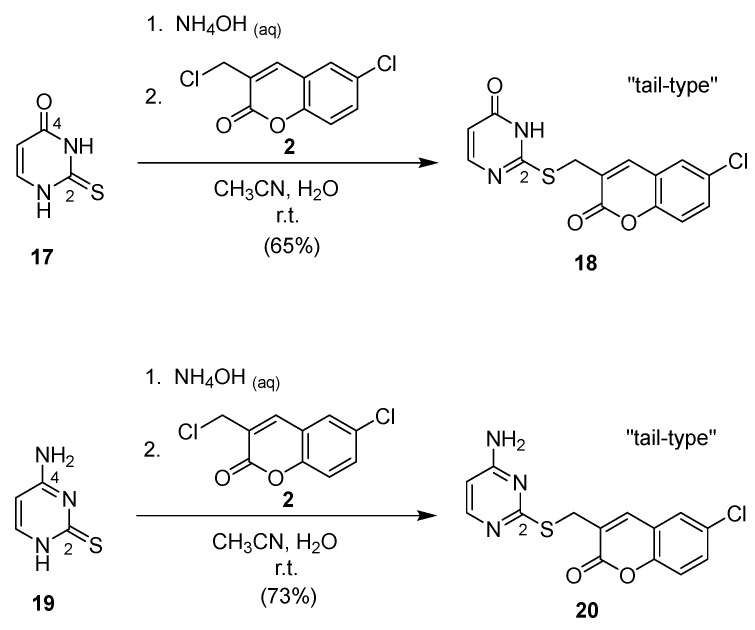 Figure 7
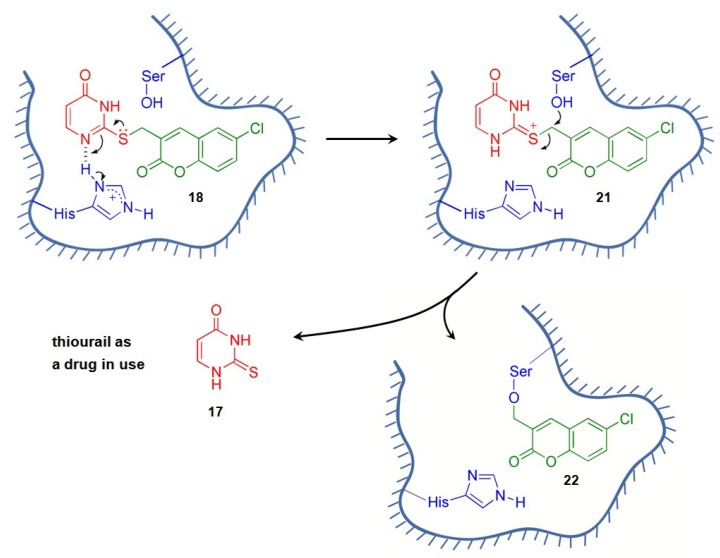 Figure 8
Peer Reviews
No public reviews on file for this paper yet. If you reviewed it on a platform where reviews are public (OpenReview, ICLR, NeurIPS, ICML), you can paste yours below so the community can read it here.
Videos
No videos yet. Explain this paper in a talk, walkthrough, or lecture? Add one.
Taxonomy
TopicsHepatitis C virus research · HIV/AIDS drug development and treatment · Biochemical and Molecular Research