Psychomotor Speed and Fall Risk in Older Adults with Sarcopenia and Frailty: A Cross-Sectional Study
Justina Kilaitė, Rūta Dadelienė, Valentina Ginevičienė, Erinija Pranckevičienė, Asta Mastavičiūtė, Ieva Eglė Jamontaitė, Alina Urnikytė, Ildus I. Ahmetov, Vidmantas Alekna

TL;DR
Slower psychomotor speed, especially reaction time, is linked to a higher risk of falls in older adults with sarcopenia and frailty, particularly in women.
Contribution
This study identifies psychomotor speed as a novel predictor of fall risk in older adults with sarcopenia and frailty.
Findings
Slower reaction time and lower movement frequency are associated with increased fall risk in sarcopenic and frail older adults.
Women with sarcopenia and frailty show stronger correlations between psychomotor speed and fall risk.
Each millisecond increase in reaction time raises fall risk by 1.5% in sarcopenic participants.
Abstract
Background and Objectives: Information on how psychomotor speed is associated with the risk of falling is scarce, even in older adults. Therefore, this study aimed to determine the relationship between falls and psychomotor speed in older adults with sarcopenia and frailty. Materials and Methods: A total of 204 subjects (aged 83 (77–87) years) participated in this study: 161 women (78.9%) and 43 men (21.1%). The history of falls was assessed by asking whether the subject had experienced a fall in the past 12 months. Psychomotor speed was evaluated by reaction time and frequency of movement. Sarcopenia was diagnosed based on the EWGSOP2 criteria. Frailty was confirmed if the participants met ≥3 criteria according to the Fried frailty criteria. The relationship between falls and psychomotor speed was measured using partial correlations. Binary logistic regression analysis was used to…
Genes, proteins, chemicals, diseases, species, mutations and cell lines named across the full text — each resolved to its canonical identifier and authoritative record.
Click any figure to enlarge with its caption.
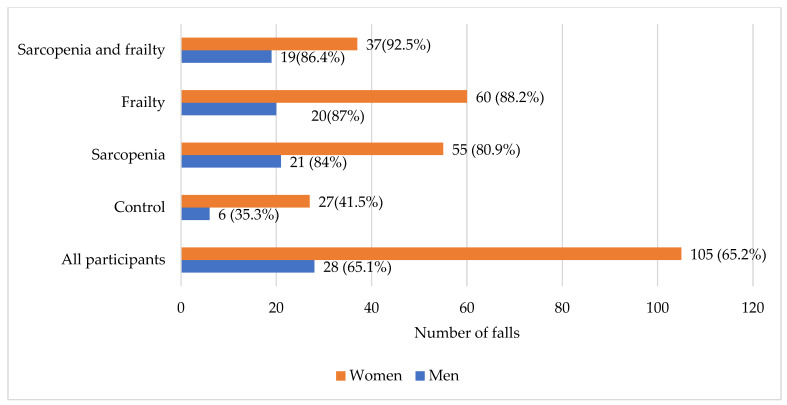 Figure 1
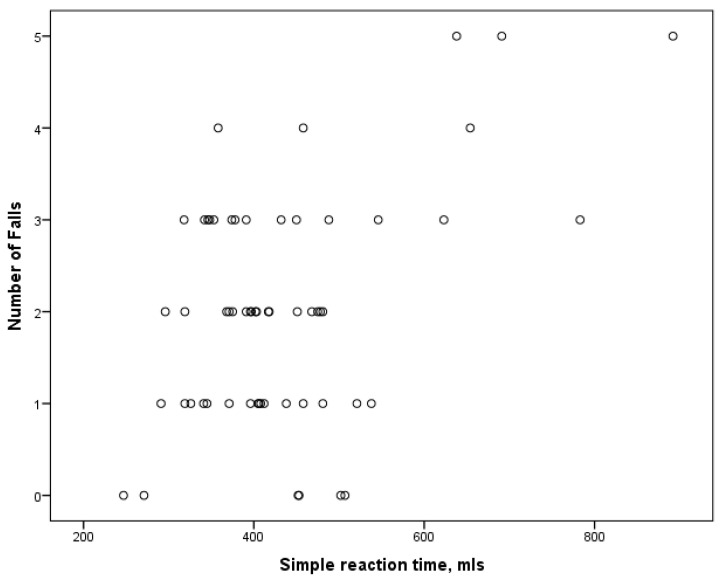 Figure 2
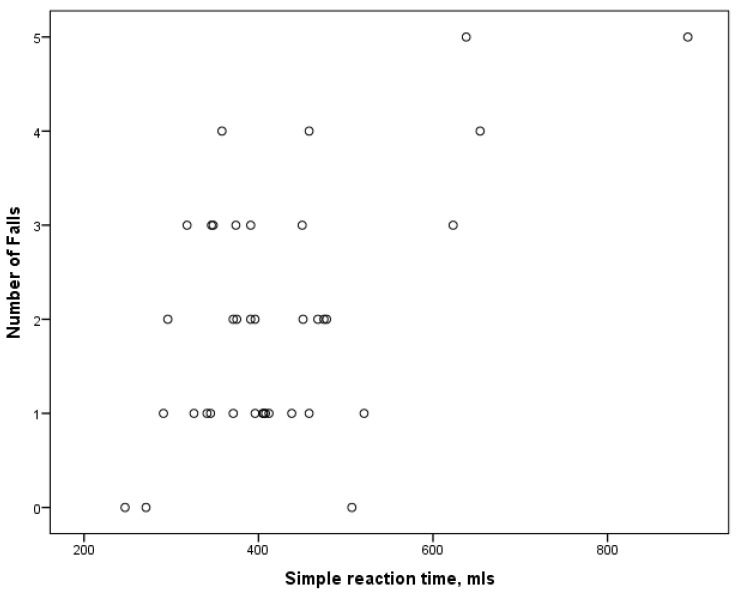 Figure 3
Peer Reviews
No public reviews on file for this paper yet. If you reviewed it on a platform where reviews are public (OpenReview, ICLR, NeurIPS, ICML), you can paste yours below so the community can read it here.
Videos
No videos yet. Explain this paper in a talk, walkthrough, or lecture? Add one.
Taxonomy
TopicsNutrition and Health in Aging · Frailty in Older Adults · Body Composition Measurement Techniques