Functional Analysis of FoCrpA in Fusarium oxysporum Causing Rice Seedling Blight
Chun Wang, Liang Wang, Xuanjie Zhao, Lei Hou, Qingran Liu, Rui Ren, Anqi Lv, Xinyang Liu, Tianliang Xiong, Peng Guo, Xiaofeng Xu, Zhe Ni, Chunlai Liu, Junhua Zhang

TL;DR
This study investigates the role of the FoCrpA gene in the rice seedling blight pathogen Fusarium oxysporum, finding that it affects stress tolerance and pathogenicity.
Contribution
The study identifies FoCrpA as a key gene involved in stress responses and pathogenicity in Fusarium oxysporum.
Findings
Knockout of FoCrpA reduced tolerance to copper, osmotic, and oxidative stress in Fusarium oxysporum.
The FoCrpA knockout mutant showed decreased pathogenicity and penetration ability.
Complementation restored wild-type characteristics, confirming FoCrpA's role in stress and pathogenicity.
Abstract
Fusarium oxysporum is one of the main pathogens causing rice seedling blight disease. Revealing its pathogenic mechanism is of great significance for formulating prevention and control strategies for rice seedling blight disease. Copper transporting P-type ATPases (Cu-ATPase) is a large class of proteins located on the plasma membrane that utilize the energy provided by ATP hydrolysis phosphorylation to transport substrates across the membrane. It plays a crucial role in signal transduction, the maintenance of cell membrane stability, and material transport. The main function of Cu-ATPase is to maintain the homeostasis of copper in cells, which is essential for the normal growth and development of organisms. This study utilized the ATMT-mediated gene knockout method to obtain the knockout mutant ∆FoCrpA and the complementation strain ∆FoCrpA-C, which are highly homologous to the P-type…
Genes, proteins, chemicals, diseases, species, mutations and cell lines named across the full text — each resolved to its canonical identifier and authoritative record.
Click any figure to enlarge with its caption.
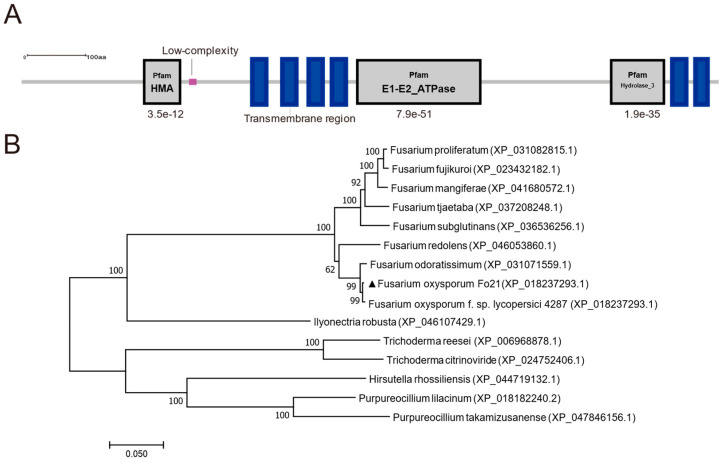 Figure 1
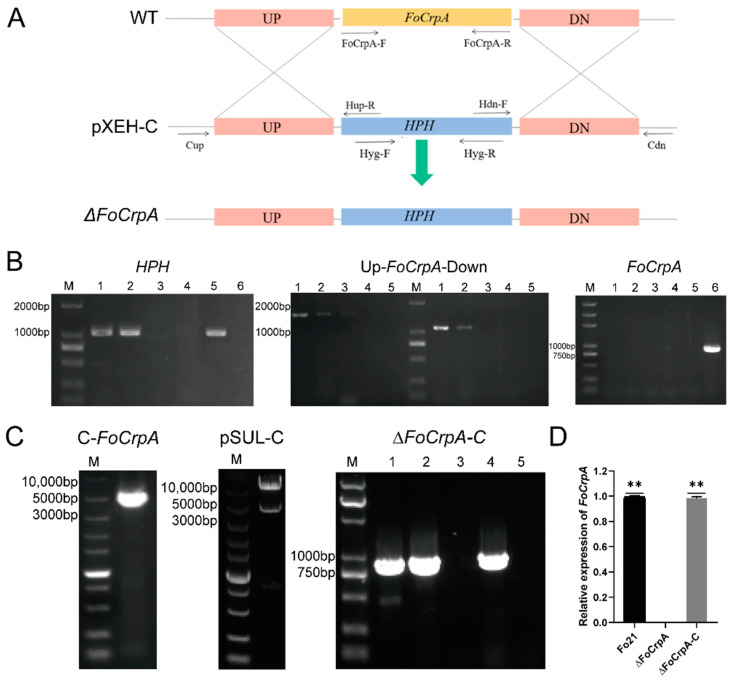 Figure 2
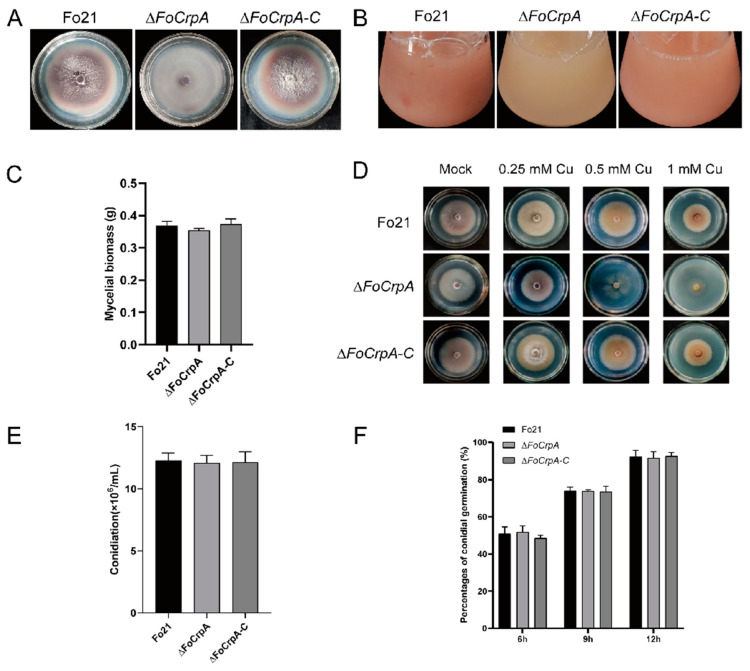 Figure 3
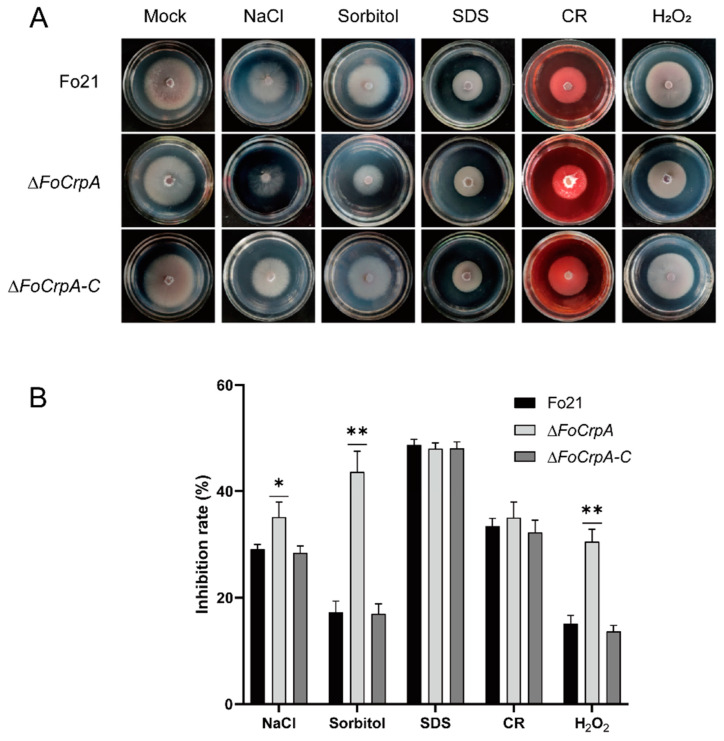 Figure 4
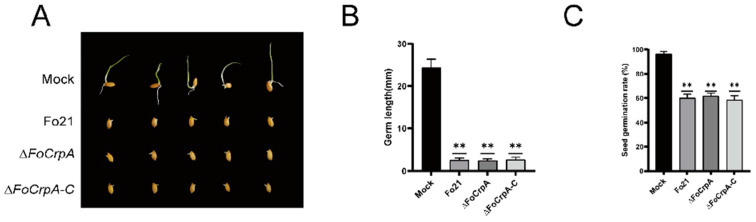 Figure 5
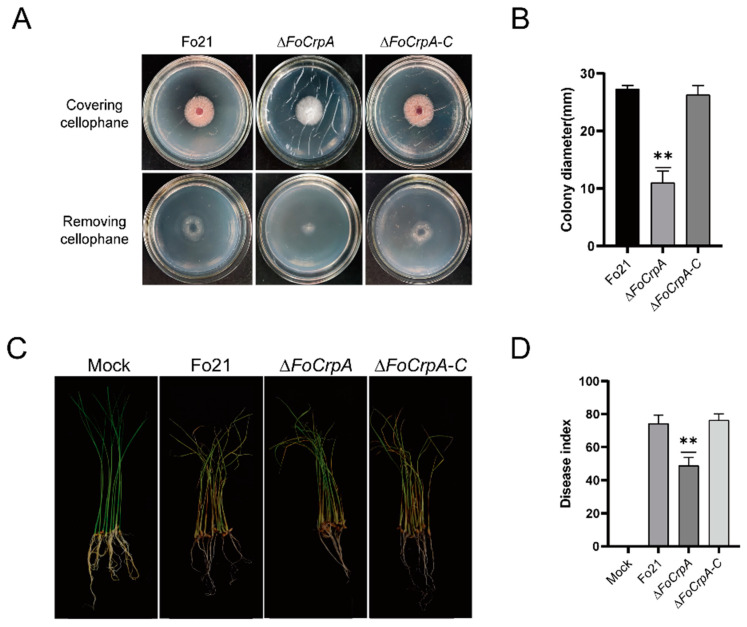 Figure 6
Peer Reviews
No public reviews on file for this paper yet. If you reviewed it on a platform where reviews are public (OpenReview, ICLR, NeurIPS, ICML), you can paste yours below so the community can read it here.
Videos
No videos yet. Explain this paper in a talk, walkthrough, or lecture? Add one.
Taxonomy
TopicsAluminum toxicity and tolerance in plants and animals · Plant Micronutrient Interactions and Effects · Plant-Microbe Interactions and Immunity