Prognostic Factors and Long-Term Survival in Kaposi’s Sarcoma Patients: Results from a 28-Year Retrospective Cohort
Emre Hafızoğlu, Murat Bardakçı, Yakup Ergun, Irfan Karahan, Derya Demirtaş Esmer, Doğan Bayram, Fahriye Tugba Kos, Efnan Algın, Oznur Bal, Dogan Uncu

TL;DR
This study examines survival rates and prognostic factors in Kaposi’s sarcoma patients over 28 years, finding that performance status is the strongest predictor of survival.
Contribution
The study provides long-term survival data and identifies performance status as the key prognostic factor in Kaposi’s sarcoma.
Findings
The 5-year and 10-year overall survival rates were 82.7% and 70.8%, respectively.
Performance status (ECOG PS) was the only significant predictor of survival in multivariate analysis.
Abstract
Background and Objectives: Kaposi’s sarcoma (KS) is a rare malignancy with limited prospective data. The aim of this study was to evaluate the clinical features and prognostic factors of KS in a cohort of patients treated at a single center. Materials and Methods: Records of 83 patients with KS were retrospectively analyzed. Patient demographics, clinical features, and treatments were analyzed. Univariate and multivariate analyses were performed to evaluate factors affecting overall survival (OS). Results: The median age of the cohort was 65 years, and 22.9% were female. The classical type of KS was the most common (84.3%), with the most common site of localization being the feet (30.2%). The 5-year and 10-year OS rates were 82.7% and 70.8%, respectively. Univariate analysis identified age, performance score (ECOG PS), lymph node involvement, and disease stage as significant prognostic…
Genes, proteins, chemicals, diseases, species, mutations and cell lines named across the full text — each resolved to its canonical identifier and authoritative record.
Click any figure to enlarge with its caption.
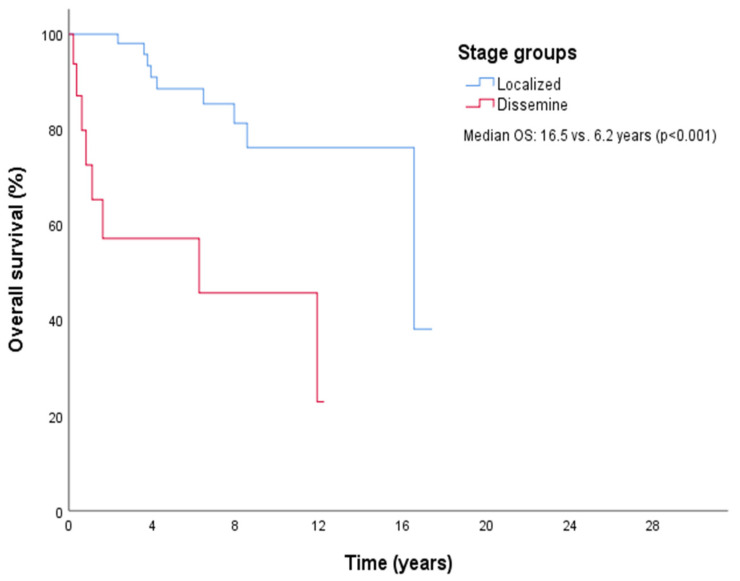 Figure 1
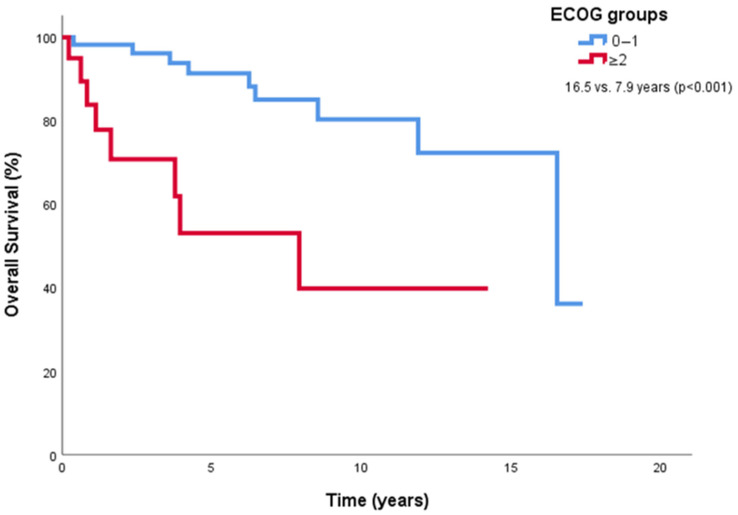 Figure 2
Peer Reviews
No public reviews on file for this paper yet. If you reviewed it on a platform where reviews are public (OpenReview, ICLR, NeurIPS, ICML), you can paste yours below so the community can read it here.
Videos
No videos yet. Explain this paper in a talk, walkthrough, or lecture? Add one.
Taxonomy
TopicsViral-associated cancers and disorders · Histiocytic Disorders and Treatments · Lymphoma Diagnosis and Treatment