The Role of Statistical Power: A Study of Relationship Between Emotional and Conduct Problems, Sociodemographic Factors, and Smoking Behaviours in Large and Small Samples of Latvian Adolescents
Viola Daniela Kiselova, Kristine Ozolina, Maksims Zolovs, Evija Nagle, Ieva Reine

TL;DR
This study explores how sample size affects the interpretation of factors influencing adolescent smoking in Latvia, emphasizing the importance of considering effect sizes alongside statistical significance.
Contribution
The study demonstrates how large sample sizes can lead to significant results for weak predictors, advocating for effect size interpretation in public health research.
Findings
Age and conduct problems consistently predict adolescent smoking across sample sizes.
Large samples yield significant results for weak predictors like family affluence.
Effect size interpretation is crucial to avoid overstating findings in large datasets.
Abstract
Background and Objectives: Adolescent smoking is influenced by sociodemographic and psychological factors, including emotional and conduct problems. Understanding how sample size impacts the interpretation of these associations is critical for improving study design and public health interventions. This study examines the relationships between smoking behaviours, sociodemographic factors, and emotional and conduct problems, focusing on how sample size affects statistical significance and effect size interpretation. Materials and Methods: Data from the Latvian Health Behaviour in School-aged Children study was analysed. Chi-square tests and logistic regression were conducted to evaluate associations between smoking behaviours, sociodemographic factors, and emotional and conduct problems. Analyses were performed on both a large general sample and ten smaller generated subsamples to…
Genes, proteins, chemicals, diseases, species, mutations and cell lines named across the full text — each resolved to its canonical identifier and authoritative record.
Click any figure to enlarge with its caption.
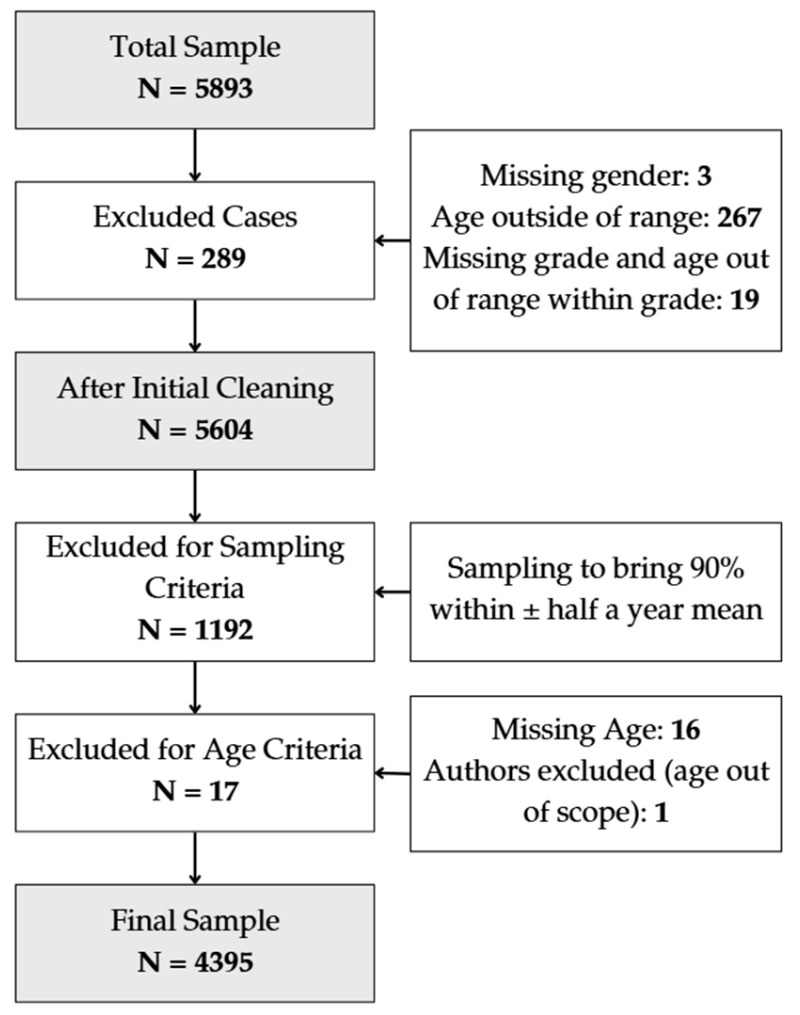 Figure 1
Peer Reviews
No public reviews on file for this paper yet. If you reviewed it on a platform where reviews are public (OpenReview, ICLR, NeurIPS, ICML), you can paste yours below so the community can read it here.
Videos
No videos yet. Explain this paper in a talk, walkthrough, or lecture? Add one.
Taxonomy
TopicsSmoking Behavior and Cessation · Behavioral Health and Interventions · School Health and Nursing Education