Variable Phenotypic Expression of PAX2 Variants in Two Lithuanian Families with Kidney Disease
Deimante Brazdziunaite, Gabija Mazur, Marius Miglinas, Algirdas Utkus

TL;DR
This study shows that PAX2 gene mutations can cause different kidney and eye problems in two Lithuanian families, highlighting the need for a multidisciplinary approach in diagnosis.
Contribution
The study demonstrates variable phenotypic expression of PAX2 variants in unrelated families, emphasizing inconsistent genotype–phenotype correlations.
Findings
Family A had chronic kidney disease and optic nerve dysplasia due to a PAX2 variant c.685C>T.
Family B showed renal hypoplasia and focal segmental glomerulosclerosis with a PAX2 variant c.250G>A.
The findings support that PAX2 variants can lead to diverse clinical manifestations within and across families.
Abstract
Background and Objectives: Pathogenic variants in the PAX2 gene have been associated with a spectrum of eye and kidney disorders, ranging from papillorenal syndrome (known as renal coloboma syndrome) to isolated nephrosis without kidney morphological anomalies (focal segmental glomerulosclerosis), inherited in an autosomal dominant manner. However, due to the growing number of reports of pathogenic variants in the PAX2 gene, it is observed that genotype–phenotype correlation is not always consistent. We present patients from two unrelated families with PAX2 pathogenic variants c.685C>T and c.250G>A, highlighting the diverse phenotypic expression of PAX2-related disorders. Materials and Methods: We analyzed clinical and genetic data from two families who were tested for genomic abnormalities using targeted next-generation sequencing and Sanger sequencing for segregation analysis.…
Genes, proteins, chemicals, diseases, species, mutations and cell lines named across the full text — each resolved to its canonical identifier and authoritative record.
Click any figure to enlarge with its caption.
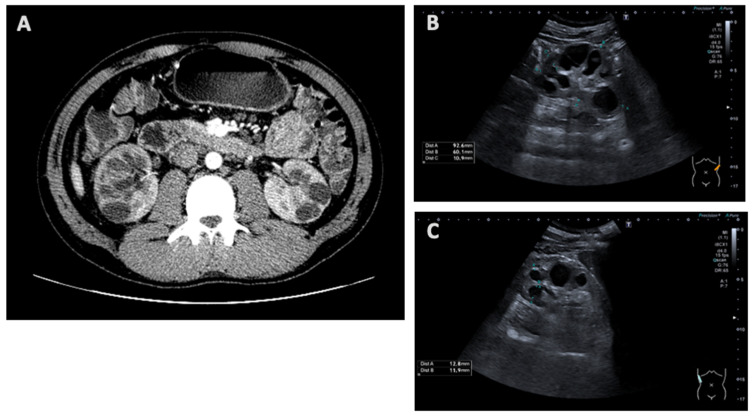 Figure 1
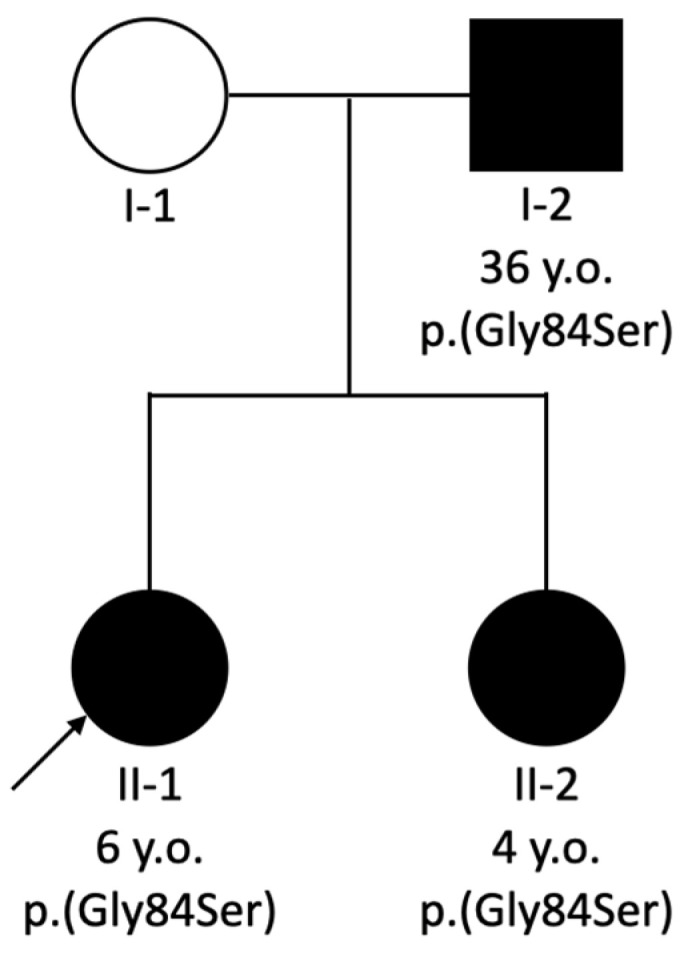 Figure 2
Peer Reviews
No public reviews on file for this paper yet. If you reviewed it on a platform where reviews are public (OpenReview, ICLR, NeurIPS, ICML), you can paste yours below so the community can read it here.
Videos
No videos yet. Explain this paper in a talk, walkthrough, or lecture? Add one.
Taxonomy
TopicsRenal and related cancers · Renal cell carcinoma treatment · Pediatric Urology and Nephrology Studies