The Concept of Venous Steal: The Impact of Vascular Stenosis and Outflow Pressure Gradient on Blood Flow Diversion
Mindaugas Pranevičius, Dalius Makackas, Andrius Macas, Kęstutis Petrikonis, Gintarė Šakalytė, Osvaldas Pranevičius, Rimantas Benetis

TL;DR
The paper explains how blood flow can be redirected from high-pressure to low-pressure areas in the vascular system, a phenomenon called venous steal, and its impact on blood flow in conditions like shock and ischemia.
Contribution
The paper introduces the concept of venous steal and generalizes it using Thevenin’s equivalent to explain blood flow diversion in various vascular regions.
Findings
Venous steal occurs when blood is shunted to a lower pressure system due to an outflow gradient.
Both arterial and venous steal reduce compartment perfusion by altering pressure gradients.
Venous steal contributes to blood flow maldistribution in shock and low-flow states.
Abstract
Vascular steal refers to the diversion of blood flow between collateral vessels that share a common inflow restricted by arterial stenosis. Blood is diverted from the high-pressure to the low-pressure, low-resistance system. Vascular steal is associated with anatomical bypass or vasodilation in the collateral network and is called “the arterial steal”. However, we have demonstrated that in the presence of an outflow gradient (e.g., intra-extracranial), blood is shunted to a lower pressure system, a phenomenon we term “venous steal”. Using Thevenin’s equivalent, we generalized the concept of venous steal to apply it to any region of the vascular system with increased outflow pressure. Both arterial steal, caused by increased collateral network conductivity, and venous steal, resulting from lower collateral outflow pressure, reduce compartment perfusion. This occurs indirectly by…
Genes, proteins, chemicals, diseases, species, mutations and cell lines named across the full text — each resolved to its canonical identifier and authoritative record.
Click any figure to enlarge with its caption.
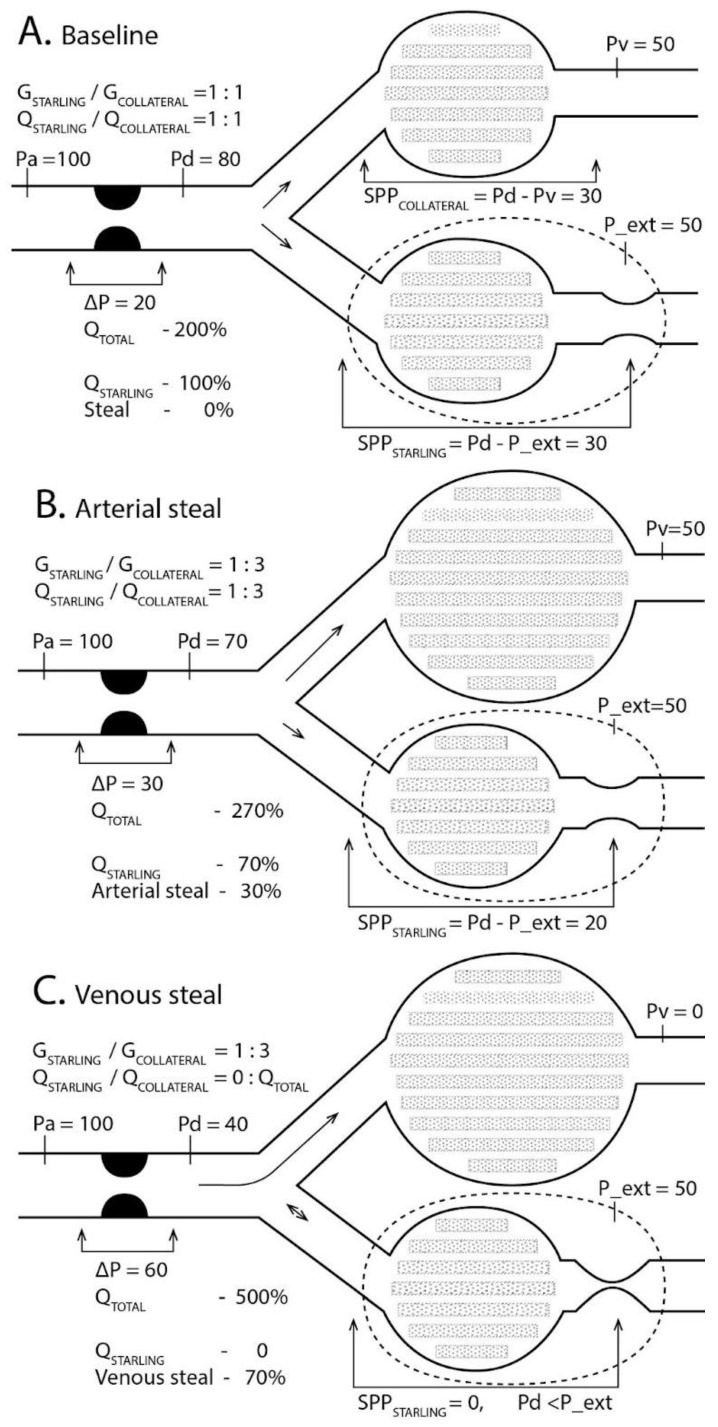 Figure 1
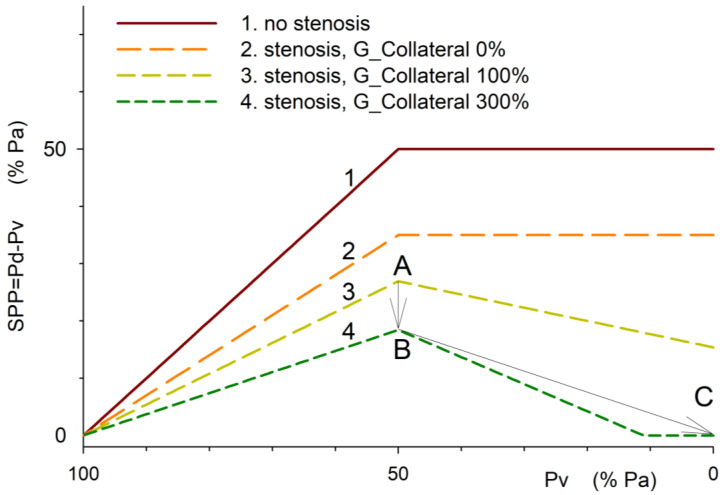 Figure 2
Peer Reviews
No public reviews on file for this paper yet. If you reviewed it on a platform where reviews are public (OpenReview, ICLR, NeurIPS, ICML), you can paste yours below so the community can read it here.
Videos
No videos yet. Explain this paper in a talk, walkthrough, or lecture? Add one.
Taxonomy
TopicsTraumatic Brain Injury and Neurovascular Disturbances · Acute Ischemic Stroke Management · Trauma, Hemostasis, Coagulopathy, Resuscitation