Applicability of the Instrumented Pendulum Test for Assessing Limb Viscoelastic Properties in Neurological and Internal Diseases: A Narrative Review
Maria Stella Valle, Matteo Cioni, Cristina Russo, Lucia Malaguarnera, Antonino Casabona

TL;DR
This review explores how the instrumented pendulum test can measure limb stiffness and viscosity in neurological and internal diseases, aiding clinical decisions.
Contribution
The paper highlights the instrumented pendulum test's novel application in quantifying limb viscoelastic properties for clinical use.
Findings
The instrumented pendulum test quantifies stiffness, viscosity, and damping in knee and elbow joints across various diseases.
Non-neural parameters measured correlate with age and disease severity.
The test supports targeted treatments like botulinum toxin-A injections for spasticity.
Abstract
Background: The pendulum test was first introduced by Wartenberg as a clinical tool for neurological examination in patients with hypertonia. It was later instrumented to measure the kinematic parameters of gravity-imposed knee movements in patients with spasticity. More recently, the instrumented pendulum test has enabled the quantification of stiffness, viscosity, and damping in both the lower and upper limbs across various neurological and internal diseases. Objective: To highlight the utility of the instrumented pendulum test as a valuable tool for the quantification of stiffness, viscosity, and damping of knee and elbow joints within a clinical setting. Design: Narrative review. Methods: A comprehensive search was conducted using PubMed/MEDLINE, focusing on the terms “pendulum test” combined with “viscosity”, “stiffness”, and “damping”. Results: The instrumented pendulum test…
Genes, proteins, chemicals, diseases, species, mutations and cell lines named across the full text — each resolved to its canonical identifier and authoritative record.
Click any figure to enlarge with its caption.
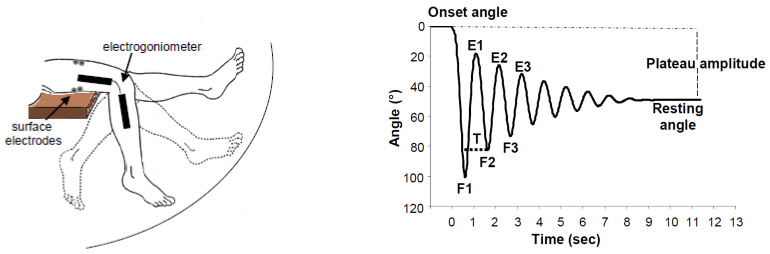 Figure 1
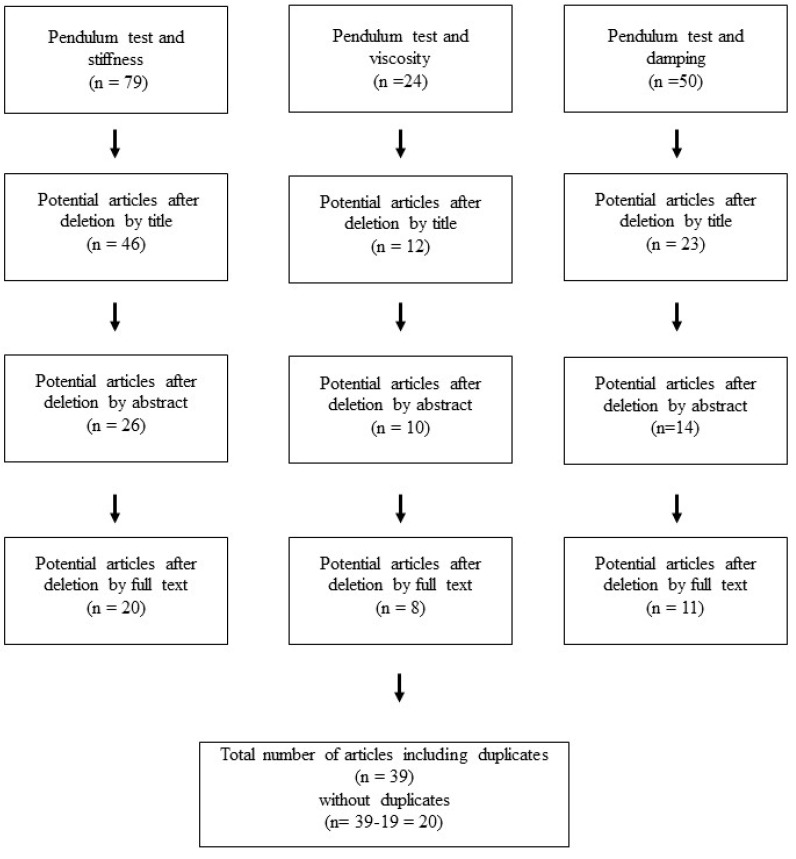 Figure 2
Peer Reviews
No public reviews on file for this paper yet. If you reviewed it on a platform where reviews are public (OpenReview, ICLR, NeurIPS, ICML), you can paste yours below so the community can read it here.
Videos
No videos yet. Explain this paper in a talk, walkthrough, or lecture? Add one.
Taxonomy
TopicsBotulinum Toxin and Related Neurological Disorders · Cerebral Palsy and Movement Disorders · Neurological disorders and treatments