Molecular Mechanism of Aflatoxin B1 Synthesis Related AfVerB Regulating the Development, AFB1 Biosyntheis and Virulence of Aspergillus flavus Mainly Through Its CYP Domain
Kangfu Ye, Song Zhou, Dandan Wu, Dongmei Ma, Yanfang Yao, Chi Yang, Minghui Sun, Sile Yang, Wangzhuo Fu, Wenwen Xin, Jun Yuan, Zhenhong Zhuang, Yanling Yang

TL;DR
This study explores how the AfVerB protein in Aspergillus flavus affects fungal development, aflatoxin production, and virulence, mainly through its CYP domains.
Contribution
The study reveals the role of AfVerB's CYP domains in regulating aflatoxin biosynthesis, fungal development, and virulence in Aspergillus flavus.
Findings
AfVerB's CYP domains are crucial for fungal morphogenesis and aflatoxin synthesis.
AfVerB is essential for host infection and response to environmental stress.
The second CYP domain of AfVerB is particularly important for its biological functions.
Abstract
Aspergillus flavus and its secondary metabolites aflatoxins pose a significant threat to the health of humans, animals, and plants. Therefore, there is an urgent need to control A. flavus contamination. AfverB plays a key role in the aflatoxin gene cluster; however, its function and mechanism in fungal development and virulence remain poorly understood. In this study, we constructed afVerB gene deletion mutants (∆afVerB−1 and ∆afVerB−2) and two CYP domain mutants (afVerB∆D1 and afVerB∆D2) through homologous recombination. Phenotype analysis revealed that, via its two CYP domains, AfVerB is deeply involved in fungal morphogenesis and aflatoxin synthesis. Insect and crop colonization models revealed that AfVerB plays a key role in the fungus’s ability to infect hosts, and stress experiments discovered that AfVerB plays a significant role in the response to various environmental stresses,…
Genes, proteins, chemicals, diseases, species, mutations and cell lines named across the full text — each resolved to its canonical identifier and authoritative record.
Click any figure to enlarge with its caption.
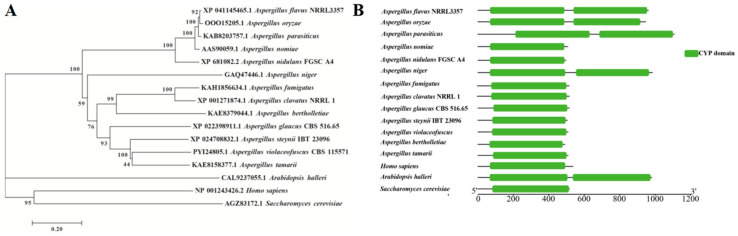 Figure 1
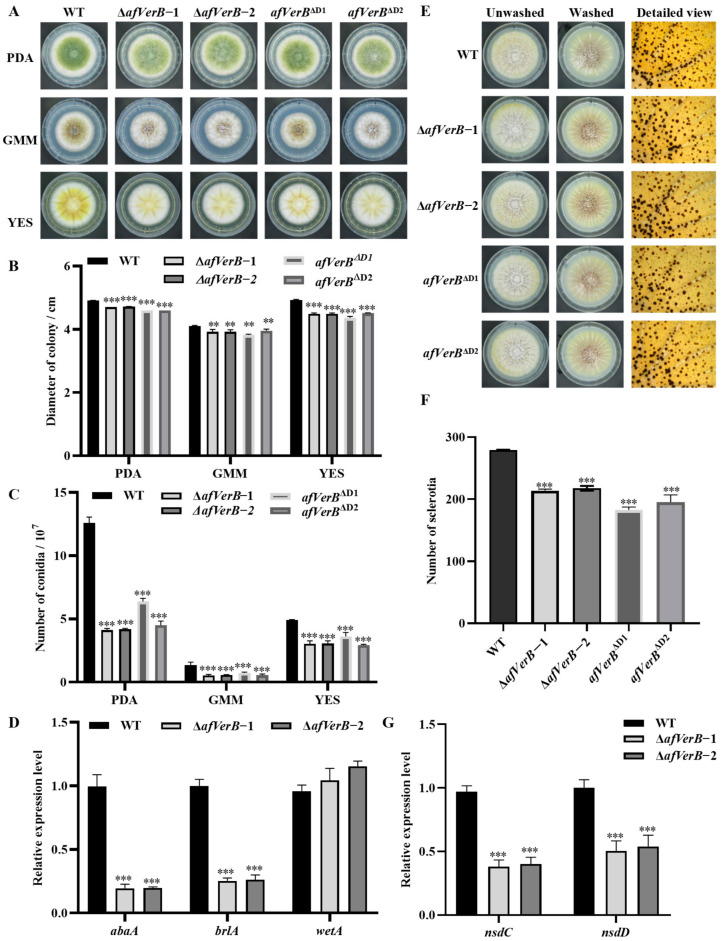 Figure 2
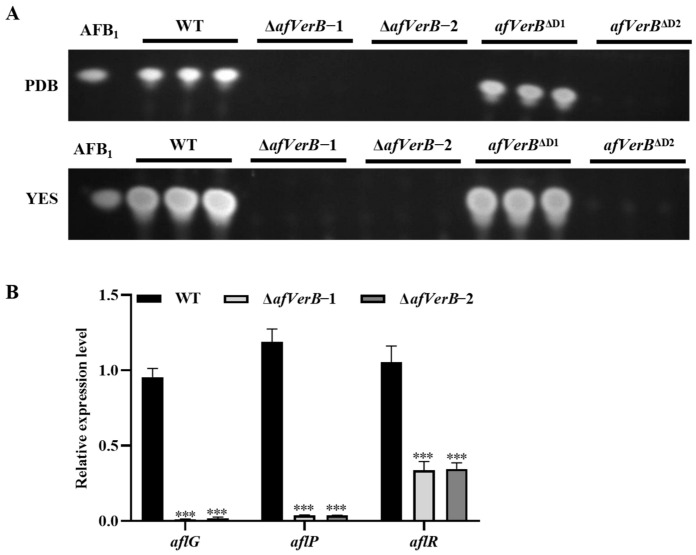 Figure 3
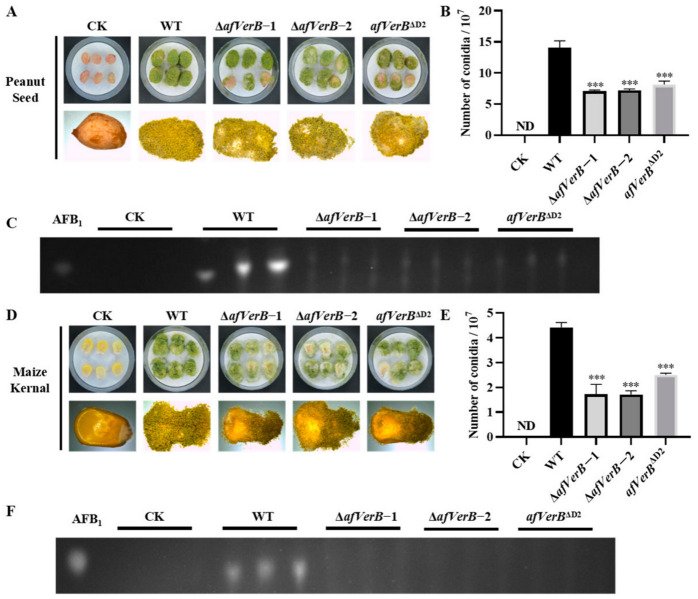 Figure 4
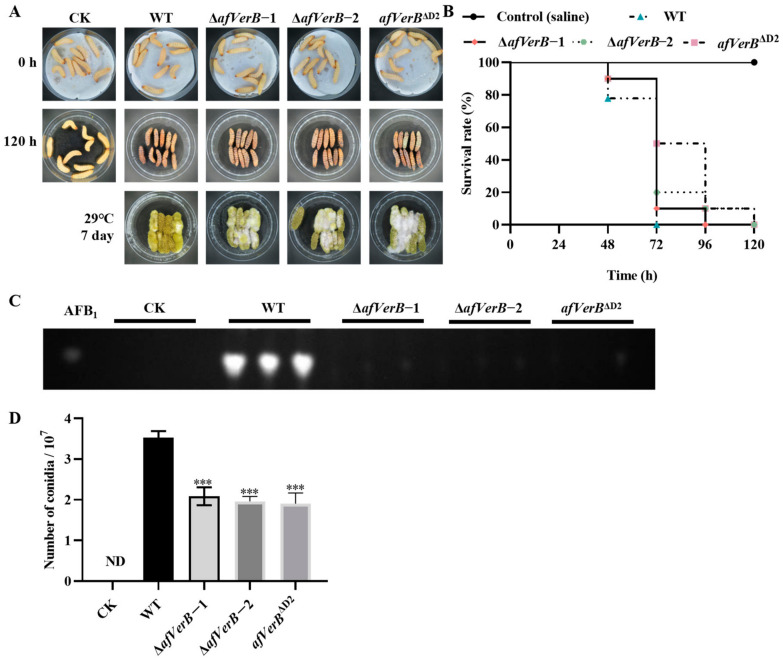 Figure 5
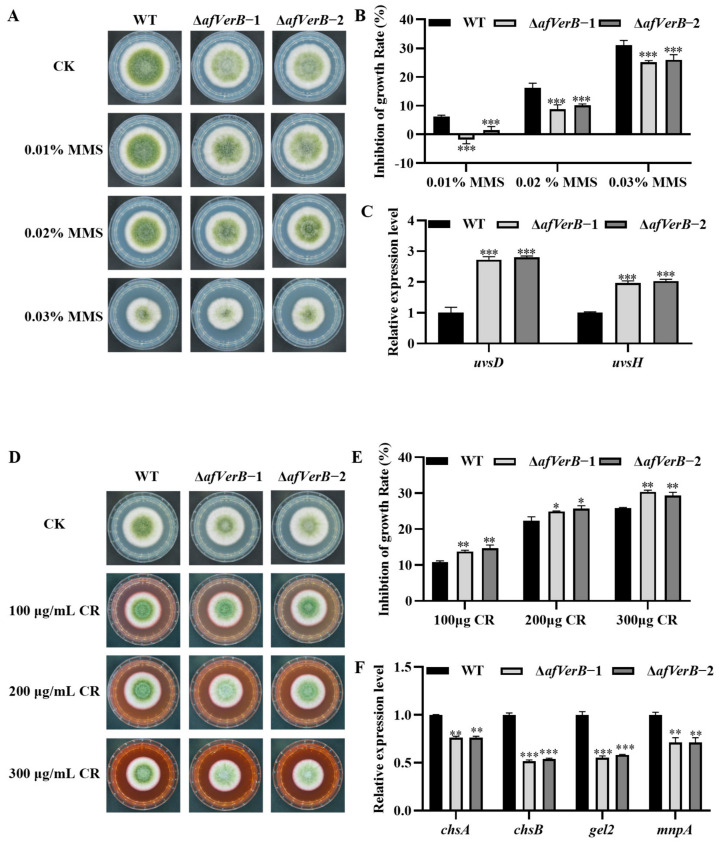 Figure 6
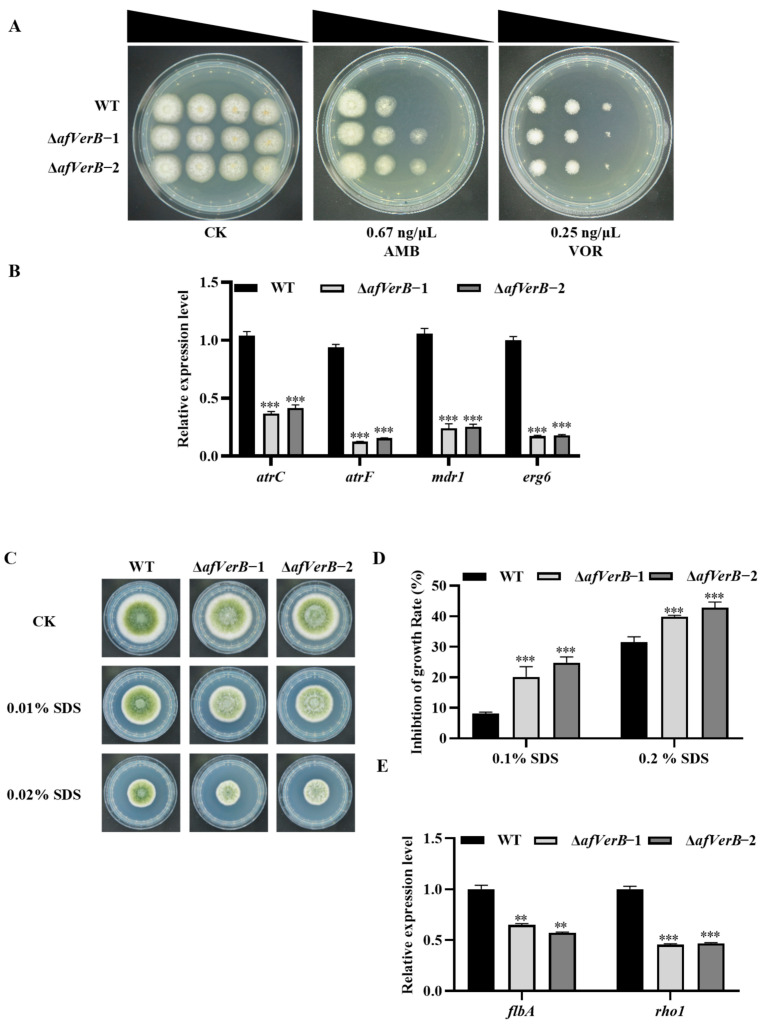 Figure 7
Peer Reviews
No public reviews on file for this paper yet. If you reviewed it on a platform where reviews are public (OpenReview, ICLR, NeurIPS, ICML), you can paste yours below so the community can read it here.
Videos
No videos yet. Explain this paper in a talk, walkthrough, or lecture? Add one.
Taxonomy
TopicsMycotoxins in Agriculture and Food · Fungal and yeast genetics research · Antifungal resistance and susceptibility