Effectiveness of Electrical Muscle Elongation and Proprioceptive Neuromuscular Facilitation Programs on Muscle Flexibility and Stiffness in Young Adults with Functional Hamstring Disorder: A Randomized Clinical Trial with 4-Week Follow-Up
Carolina Jiménez-Sánchez, Rocío Fortún-Rabadán, Beatriz Carpallo-Porcar, Paula Cordova-Alegre, Luis Espejo-Antúnez, María Ortiz-Lucas

TL;DR
This study compares two stretching methods to improve hamstring flexibility and muscle stiffness in young adults with a specific hamstring disorder.
Contribution
The study introduces Electrical Muscle Elongation as a potentially more effective method than PNF for improving hamstring flexibility.
Findings
EME improved hamstring flexibility in the left limb more than the control group.
EME showed better results in some quadriceps muscle properties compared to PNF and control groups.
Improvements were sustained at the 4-week follow-up for the EME group.
Abstract
Background: Adequate hamstring flexibility is crucial for musculoskeletal health as increased muscle tone can lead to stretch-type injuries, muscle weakness, dysfunctional neuromuscular control, postural changes, and lower back pain. The aim was to compare the effectiveness of a program based on Electrical Muscle Elongation (EME), Proprioceptive Neuromuscular Facilitation (PNF), and no intervention in improving flexibility and viscoelastic properties of hamstring and quadriceps muscles in active young adults with functional hamstring disorder (type 2B according to the Munich Consensus). Methods: Sixty-five participants (45 male, 20 female) were randomly assigned to three groups: the EME group (n = 21) received a simultaneous combination of interferential current and stretching, the PNF group (n = 22) underwent active stretching, and the Control group (n = 22) received no intervention.…
Genes, proteins, chemicals, diseases, species, mutations and cell lines named across the full text — each resolved to its canonical identifier and authoritative record.
Click any figure to enlarge with its caption.
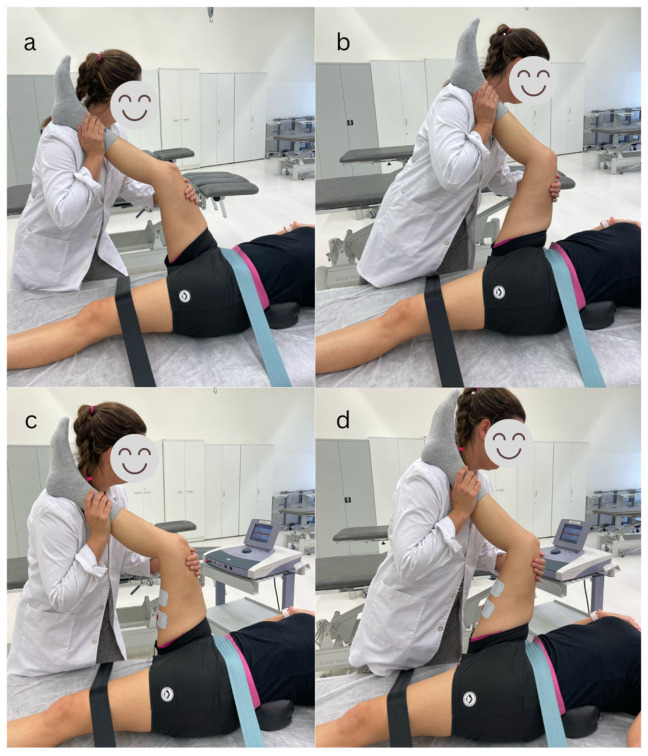 Figure 1
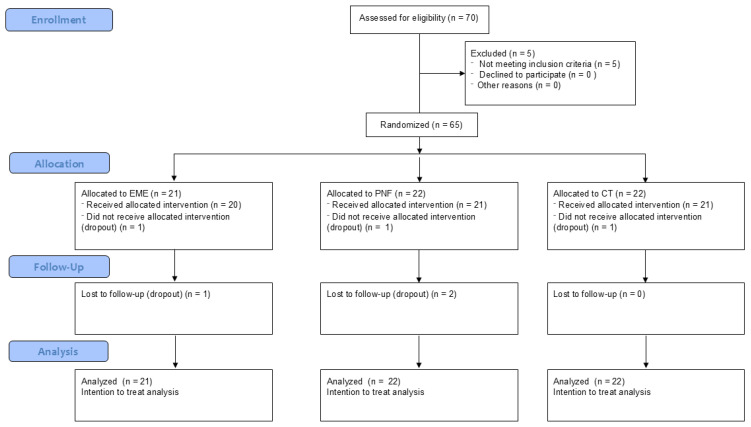 Figure 2
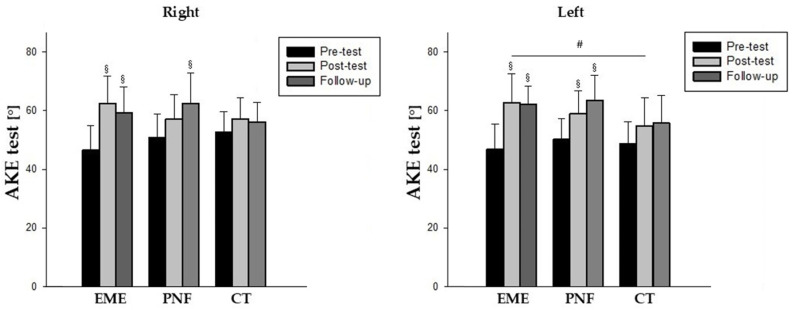 Figure 3
Peer Reviews
No public reviews on file for this paper yet. If you reviewed it on a platform where reviews are public (OpenReview, ICLR, NeurIPS, ICML), you can paste yours below so the community can read it here.
Videos
No videos yet. Explain this paper in a talk, walkthrough, or lecture? Add one.
Taxonomy
TopicsSports injuries and prevention · Musculoskeletal pain and rehabilitation · Injury Epidemiology and Prevention