EvSec22, a SNARE Protein, Regulates Hyphal Growth, Stress Tolerance, and Nematicidal Pathogenicity in Esteya vermicola
Jingjie Yuan, Run Zou, Xuan Peng, Yilan Wang, Zhongwu Cheng, Tengqing Ye, Lihui Han, Chengjian Xie

TL;DR
This study shows that the SNARE protein EvSec22 is crucial for the fungus Esteya vermicola to control the pinewood nematode and tolerate stress.
Contribution
The study identifies EvSec22 as a key SNARE protein involved in fungal pathogenicity and stress tolerance in E. vermicola.
Findings
EvSec22 deletion reduces E. vermicola's pathogenicity against B. xylophilus.
The mutant shows impaired hyphal growth, conidiation, and stress tolerance.
EvSec22 is linked to virulence and abiotic stress responses in E. vermicola.
Abstract
Bursaphelenchus xylophilus, the causative agent of pine wilt disease (PWD), poses a severe global threat to coniferous forests. Esteya vermicola, an endoparasitic nematophagous fungus, exhibits promising biocontrol potential against this pinewood nematode. The vesicular transport system, evolutionarily conserved in eukaryotes, is essential for fungal pathogenicity. Based on our genome sequence of E. vermicola CBS115803, we identified EvSec22, a gene encoding a SNARE protein implicated in vesicular transport process. This study investigates the role of EvSec22 in E. vermicola during nematode infection, utilizing our optimized gene knockout methodology. Infection assays revealed that EvSec22 deletion significantly impaired the pathogenicity of E. vermicola against B. xylophilus. Phenotypic analyses revealed that the ΔEvSec22 mutant exhibited suppressed hyphal growth, reduced conidiation,…
Genes, proteins, chemicals, diseases, species, mutations and cell lines named across the full text — each resolved to its canonical identifier and authoritative record.
Click any figure to enlarge with its caption.
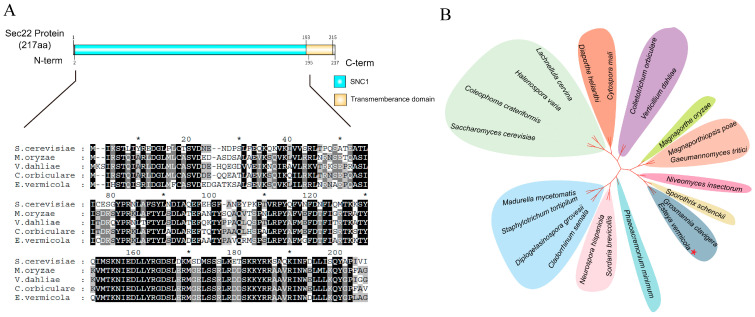 Figure 1
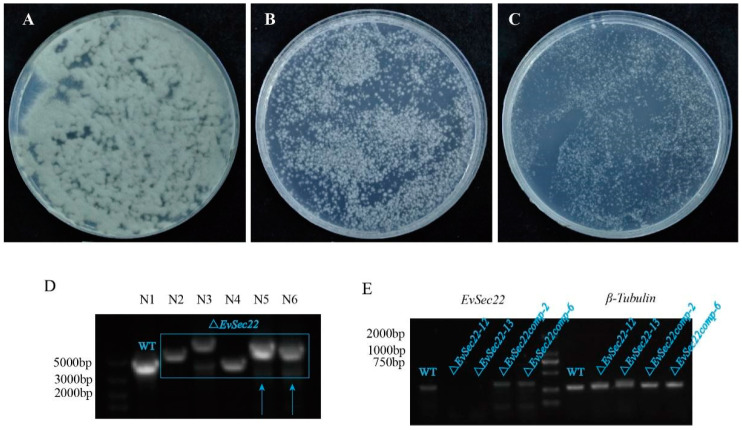 Figure 2
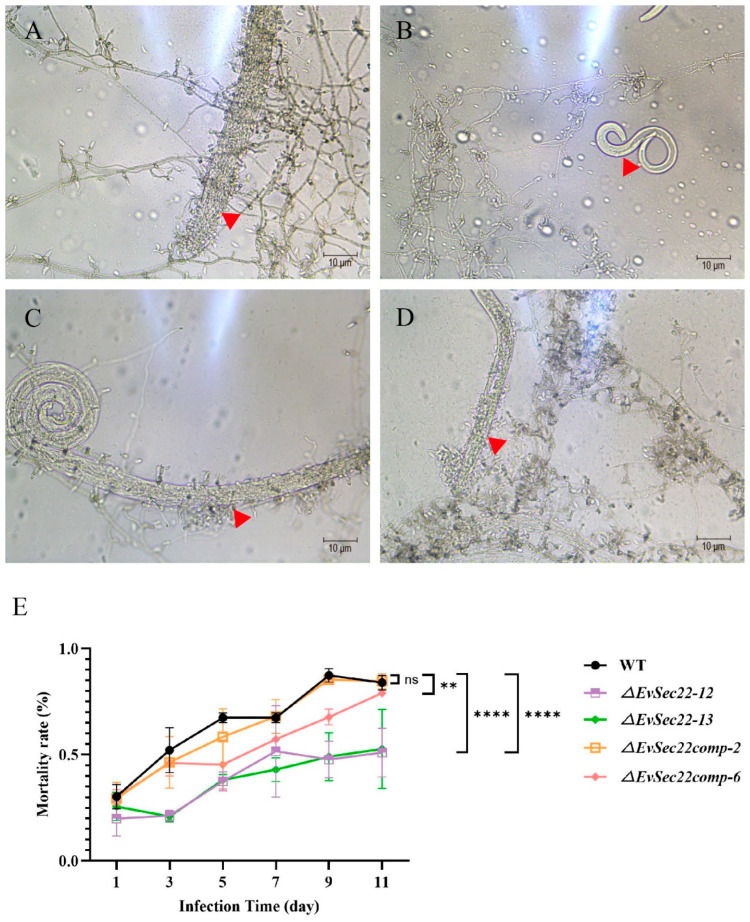 Figure 3
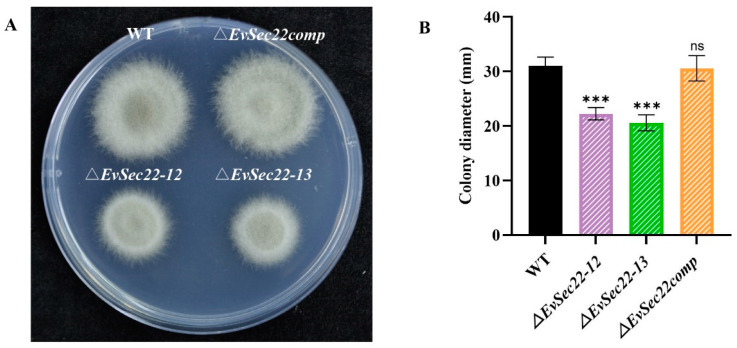 Figure 4
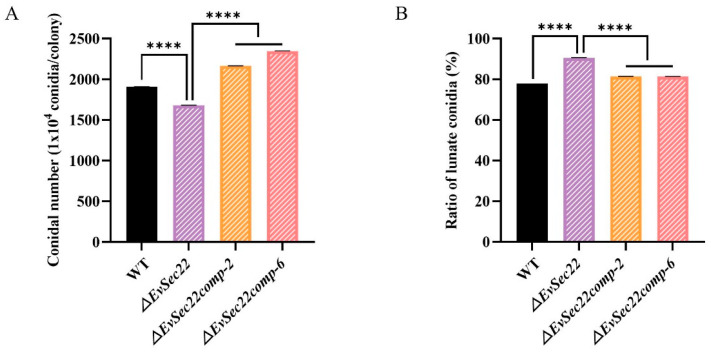 Figure 5
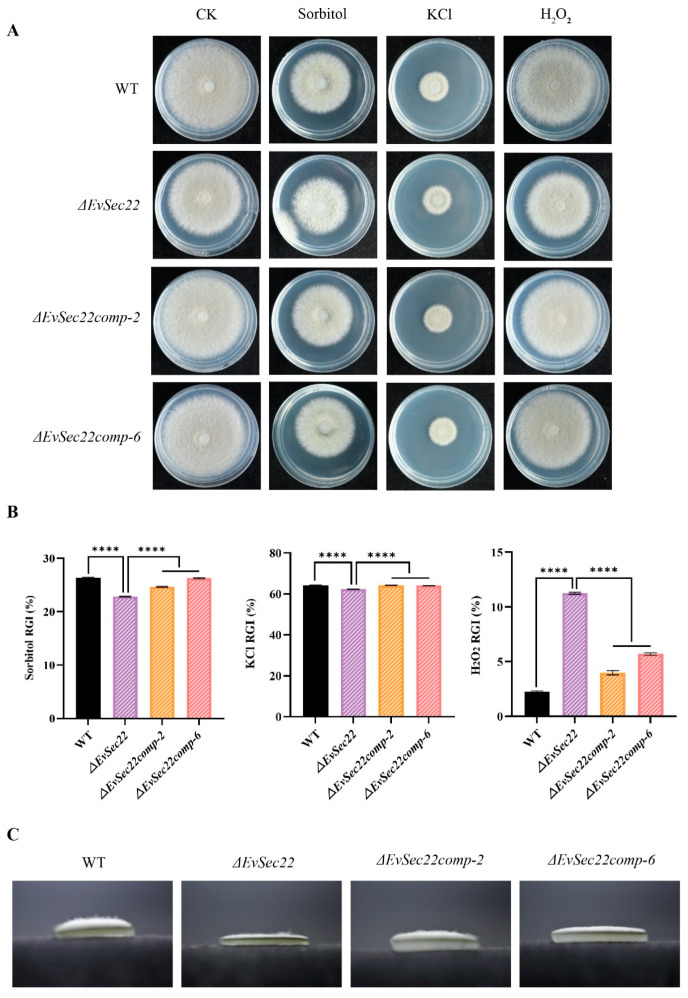 Figure 6
Peer Reviews
No public reviews on file for this paper yet. If you reviewed it on a platform where reviews are public (OpenReview, ICLR, NeurIPS, ICML), you can paste yours below so the community can read it here.
Videos
No videos yet. Explain this paper in a talk, walkthrough, or lecture? Add one.
Taxonomy
TopicsNematode management and characterization studies · Legume Nitrogen Fixing Symbiosis · Fungal and yeast genetics research