Positive Lymph Nodes Independently Affect Long-Term Survival After Pancreaticoduodenectomy for Non-Ampullary Duodenal Adenocarcinoma: A Single-Center, Retrospective Analysis
Matteo De Pastena, Caterina Costanza Zingaretti, Salvatore Paiella, Gabriella Lionetto, Massimo Guerriero, Nicoletta De Santis, Claudio Luchini, Giuseppe Malleo, Roberto Salvia

TL;DR
This study finds that lymph node involvement significantly affects survival in patients with non-ampullary duodenal adenocarcinoma after surgery.
Contribution
The study identifies lymph node stations 8 and 12 as critical for survival and suggests a minimum number of lymph nodes to examine for accurate staging.
Findings
Positive lymph nodes are linked to worse survival outcomes in non-ampullary duodenal adenocarcinoma patients.
Lymph node ratio, tumor grade, and metastases at stations 8 and 12 independently predict overall survival.
A minimum of 25 examined lymph nodes is recommended to detect metastases with 95% probability.
Abstract
Background/Objectives: The main treatment for non-ampullary duodenal adenocarcinoma (NDA) is pancreatoduodenectomy (PD) with lymphadenectomy (LN). Several studies have proposed a minimum number of examined lymph nodes (MNELN) to ensure proper staging. This study investigated the impact of nodal parameters—including the pattern of nodal spread—on oncologic outcomes following PD for NDA. Furthermore, we sought to determine the MNELN to ensure reliable detection of nodal involvement. Methods: This was a single-center, retrospective study. Consecutive patients who underwent PD from 2000 to 2019 with a final diagnosis of NDA were retrieved from a prospectively maintained database. The probability of detecting at least one metastatic LN in a node-positive patient was assessed using a model based on the binomial probability law. Results: A total of 70 patients met the inclusion criteria. The…
Genes, proteins, chemicals, diseases, species, mutations and cell lines named across the full text — each resolved to its canonical identifier and authoritative record.
Click any figure to enlarge with its caption.
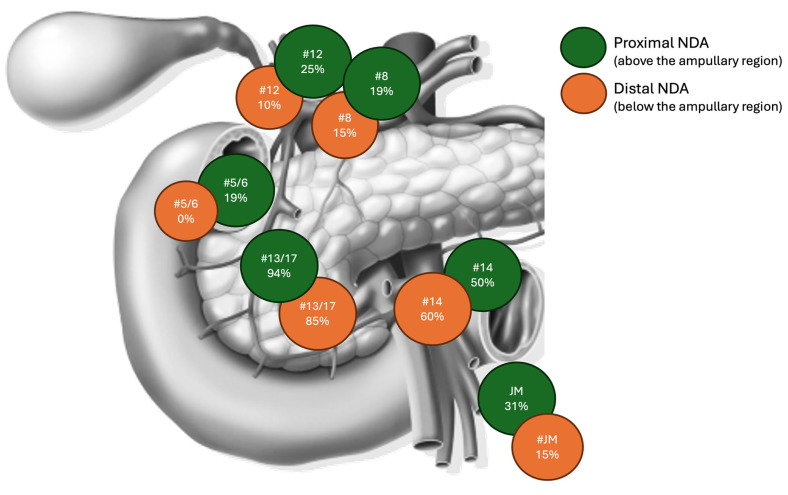 Figure 1
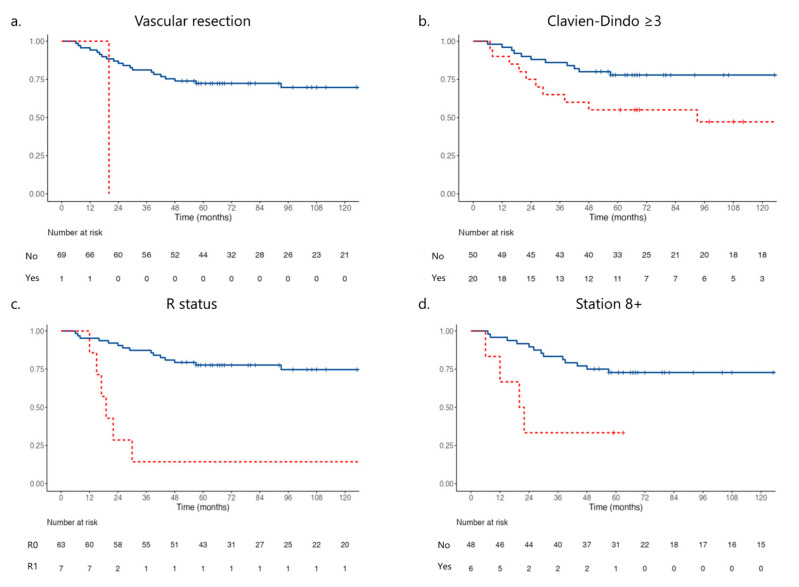 Figure 2
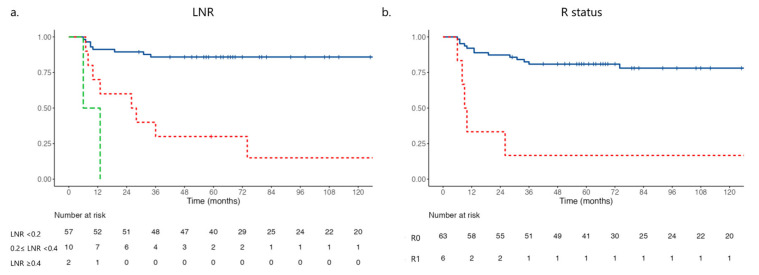 Figure 3
Peer Reviews
No public reviews on file for this paper yet. If you reviewed it on a platform where reviews are public (OpenReview, ICLR, NeurIPS, ICML), you can paste yours below so the community can read it here.
Videos
No videos yet. Explain this paper in a talk, walkthrough, or lecture? Add one.
Taxonomy
TopicsPancreatic and Hepatic Oncology Research · Gastric Cancer Management and Outcomes · Gastrointestinal Tumor Research and Treatment