Prevalence of Patent Foramen Ovale in Patients with Non-Obstructive Coronary Artery Disease (PROVA) Study
Abdelhak el Bouziani, Lars S. Witte, Rutger G. T. Feenstra, Mick P. L. Renkens, Janneke Woudstra, Jan G. P. Tijssen, Arja S. Vink, Yolande Appelman, Maik J. D. Grundeken, Bart Straver, Jan J. Piek, Berto J. Bouma, Robbert J. de Winter, Marcel A. M. Beijk

TL;DR
This study found that about 23% of patients with coronary artery spasm had a patent foramen ovale, which may contribute to their symptoms.
Contribution
The study is the first to investigate the prevalence of patent foramen ovale in patients with documented coronary artery spasm.
Findings
RLS due to PFO was observed in 23% of patients with coronary artery spasm.
Patients with RLS had worse angina symptoms compared to those without RLS.
RLS was more common in patients with coronary artery spasm and migraine.
Abstract
(1) Background: Prevalence of patent foramen ovale (PFO) in the general population is estimated at around 24%. We hypothesized that right-to-left shunting (RLS) resulting from PFO might contribute to angina symptoms in patients with coronary artery spasm (CAS), potentially triggered by vasoactive metabolites. Therefore, the aim of this study was to investigate the prevalence of PFO-related RLS in patients with documented CAS. (2) Methods: This single-center prospective cohort study included patients with documented CAS undergoing transthoracic echocardiography (TTE), including a contrast bubble study between 2021 and 2023. The Seattle Angina Questionnaire (SAQ) and Migraine Disability Assessment (MIDAS) were used to survey patients. (3) Results: RLS (PFO group) was observed in 11 of the 48 patients included (23%). In the PFO group, 64% had epicardial spasm and 36% microvascular spasm.…
Genes, proteins, chemicals, diseases, species, mutations and cell lines named across the full text — each resolved to its canonical identifier and authoritative record.
Click any figure to enlarge with its caption.
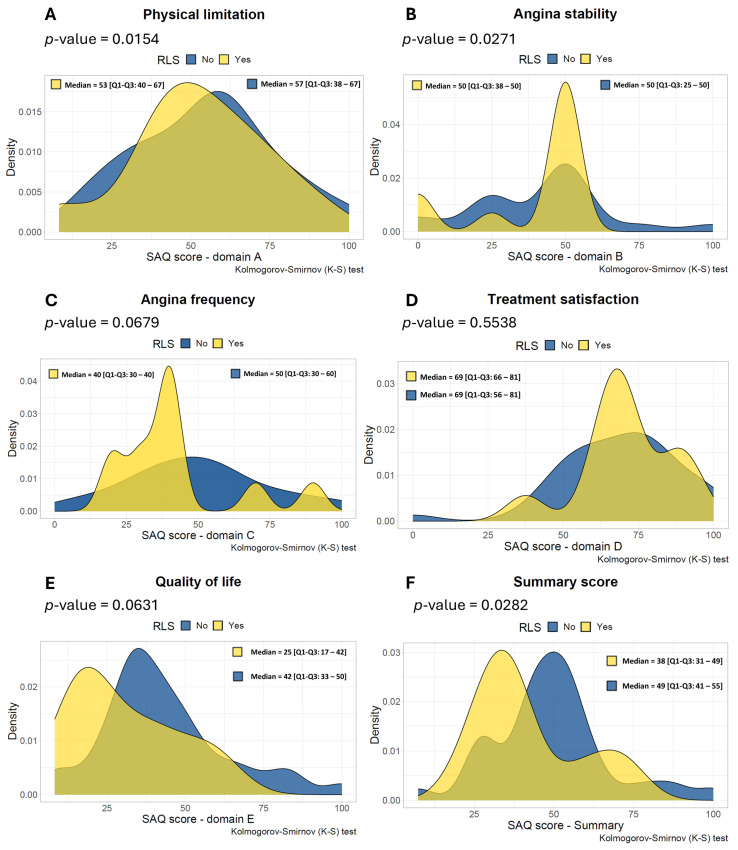 Figure 1
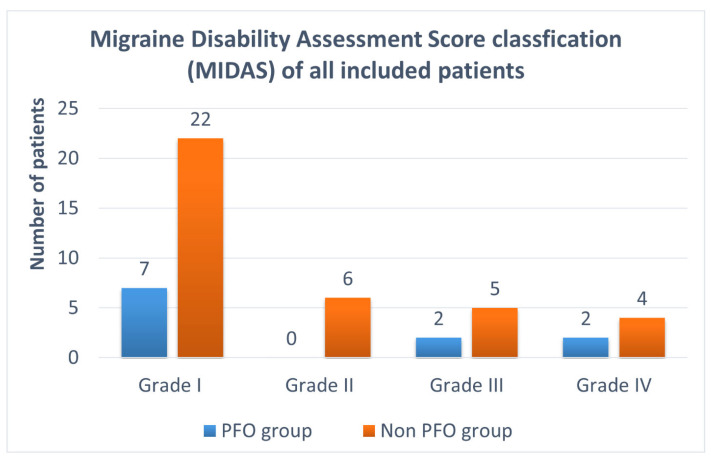 Figure 2
Peer Reviews
No public reviews on file for this paper yet. If you reviewed it on a platform where reviews are public (OpenReview, ICLR, NeurIPS, ICML), you can paste yours below so the community can read it here.
Videos
No videos yet. Explain this paper in a talk, walkthrough, or lecture? Add one.
Taxonomy
TopicsCardiovascular and Diving-Related Complications · Cardiovascular Syncope and Autonomic Disorders · Migraine and Headache Studies