Diflubenzuron Did Not Affect the Abilities of the Backswimmer Buenoa tarsalis to Survive and Prey Upon Larvae of Aedes aegypti
Sabrina H. C. Araujo, Luis G. Salinas Jimenez, Maria J. M. Corrêa, Viviana L. Bohorquez Zapata, Monalisa S. S. Oliveira, Joshua S. Fernandes, Jônatas M. Gomes, Raimundo W. S. Aguiar, Gil R. Santos, Wilson R. Valbon, Eugênio E. Oliveira

TL;DR
This study shows that the insecticide diflubenzuron does not harm aquatic predators like backswimmers or guppies, even at high concentrations, and does not affect their ability to prey on mosquito larvae.
Contribution
The study demonstrates that diflubenzuron is safe for non-target aquatic predators, even at high concentrations.
Findings
Diflubenzuron at recommended field doses did not affect the survival of non-target aquatic predators.
Exposure to 1000-fold field doses did not impair the predation ability of Buenoa tarsalis on Aedes aegypti larvae.
Diflubenzuron poses negligible ecological risks to mosquito predators in aquatic ecosystems.
Abstract
Diflubenzuron is a widely used insecticide. It is used on a variety of target organisms, including mosquitoes’ larvae. However, the misuse of diflubenzuron near and in aquatic environments can lead to unintended effects to beneficial organisms that inhabit these places. Here, we evaluated the impacts of diflubenzuron on two species of water bugs, Buenoa tarsalis and Belostoma anurum, and on the guppy fish Poecilia reticulata. Exposure to the insecticide at concentrations equivalent to the recommended field dose had no impact on the survival of the species. Even at 1000-fold higher concentrations, diflubenzuron was unable to impact on the ability of Bu. tarsalis to prey upon larvae of the mosquitoes Aedes aegypti. The results reinforce the safety of diflubenzuron for non-target aquatic organisms capable of preying on mosquitoes’ larvae. Diflubenzuron is a growth regulator insecticide…
Genes, proteins, chemicals, diseases, species, mutations and cell lines named across the full text — each resolved to its canonical identifier and authoritative record.
Click any figure to enlarge with its caption.
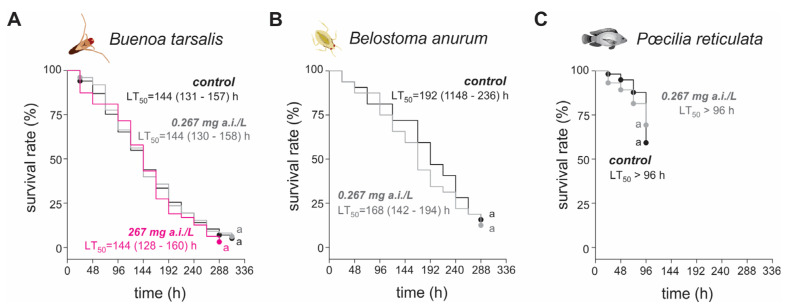 Figure 1
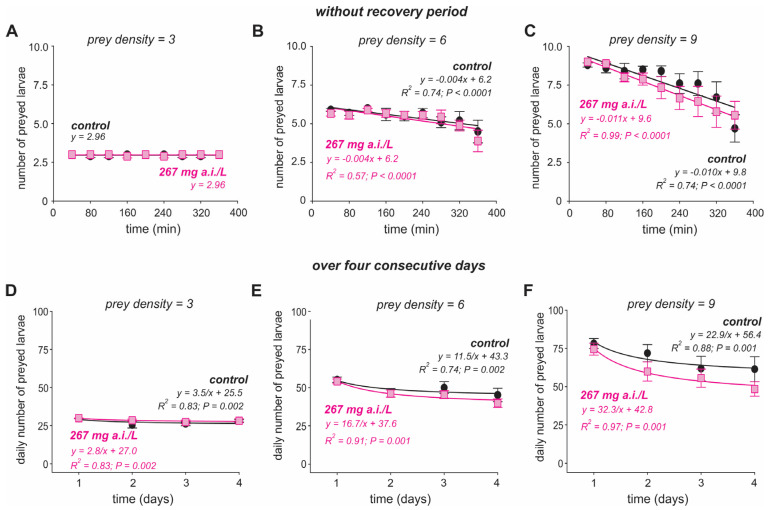 Figure 2
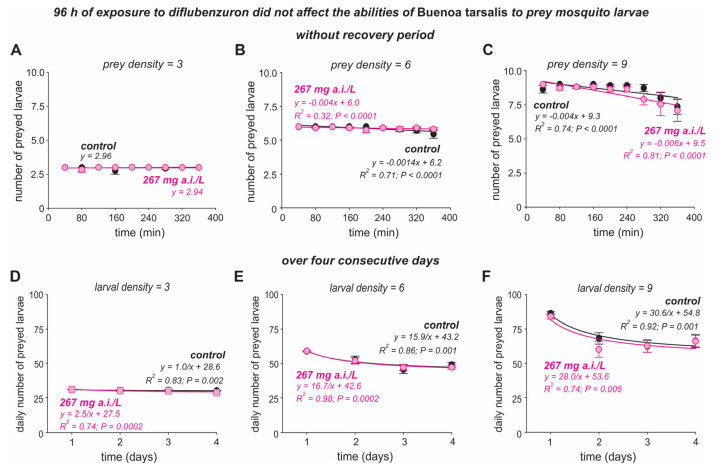 Figure 3
Peer Reviews
No public reviews on file for this paper yet. If you reviewed it on a platform where reviews are public (OpenReview, ICLR, NeurIPS, ICML), you can paste yours below so the community can read it here.
Videos
No videos yet. Explain this paper in a talk, walkthrough, or lecture? Add one.
Taxonomy
TopicsMosquito-borne diseases and control · Insect and Pesticide Research · Insect Pest Control Strategies