Population Dynamics of Galerucella birmanica and Its Aggregation Behavior in Brasenia schreberi Aquaculture System
Yini Wang, Yahong Wang, Changfang Zhou

TL;DR
This study examines the population patterns and aggregation behavior of a pest, Galerucella birmanica, in Brasenia schreberi aquaculture, identifying a chemical attractant from damaged leaves.
Contribution
The study identifies 2-phenylethyl isothiocyanate as a key attractant for G. birmanica, offering a new approach for pest management in B. schreberi cultivation.
Findings
G. birmanica showed a 21.6-fold higher abundance in severely chewed leaf areas compared to non-chewed areas.
2-phenylethyl isothiocyanate significantly attracted G. birmanica adults in laboratory tests.
Damaged B. schreberi leaves release herbivore-induced volatiles that may protect the plant population from pests.
Abstract
The aquatic macrophyte watershield, Brasenia schreberi Gmel., with its young buds coated in a thick mucilage served as a famous vegetable, has been cultivated in China for a long time. However, its production has been threatened by a pest, Galerucella birmanica Jacoby. This study investigated the population dynamics of G. birmanica throughout the entire growth season of B. schreberi from May to November and identified the aggregation behavior of the pest, with a preference for severely chewed leaf areas. Further analysis revealed that it was 2-phenylethyl isothiocyanate released from the damaged leaves that attracted G. birmanica. Our findings provide valuable insights for pest management in B. schreberi cultivation fields, and the attractant effect of 2-phenylethyl isothiocyanate on G. birmanica offers a new perspective for the development of attractants for this insect. The aquatic…
Genes, proteins, chemicals, diseases, species, mutations and cell lines named across the full text — each resolved to its canonical identifier and authoritative record.
Click any figure to enlarge with its caption.
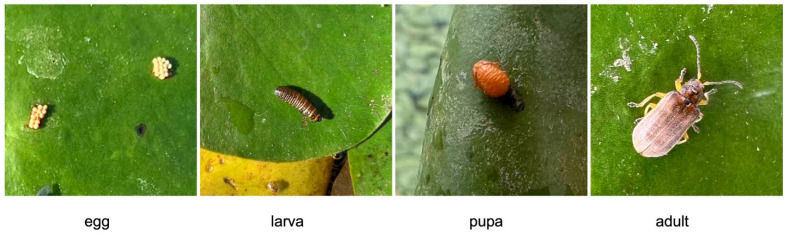 Figure 1
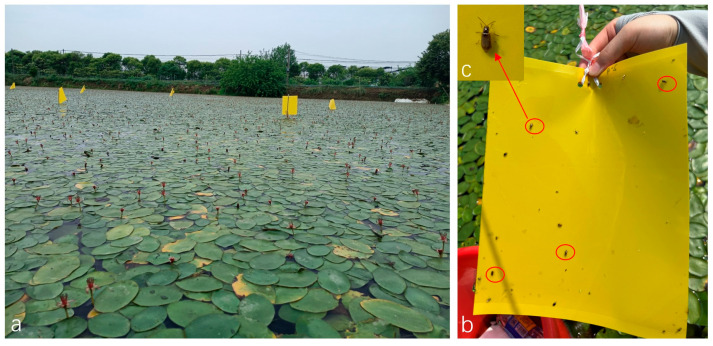 Figure 2
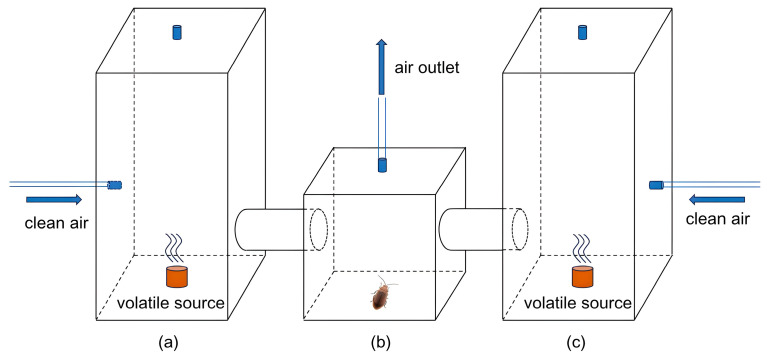 Figure 3
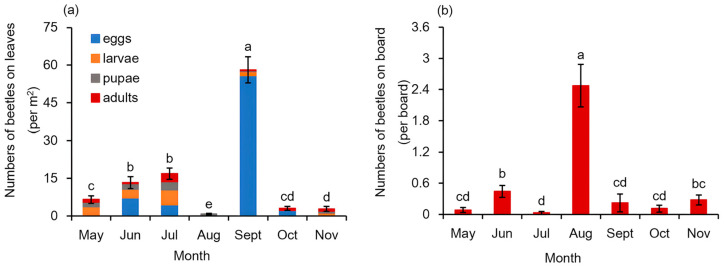 Figure 4
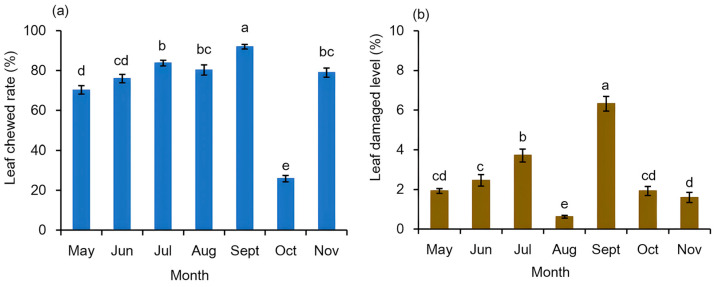 Figure 5
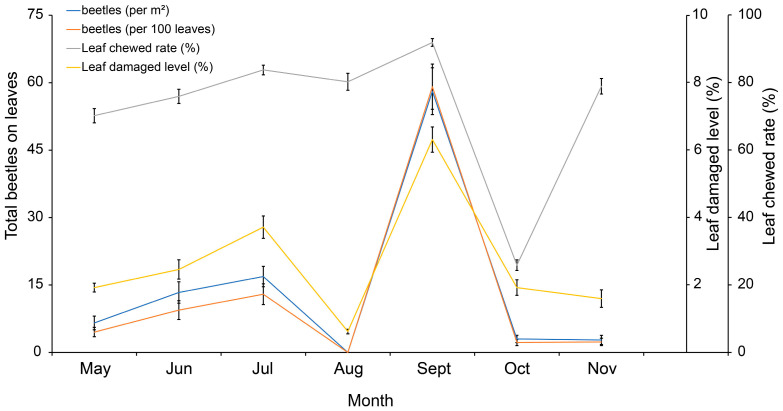 Figure 6
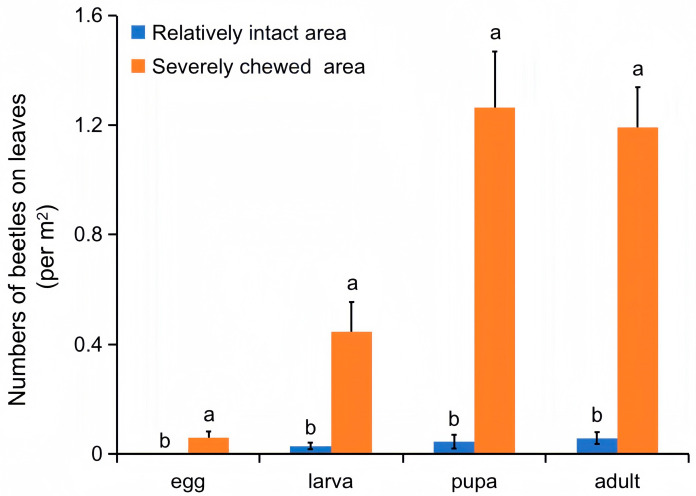 Figure 7
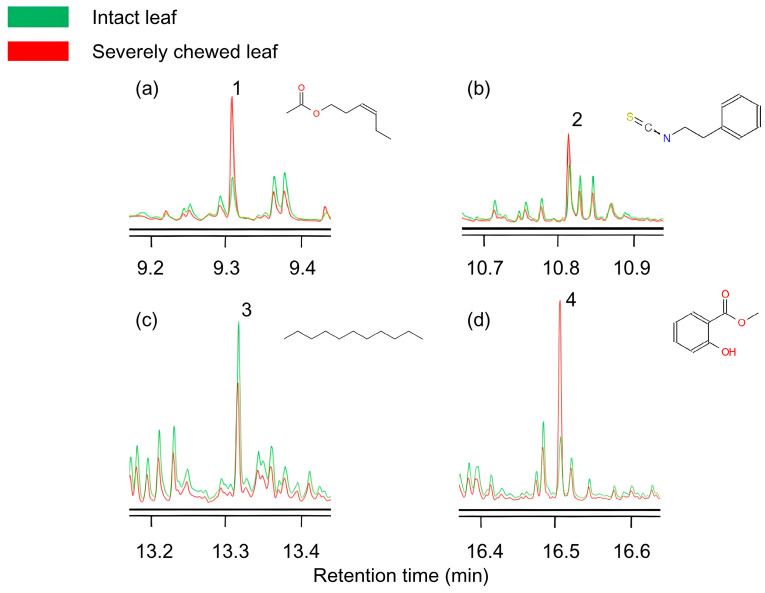 Figure 8
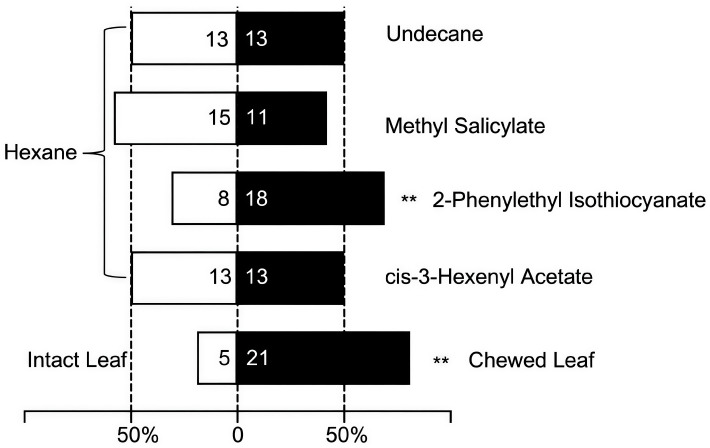 Figure 9
Peer Reviews
No public reviews on file for this paper yet. If you reviewed it on a platform where reviews are public (OpenReview, ICLR, NeurIPS, ICML), you can paste yours below so the community can read it here.
Videos
No videos yet. Explain this paper in a talk, walkthrough, or lecture? Add one.
Taxonomy
TopicsInsect-Plant Interactions and Control · Insect Pest Control Strategies · Essential Oils and Antimicrobial Activity