Right Ventricular and Left Atrial Strain Predict Volumetric Response to Cardiac Resynchronization Therapy
Shing Ching, Jeffrey Ji-Peng Li, Stefanie Maria Werhahn, Rebecca Elisabeth Beyer, Misael Estepa, Christian Stehning, Djawid Hashemi, Natalia Solowjowa, Christoph Klein, Henryk Dreger, Sebastian Kelle, Patrick Doeblin

TL;DR
This study finds that right ventricular and left atrial strain measured by CMR can predict how well patients respond to cardiac resynchronization therapy.
Contribution
The study introduces CMR-derived strain parameters as novel predictors of volumetric response to CRT.
Findings
CRT responders had significantly lower indexed right ventricular volumes and left atrial area compared to non-responders.
Left atrial and right ventricular strain parameters were significantly better in CRT responders.
CMR-derived peak septal circumferential strain and RVEDVi correlated with volumetric response to CRT.
Abstract
Background: While left-bundle-branch-block-related contraction patterns as well as echocardiography-derived strain are variably associated with the volumetric response to cardiac resynchronization therapy (CRT), the role of CMR-derived strain parameters is unexplored. Methods: A total of 50 patients receiving CRT implantation were retrospectively analyzed, all of whom had undergone CMR imaging within one year before, and echocardiography within 6 months before and 6–12 months after CRT implantation. We assessed CMR-derived morphological and functional parameters with regard to the echocardiographic response, defined as a reduction in the left ventricular end-systolic volume of ≥15%. Results: Among the standard CMR parameters, the indexed right ventricular volumes in end-diastole (RVEDVi) (74.5 ± 19.5 vs. 94.8 ± 30.2 mL/m2, p = 0.006) and end-systole (RVESVi) (43.2 ± 13.3 vs. 61.6 ± 28.8…
Genes, proteins, chemicals, diseases, species, mutations and cell lines named across the full text — each resolved to its canonical identifier and authoritative record.
Click any figure to enlarge with its caption.
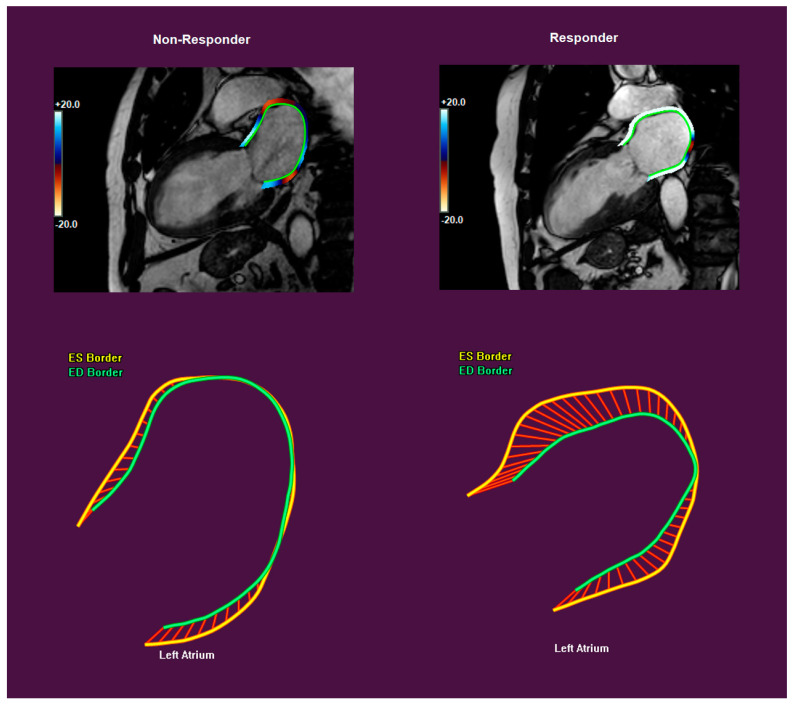 Figure 1
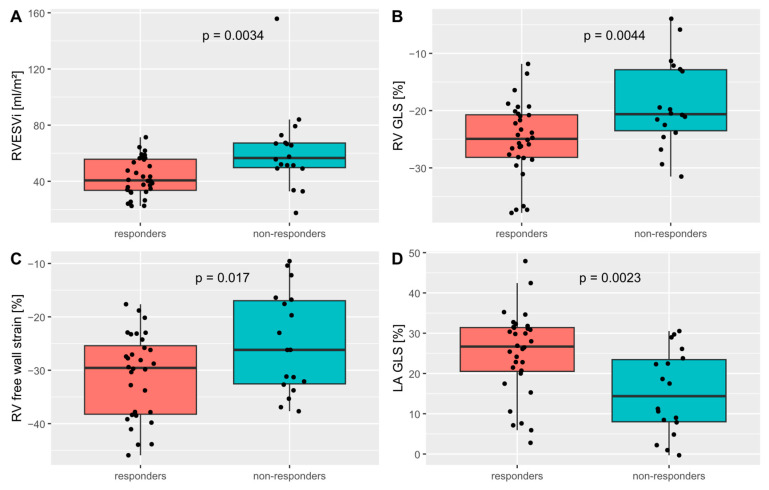 Figure 2
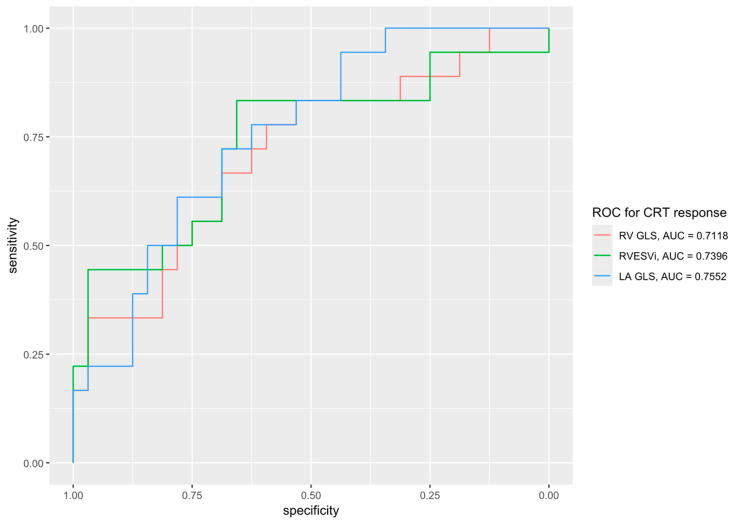 Figure 3
Peer Reviews
No public reviews on file for this paper yet. If you reviewed it on a platform where reviews are public (OpenReview, ICLR, NeurIPS, ICML), you can paste yours below so the community can read it here.
Videos
No videos yet. Explain this paper in a talk, walkthrough, or lecture? Add one.
Taxonomy
TopicsCardiac pacing and defibrillation studies · Neurological disorders and treatments · Cardiac Arrhythmias and Treatments