Complexity of Damage-Associated Molecular Pattern Molecule Expression Profile in Porcine Brain Affected by Ischemic Stroke
Dominika Golubczyk, Aleksandra Mowinska, Piotr Holak, Piotr Walczak, Miroslaw Janowski, Izabela Malysz-Cymborska

TL;DR
This study explores how molecules linked to brain injury change over time in pigs after a stroke, revealing patterns of inflammation and healing.
Contribution
The study reveals time-dependent changes in DAMP expression in a porcine model of ischemic stroke, linking inflammation and vascular remodeling.
Findings
Increased expression of calcium-binding proteins, peroxiredoxins, heat shock proteins, and interleukins within 24 hours post-stroke.
Multiple DAMPs and vascular endothelial growth factor A (VEGFA) were up-regulated by day 7 post-stroke.
Systemic inflammatory response was observed through altered serum levels of interleukins.
Abstract
Studies using large animal models are essential for better understanding the molecular processes underlying neurological diseases, including ischemic stroke, and serve as a robust foundation for evaluating potential therapies. To better understand the complex role of damage-associated molecular pattern molecules (DAMPs) after ischemia, we aimed to determine their expression in the porcine brain affected by ischemic stroke at four time points: 6 h, 24 h, 3 days and 7 days post-stroke. Within the first 24 h after the stroke, we observed the increased expression of several key factors, including calcium-binding proteins, peroxiredoxins, heat shock proteins and interleukins (1α and 1β, IL10, IL17α). Moreover, by day 7, multiple DAMPs were up-regulated, coinciding with an enhanced expression of vascular endothelial growth factor A (VEGFA) in the affected hemisphere. The effects of ischemic…
Genes, proteins, chemicals, diseases, species, mutations and cell lines named across the full text — each resolved to its canonical identifier and authoritative record.
Click any figure to enlarge with its caption.
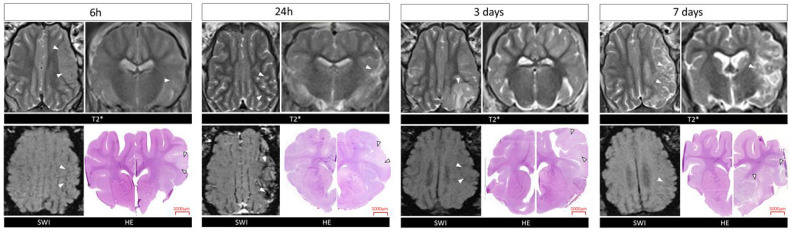 Figure 1
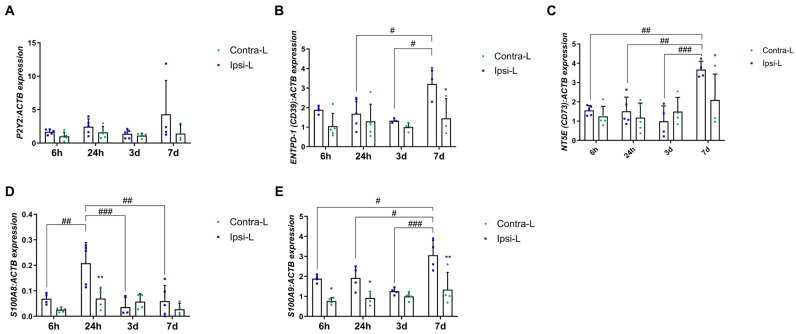 Figure 2
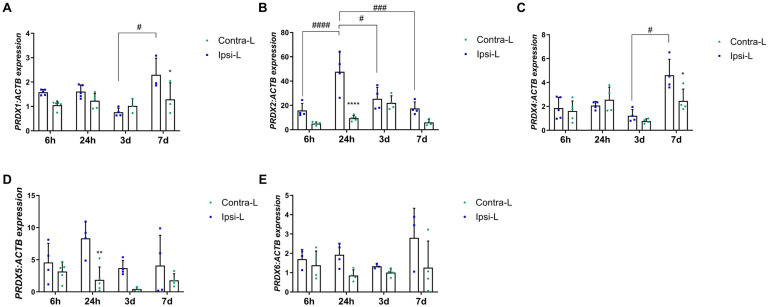 Figure 3
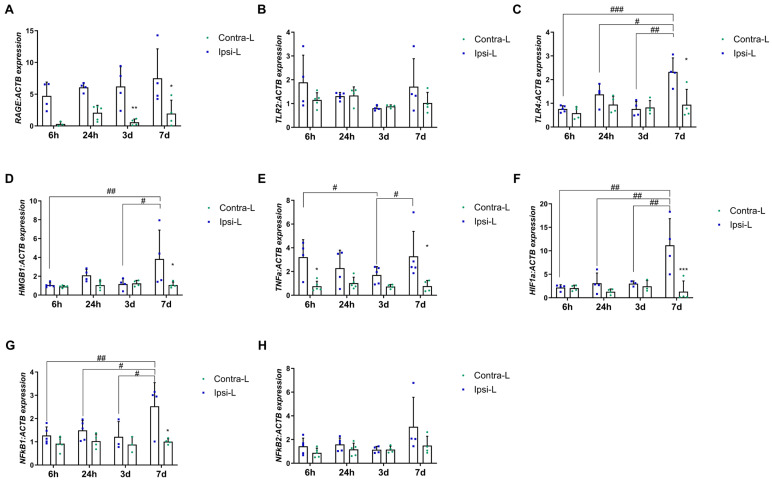 Figure 4
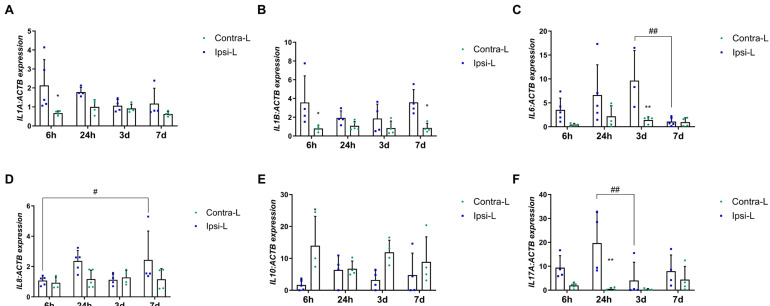 Figure 5
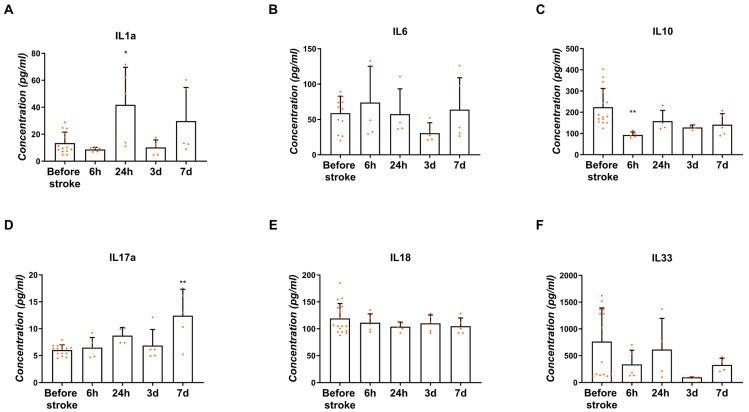 Figure 6
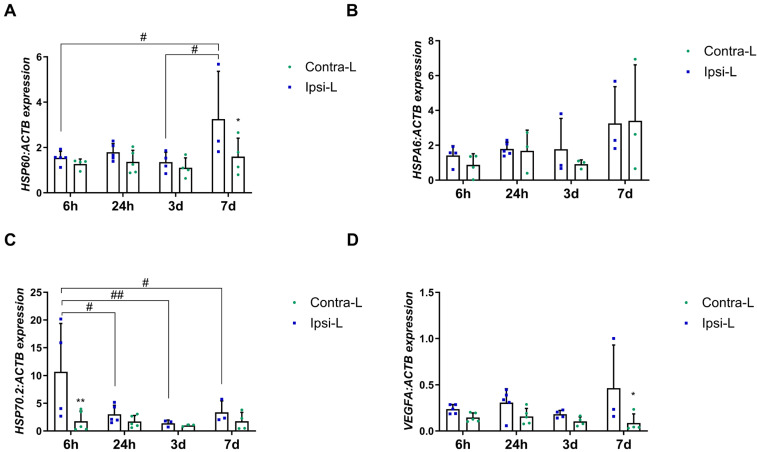 Figure 7
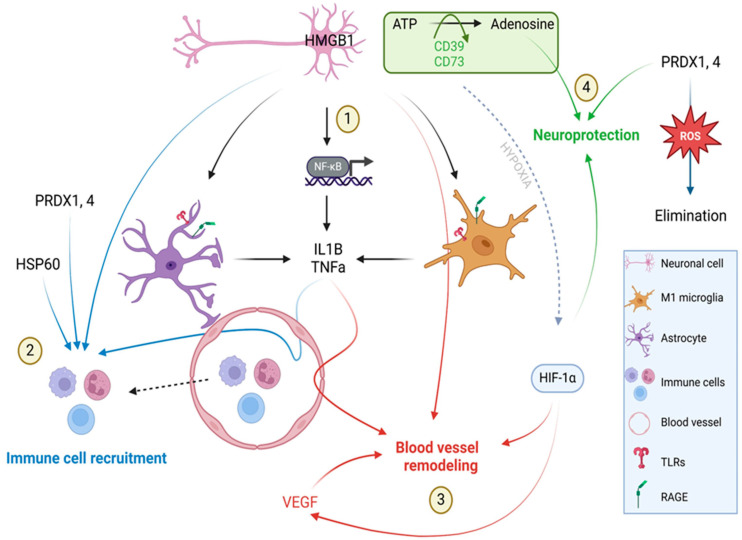 Figure 8
Peer Reviews
No public reviews on file for this paper yet. If you reviewed it on a platform where reviews are public (OpenReview, ICLR, NeurIPS, ICML), you can paste yours below so the community can read it here.
Videos
No videos yet. Explain this paper in a talk, walkthrough, or lecture? Add one.
Taxonomy
TopicsNeuroinflammation and Neurodegeneration Mechanisms · S100 Proteins and Annexins · Redox biology and oxidative stress