More than Just Host Plant Preferences for the Two Main Vectors of Xylella fastidiosa in Europe: Two Insect Species and Two Different Behaviors
Saúl Bernat-Ponce, Rosalía García-García, Cristina M. Aure, Lorena Nieves, Juan Pedro Bouvet, Francisco J. Beitia, César Monzó

TL;DR
This study shows that two insect vectors of Xylella fastidiosa in Europe have different plant preferences and behaviors, which can inform strategies to control the spread of the disease.
Contribution
The study reveals distinct oviposition and nymphal development behaviors of two Xylella vectors under semi-field conditions.
Findings
Neophilaenus campestris prefers grass for egg-laying and nymph development.
Philaenus spumarius lays eggs on dry soil and favors single-host environments for higher oviposition rates.
Nymphs of both species survive best on their preferred host plants.
Abstract
Xylella fastidiosa is a plant disease-causing bacterium that has devastating impacts on global agriculture, affecting crops such as olives, grapes, and citrus. In Europe, two main insect species are responsible for transmitting the disease: the spittle bugs Neophilaenus campestris and Philaenus spumarius. Understanding how these insects interact with plants is essential to limiting the spread of the disease. In this work, we studied how plant species and habitat diversity influence the oviposition behavior of adult females and the development of nymphs in both species. Neophilaenus campestris showed a strong preference for grass plants for both egg-laying and nymph development, while P. spumarius primarily laid its eggs on dry soil substrates, regardless of the host plant species. Interestingly, P. spumarius females had increased oviposition rates when only a single preferential host…
Genes, proteins, chemicals, diseases, species, mutations and cell lines named across the full text — each resolved to its canonical identifier and authoritative record.
Click any figure to enlarge with its caption.
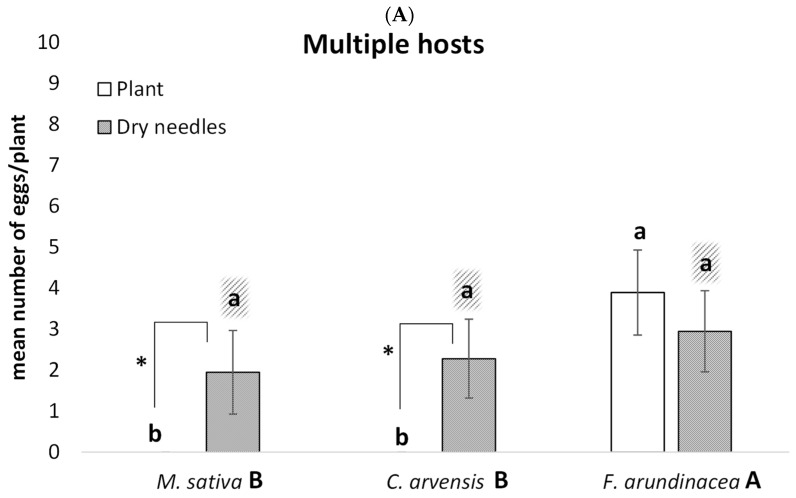 Figure 1
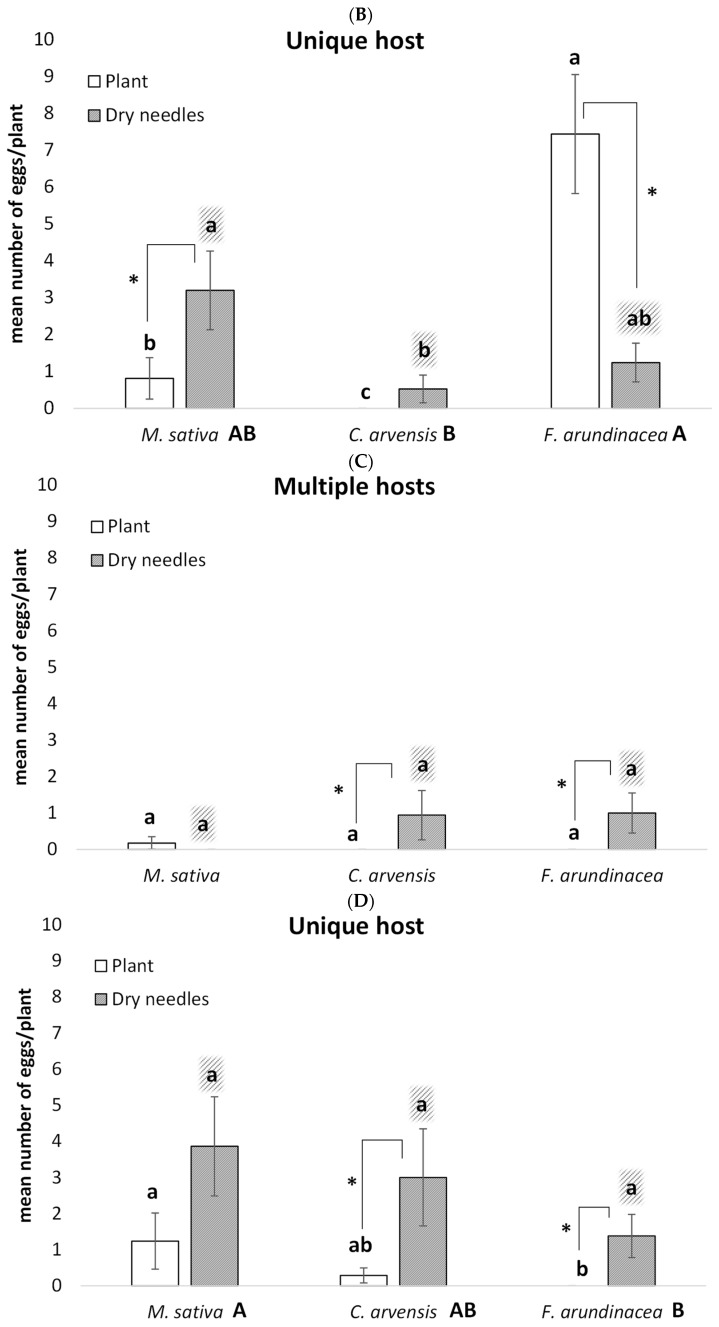 Figure 2
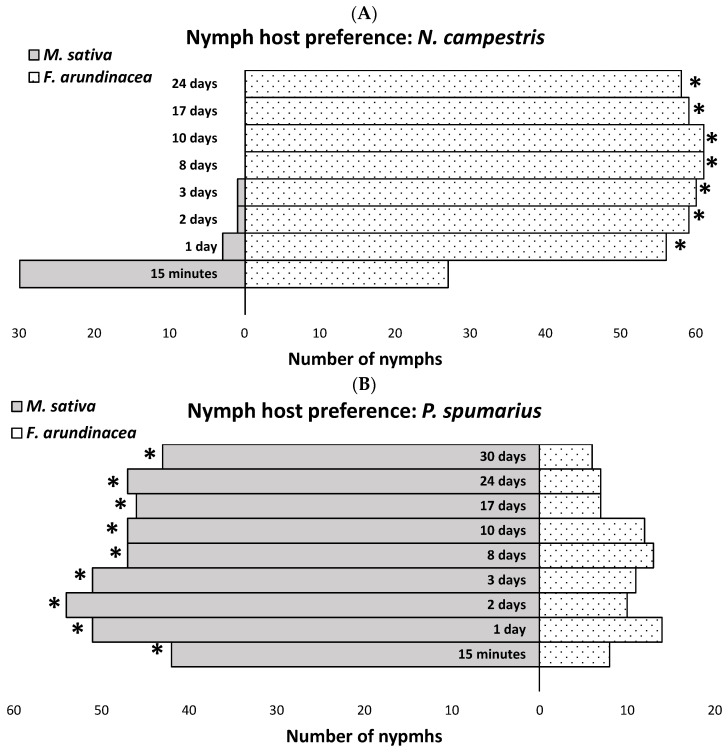 Figure 3
Peer Reviews
No public reviews on file for this paper yet. If you reviewed it on a platform where reviews are public (OpenReview, ICLR, NeurIPS, ICML), you can paste yours below so the community can read it here.
Videos
No videos yet. Explain this paper in a talk, walkthrough, or lecture? Add one.
Taxonomy
TopicsPhytoplasmas and Hemiptera pathogens · Insect symbiosis and bacterial influences · Cocoa and Sweet Potato Agronomy