In Vitro Cytotoxicity Evaluation of Nanosized Hydroxyapatite and Fluorapatite on Cell Lines and Their Relevance to the Alveolar Augmentation Process
Wojciech Zakrzewski, Maria Szymonowicz, Anna Nikodem, Agnieszka Rusak, Zbigniew Rybak, Katarzyna Szyszka, Dorota Diakowska, Benita Wiatrak, Rafal J. Wiglusz, Maciej Dobrzyński

TL;DR
This study compares nanosized hydroxyapatite and fluorapatite materials for dental bone augmentation, finding both to be biocompatible and non-toxic.
Contribution
The study introduces a novel comparison of nHAp and nFAp materials using in vitro cytotoxicity and fluoride release assessments.
Findings
Both nHAp and nFAp showed cell viability above 70%, indicating no cytotoxicity.
nFAp released significantly more fluoride ions compared to nHAp.
Fluoride release was highest in the first 3 hours and varied with solution pH.
Abstract
Background/Objectives: Materials with an apatite structure were investigated in vitro in dental bone augmentation procedures. This scientific study aimed to compare nanosized hydroxyapatite (nHAp) and fluorapatite (nFAp) materials in the form of tablets in in vitro studies, including cytotoxicity assessment and fluoride release. Methods: The nHAp and nFAp nanosized materials were obtained using the microwave hydrothermal method. Subsequently, the tablets were prepared from these nanosized powders as further studied materials. Cytotoxicity tests were conducted on Balb/3T3 fibroblast cells and L929 cells. Fluoride ion release was tested at 3, 24, 48, 72, and 168 h periods. Results: Both materials presented viability levels above 70%, indicating a lack of cytotoxic potential. The amount of fluoride (F−) ions released and accumulated from nFAp was greatly higher than from nHAp. The release…
Genes, proteins, chemicals, diseases, species, mutations and cell lines named across the full text — each resolved to its canonical identifier and authoritative record.
Click any figure to enlarge with its caption.
 Figure 1
 Figure 2
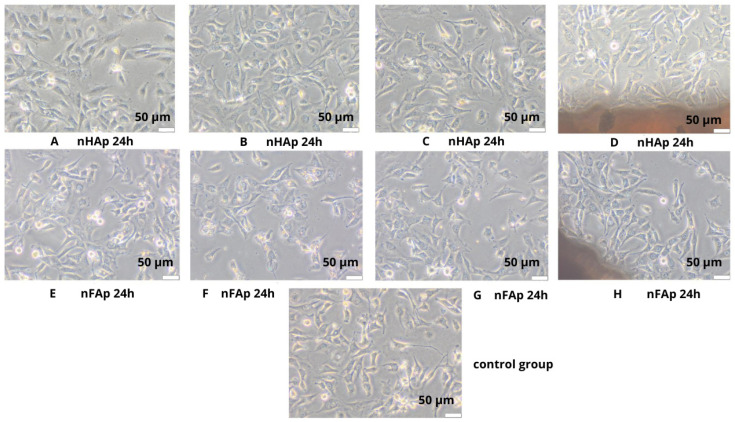 Figure 3
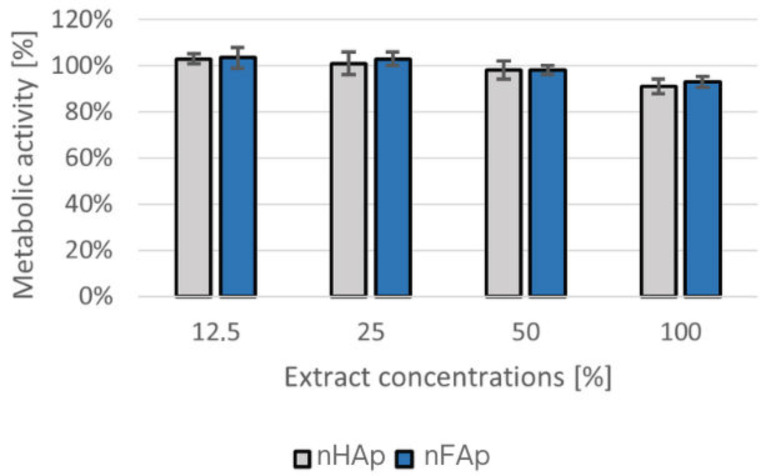 Figure 4
Peer Reviews
No public reviews on file for this paper yet. If you reviewed it on a platform where reviews are public (OpenReview, ICLR, NeurIPS, ICML), you can paste yours below so the community can read it here.
Videos
No videos yet. Explain this paper in a talk, walkthrough, or lecture? Add one.
Taxonomy
TopicsBone Tissue Engineering Materials · Anesthesia and Neurotoxicity Research · Dental materials and restorations