Quantitative Assessment of Fixational Disparity Using a Binocular Eye-Tracking Technique in Children with Strabismus
Xiaoyi Hou, Xubo Yang, Bingjie Chen, Yongchuan Liao

TL;DR
This study uses eye tracking to measure fixational disparities in children with strabismus and finds that surgery improves these disparities, especially horizontally.
Contribution
The study introduces a binocular eye-tracking method to quantitatively assess fixational disparities in children with strabismus before and after surgery.
Findings
Children with strabismus showed significant fixational disparities compared to healthy children.
Fixational disparities decreased in the horizontal direction after strabismus surgery.
A negative correlation exists between visual acuity and fixational disparities in strabismus patients.
Abstract
Fixational eye movements are important for holding the central visual field on a target for a specific period of time. In this study, we aimed to quantitatively assess fixational disparities using binocular eye tracking in children with strabismus (before and after surgical alignment) and healthy children. Fixational disparities in 117 children (4–18 years; 57 with strabismus and 60 age-similar healthy controls) were recorded under binocular viewing with corrected refractive errors. Disparities in gaze positions relative to the target location were recorded for both eyes. The main outcome measures included fixational disparities along horizontal and vertical axes in the fixation test. Children with strabismus exhibited significant (p < 0.001) fixational disparities compared to healthy children in both horizontal and vertical directions. Additionally, children with esotropia had poorer…
Genes, proteins, chemicals, diseases, species, mutations and cell lines named across the full text — each resolved to its canonical identifier and authoritative record.
Click any figure to enlarge with its caption.
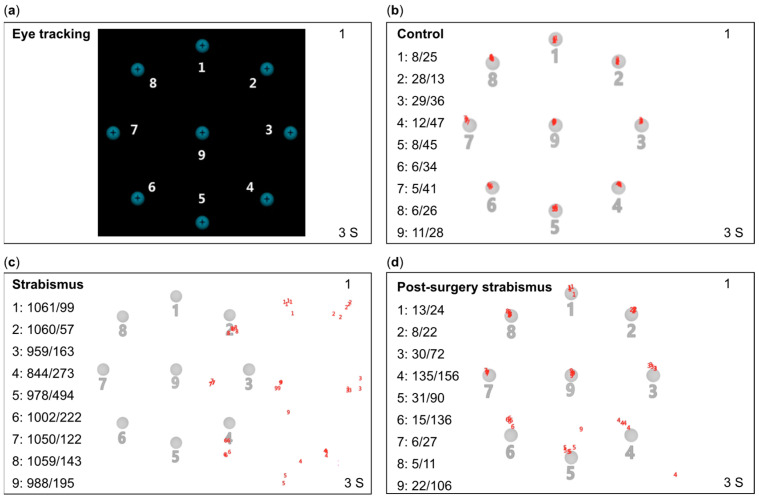 Figure 1
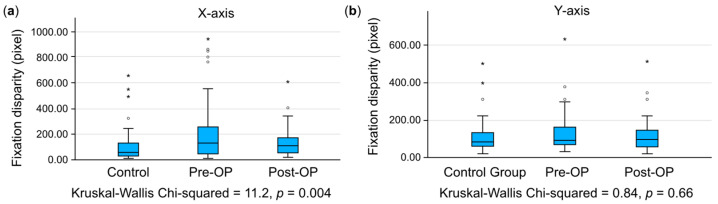 Figure 2
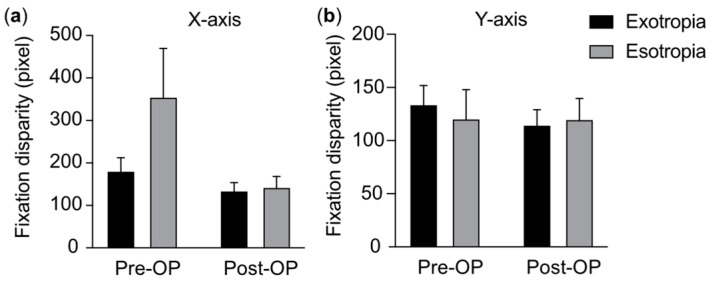 Figure 3
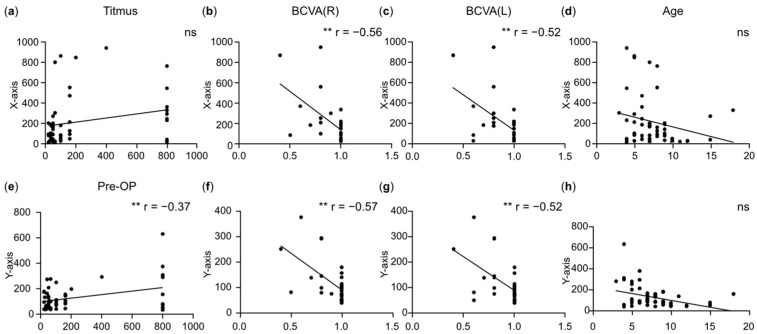 Figure 4
Peer Reviews
No public reviews on file for this paper yet. If you reviewed it on a platform where reviews are public (OpenReview, ICLR, NeurIPS, ICML), you can paste yours below so the community can read it here.
Videos
No videos yet. Explain this paper in a talk, walkthrough, or lecture? Add one.
Taxonomy
TopicsOphthalmology and Eye Disorders · Ophthalmology and Visual Impairment Studies · Glaucoma and retinal disorders