The Usefulness of Testosterone in Saliva Tests to Detect Testosterone Deficiency in Men with Advanced Chronic Kidney Disease: A Single-Center Study
Ksymena Leśniak, Arkadiusz Lubas, Stanisław Niemczyk

TL;DR
This study shows that measuring testosterone in saliva can effectively detect testosterone deficiency in men with advanced kidney disease, including those on dialysis.
Contribution
The study introduces saliva testosterone testing as a non-invasive alternative for diagnosing testosterone deficiency in men with advanced chronic kidney disease.
Findings
Saliva testosterone levels correlated with calculated serum-free testosterone in CKD and hemodialysis patients.
A saliva testosterone cut-off of ≤60.6 pg/mL detected testosterone deficiency with 73.9% sensitivity and 77.8% specificity.
Saliva testosterone was higher than calculated serum-free testosterone in hemodialysis patients.
Abstract
Background: Hypogonadism frequently occurs among men with chronic kidney disease (CKD) and is a highly unfavorable prognostic factor. Therefore, a simple and common screening for testosterone deficiency may be important. The measurement of testosterone in saliva appears to be an attractive alternative to serum testosterone. This study aimed to assess the usefulness of determining free testosterone concentration in saliva to detect testosterone deficiency in men with advanced CKD, including those on dialysis. Methods: A total of 77 adult, male patients (aged 41–89 years old)—30 with CKD stage G3-G4, 30 on hemodialysis (HD), and 17 on peritoneal dialysis (PD)—were evaluated. The concentration of free testosterone was determined in saliva (SalFT), while the concentration of total testosterone (TT) was determined in blood serum. Serum-free testosterone levels were calculated (cFT). Results:…
Genes, proteins, chemicals, diseases, species, mutations and cell lines named across the full text — each resolved to its canonical identifier and authoritative record.
Click any figure to enlarge with its caption.
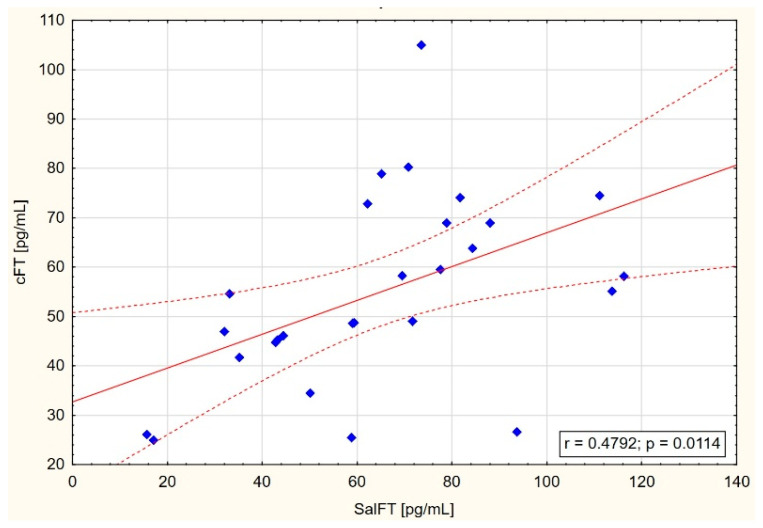 Figure 1
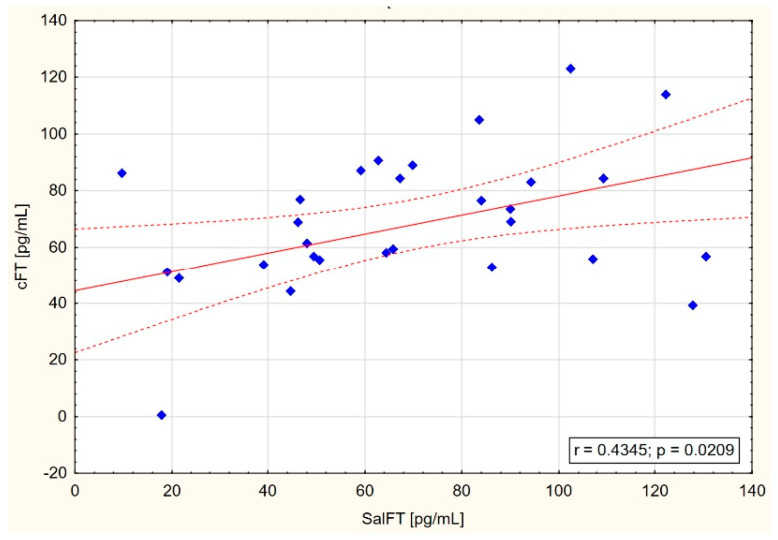 Figure 2
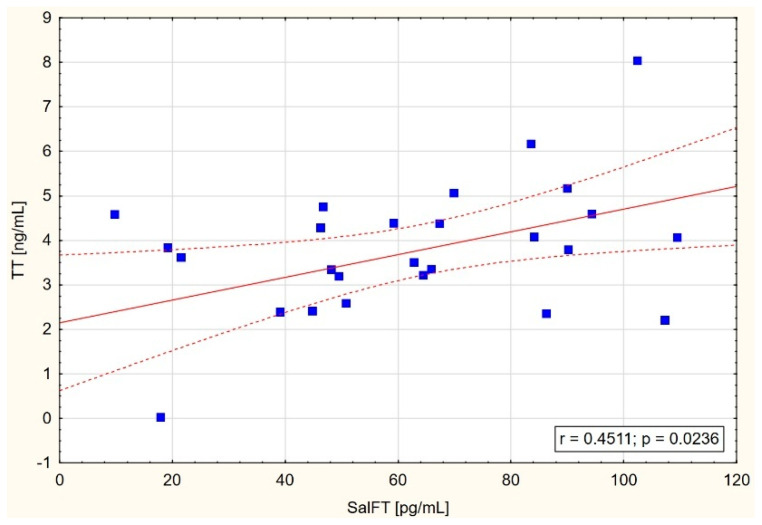 Figure 3
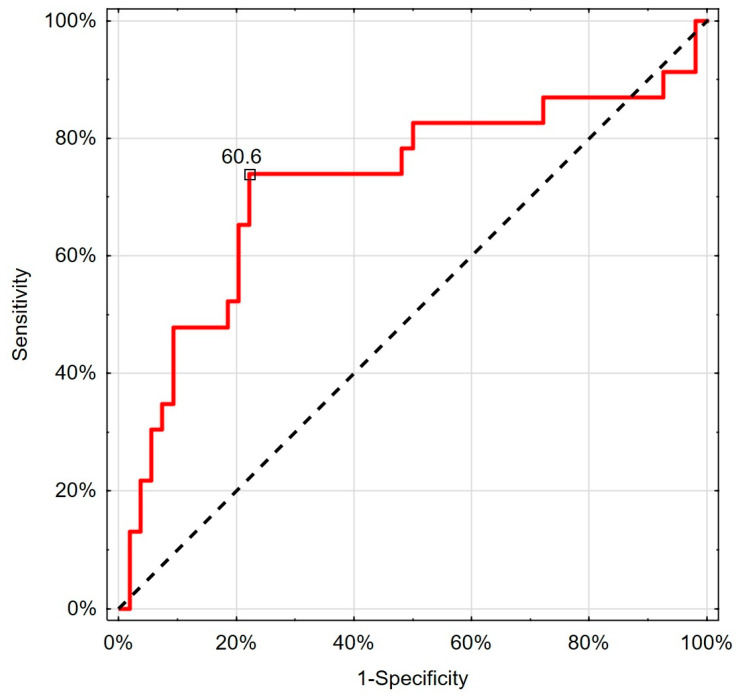 Figure 4
Peer Reviews
No public reviews on file for this paper yet. If you reviewed it on a platform where reviews are public (OpenReview, ICLR, NeurIPS, ICML), you can paste yours below so the community can read it here.
Videos
No videos yet. Explain this paper in a talk, walkthrough, or lecture? Add one.
Taxonomy
TopicsHormonal and reproductive studies · Sexual Differentiation and Disorders · Sexual function and dysfunction studies