Global Analysis of Nutritional Factors and Cardiovascular Risk: Insights from Worldwide Data and a Case Study in Mexican Children
Karmina Sánchez-Meza, Gustavo A. Hernández-Fuentes, Estibaliz Sánchez-Meza, Ivan Delgado-Enciso, Carmen A. Sánchez-Ramírez, Roberto Muñiz-Valencia, José Guzmán-Esquivel, Idalia Garza-Veloz, Margarita L. Martinez-Fierro, Iram P. Rodriguez-Sanchez, Janet Diaz-Martinez

TL;DR
This study explores how nutritional factors like linoleic acid and omega-3 fatty acids relate to cardiovascular risk in children and globally, finding a strong link between linoleic acid levels and body measurements tied to heart disease risk.
Contribution
The study introduces a novel correlation between serum linoleic acid levels and the waist-to-height ratio in children as an early cardiometabolic risk indicator.
Findings
A significant positive correlation (rho = 0.716) was found between serum linoleic acid levels and waist-to-height ratio in children.
Low seafood omega-3 fatty acid intake moderately correlated with CVD incidence (rho = 0.341) globally.
Linoleic acid levels also correlated with weight (rho = 0.684) in children.
Abstract
Cardiovascular diseases (CVDs) are the leading cause of mortality worldwide, with growing concerns about the impact of omega-6 polyunsaturated fatty acids (n-6 PUFAs) on cardiovascular health. This study aims to evaluate the relationship between serum linoleic acid (LA) levels and waist-to-height ratio (WHtR), a recognized cardiovascular risk marker, in children. The research was conducted in two parts. First, a global analysis of publicly available data (2019–2021) explored the association between nutritional factors and CVD prevalence across 183 countries. Second, a cross-sectional study involving 67 children (33 with obesity and 34 with healthy weight, classified using BMI Z-scores) examined the correlation between serum LA levels and WHtR. Global analysis revealed a moderate correlation between low seafood omega-3 fatty acid intake and CVD incidence (rho = 0.341), while low…
Genes, proteins, chemicals, diseases, species, mutations and cell lines named across the full text — each resolved to its canonical identifier and authoritative record.
Click any figure to enlarge with its caption.
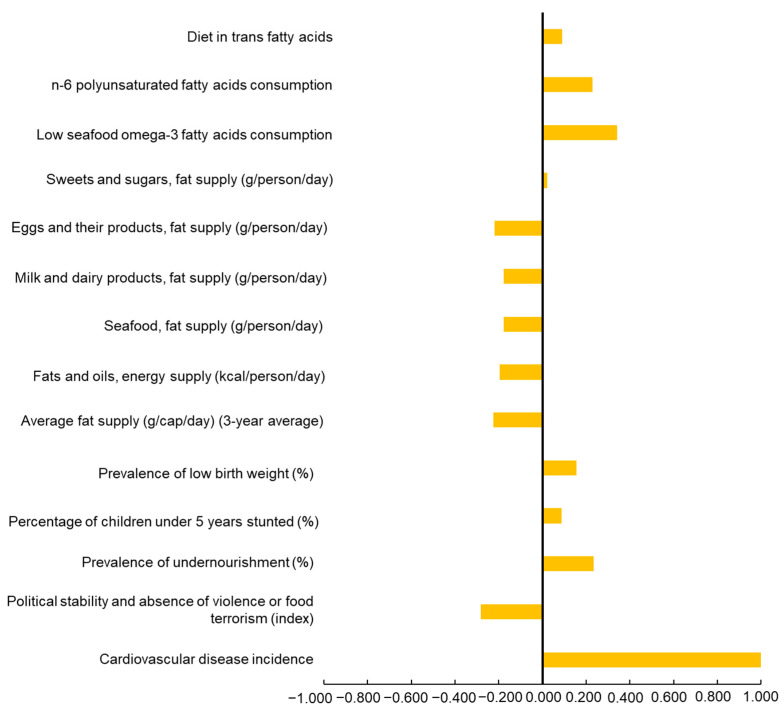 Figure 1
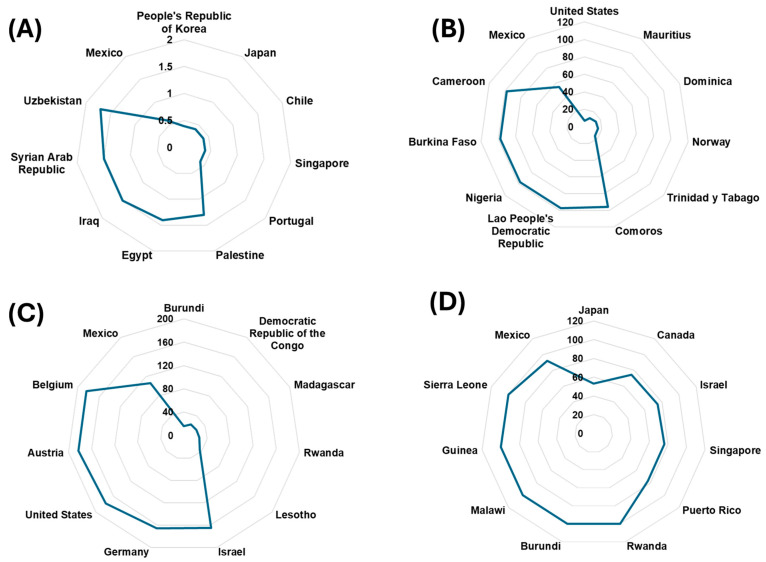 Figure 2
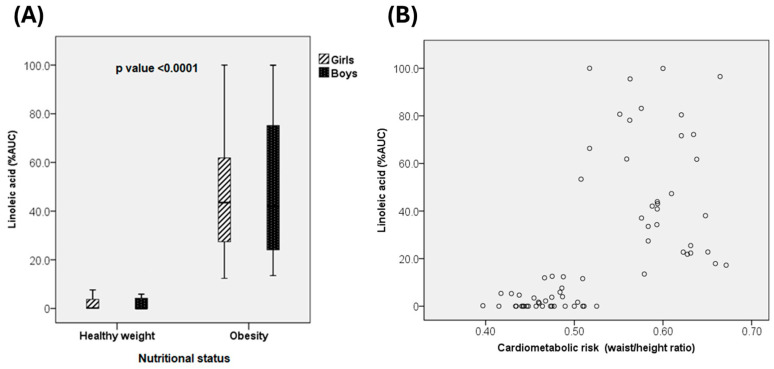 Figure 3
Peer Reviews
No public reviews on file for this paper yet. If you reviewed it on a platform where reviews are public (OpenReview, ICLR, NeurIPS, ICML), you can paste yours below so the community can read it here.
Videos
No videos yet. Explain this paper in a talk, walkthrough, or lecture? Add one.
Taxonomy
TopicsFatty Acid Research and Health · Obesity, Physical Activity, Diet · Cardiovascular Disease and Adiposity