The Delineation of Management Zones of the Halyomorpha halys (Hemiptera: Pentatomidae) Population Based on Its Spatiotemporal Distribution for Precision Agriculture Purposes
Vasileios Liakos, Eleni I. Koutsogeorgiou, Sofia Charouli, Ioannis E. Navrozidis, Georgios Proias, Stefanos S. Andreadis

TL;DR
This study uses precision agriculture to manage stink bug populations in kiwi orchards by identifying zones for targeted pesticide use based on canopy health data.
Contribution
A novel approach to delineate pest management zones using remote sensing and GIS for variable-rate pesticide application in kiwi orchards.
Findings
H. halys populations correlate with higher NDVI and NDWI values, indicating preference for healthier, moister canopies.
GIS-based K means clustering identified three stable risk zones (low, medium, high) across orchards and seasons.
The approach reduces pesticide use, environmental impact, and production costs while maintaining pest control.
Abstract
This study explores the use of Precision Agriculture techniques to manage the brown marmorated stink bug (Halyomorpha halys) in kiwi orchards, focusing on delineating management zones (MZs) for variable-rate pesticide applications by integrating pest monitoring data with canopy characteristics assessed through remote sensing indices. Pheromone traps were installed in four kiwi orchards in Greece over three growing seasons to monitor H. halys populations, and satellite-derived Normalized Difference Vegetation Index (NDVI) and Normalized Difference Water Index (NDWI) values were calculated to assess canopy health and moisture. A significant correlation was observed between H. halys population densities and areas with higher NDVI and NDWI values, indicating the pest’s preference for healthier, more humid canopy conditions. Using GIS-based K means clustering, this study delineated three…
Genes, proteins, chemicals, diseases, species, mutations and cell lines named across the full text — each resolved to its canonical identifier and authoritative record.
Click any figure to enlarge with its caption.
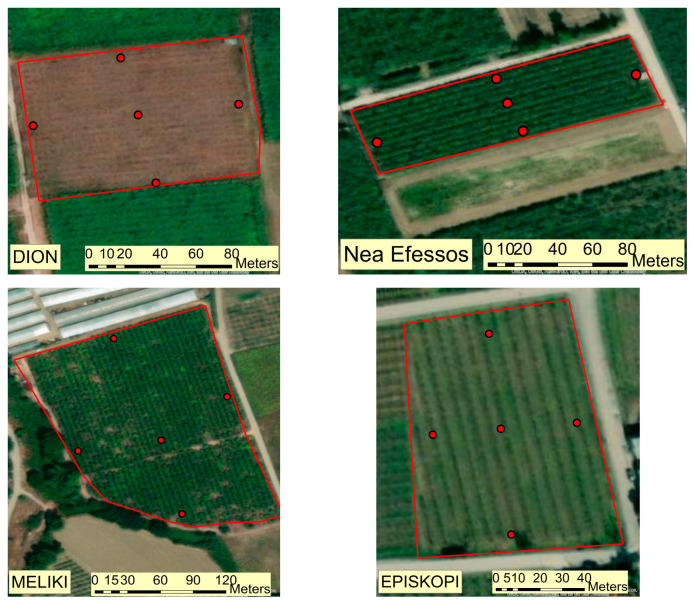 Figure 1
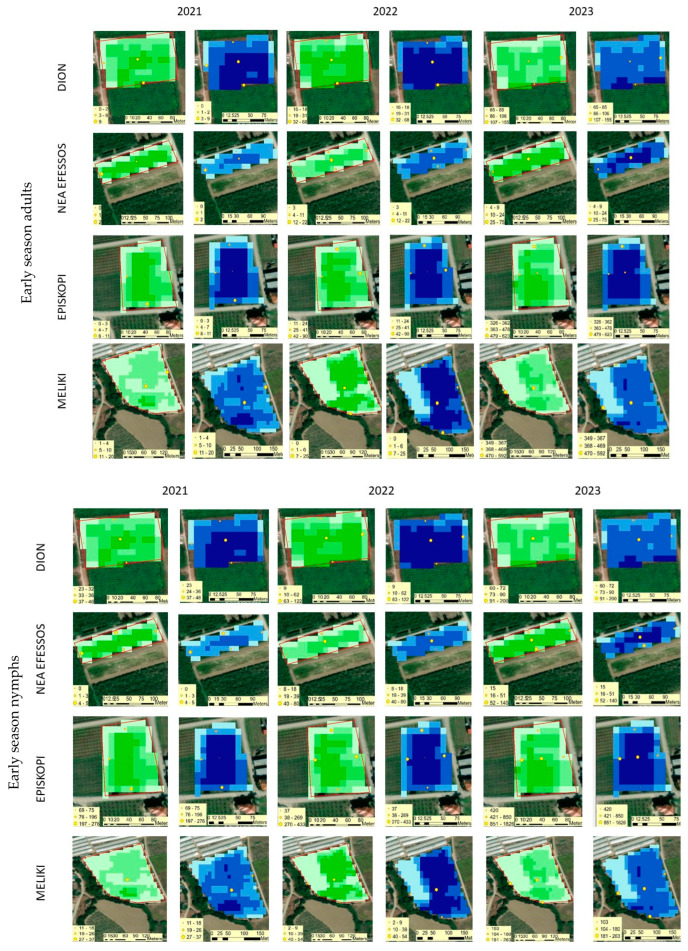 Figure 2
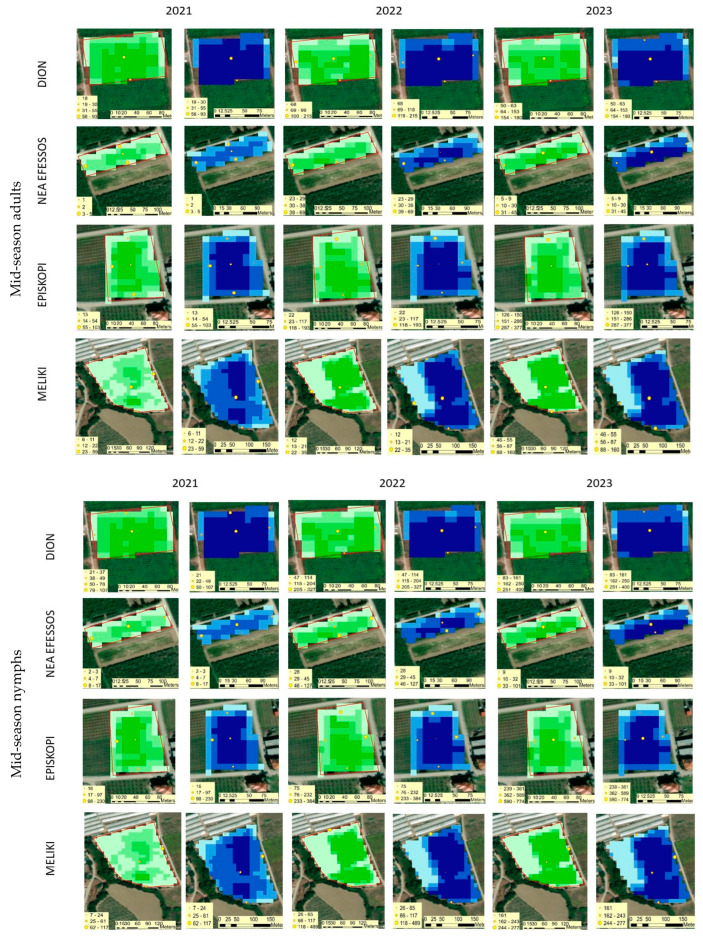 Figure 3
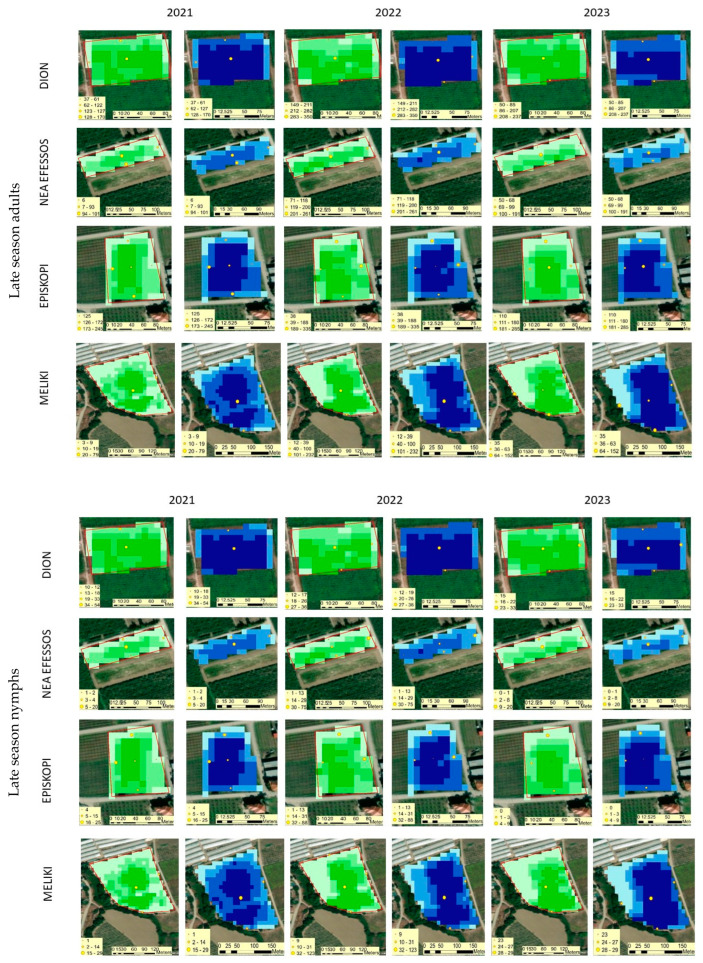 Figure 4
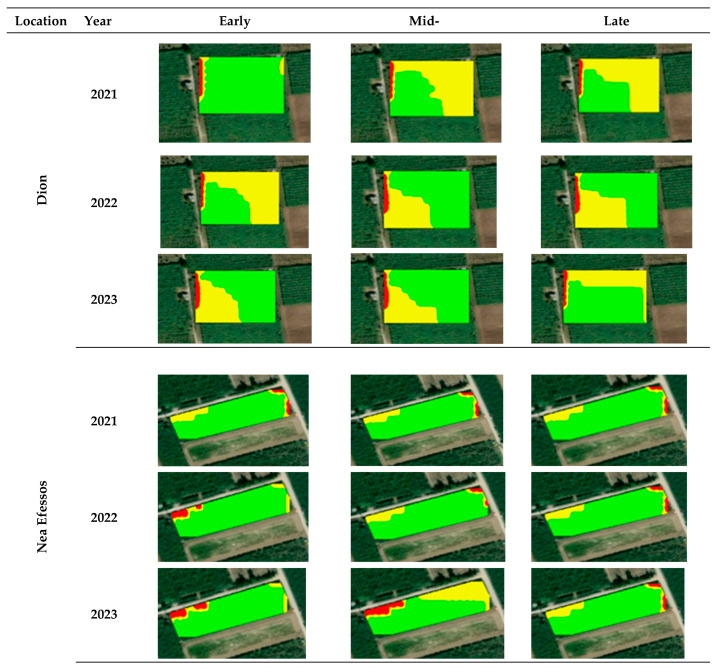 Figure 5
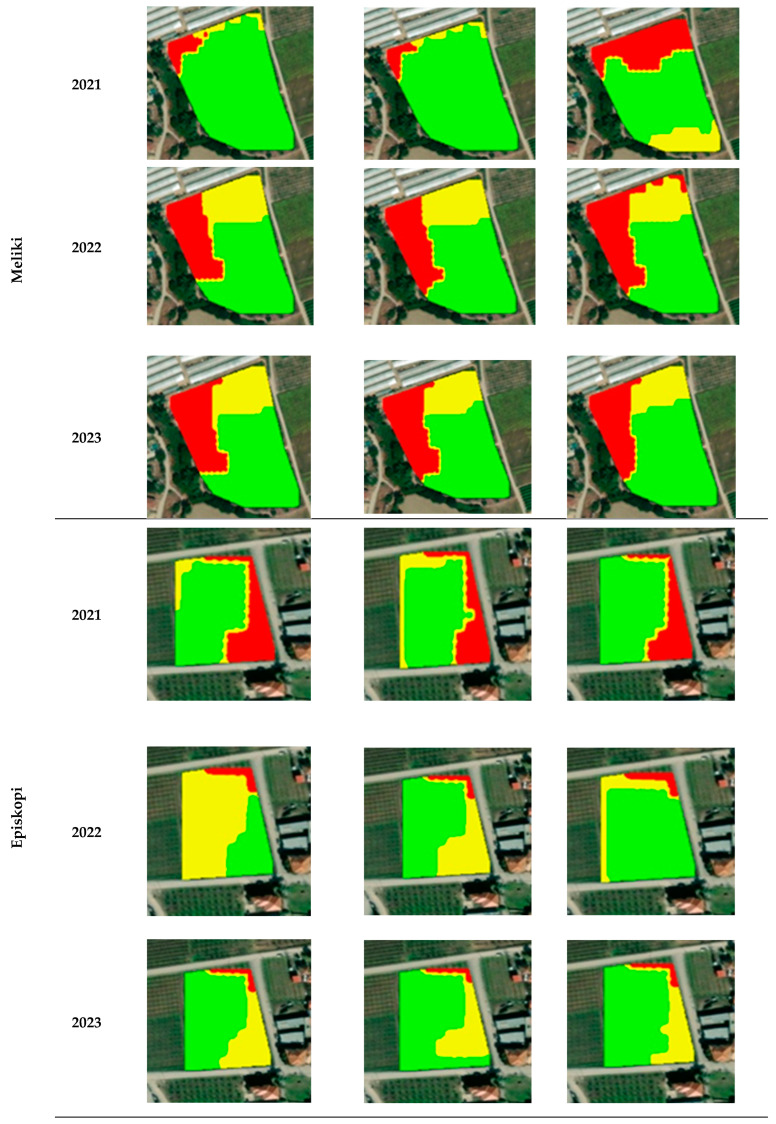 Figure 6
Peer Reviews
No public reviews on file for this paper yet. If you reviewed it on a platform where reviews are public (OpenReview, ICLR, NeurIPS, ICML), you can paste yours below so the community can read it here.
Videos
No videos yet. Explain this paper in a talk, walkthrough, or lecture? Add one.
Taxonomy
TopicsHemiptera Insect Studies · Insect and Arachnid Ecology and Behavior · Insects and Parasite Interactions