Clinical Significance and Prognosis of Prenatal Diagnosis of Large Umbilical Cord Cysts—A Review Triggered by a Clinical Case
Șerban Nastasia, Adina Elena Nenciu, Manuela Cristina Russu, Adrian Valeriu Neacșu, Iuliana Ceaușu, Nicoleta Adelina Achim

TL;DR
This paper reviews the clinical significance and outcomes of large umbilical cord cysts, highlighting their uncertain prognosis and potential risks for fetal complications.
Contribution
The study presents a case of a large umbilical cord cyst leading to fetal demise and reviews existing literature to assess prognosis and risk factors.
Findings
Large umbilical cord cysts are associated with an uncertain and potentially unfavorable prognosis.
Trisomy 18 was the most frequent genetic disorder found in cases with modified genetic test results.
Single umbilical cord cysts are more common than multiple cysts, with no significant difference in localization.
Abstract
Background/Objectives: Prevalence of umbilical cord cysts is largely unknown, mainly due to small dimensions and to the fact that only placental and fetal insertion of the umbilical cord are usually assessed. Older studies report a total prevalence of about 3%, regardless of the size. To date, no correlation between the gestational age, the size of the cyst at the moment of diagnosis and pregnancy prognosis can be made. Methods: We managed a case of a large umbilical cyst diagnosed in the first trimester. As our experience with this pathology was limited, we performed a systematic review in order to find out the optimal management. Results: We report a case of a large umbilical cord cyst that ended in fetal demise at 13 weeks in the absence of any chromosomal and structural anomalies. Our results differ from what was expected from our literature review. Sixteen papers were included in…
Genes, proteins, chemicals, diseases, species, mutations and cell lines named across the full text — each resolved to its canonical identifier and authoritative record.
Click any figure to enlarge with its caption.
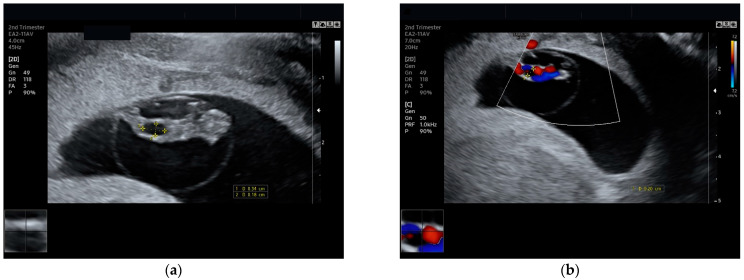 Figure 1
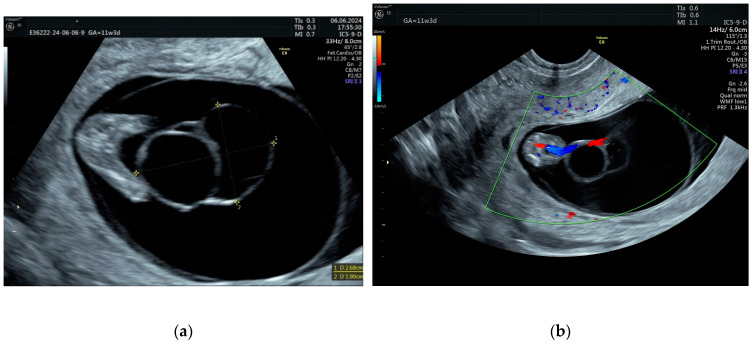 Figure 2
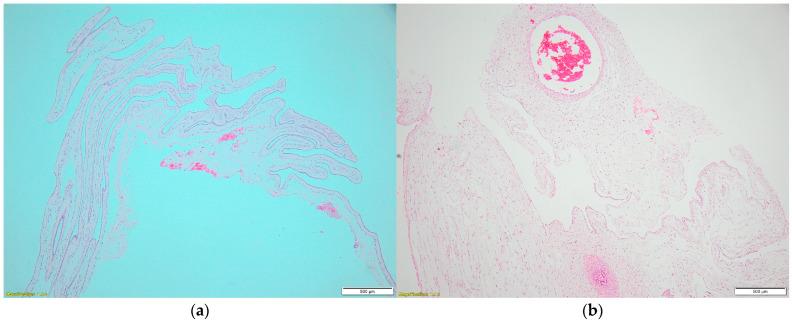 Figure 3
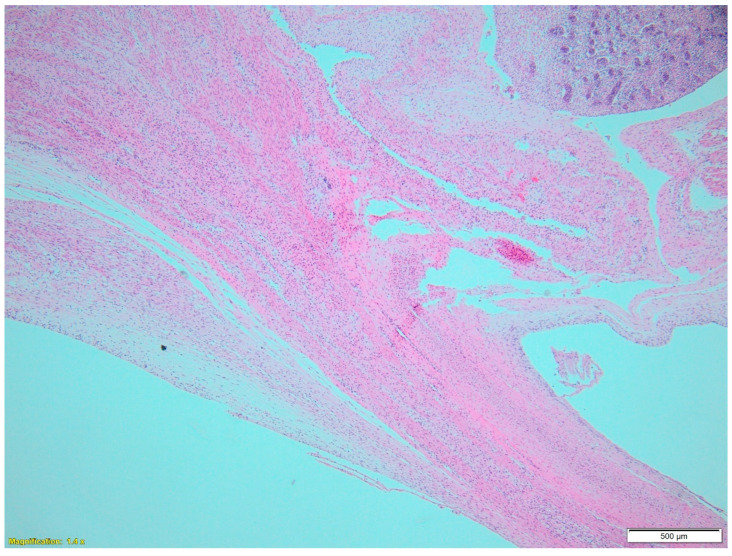 Figure 4
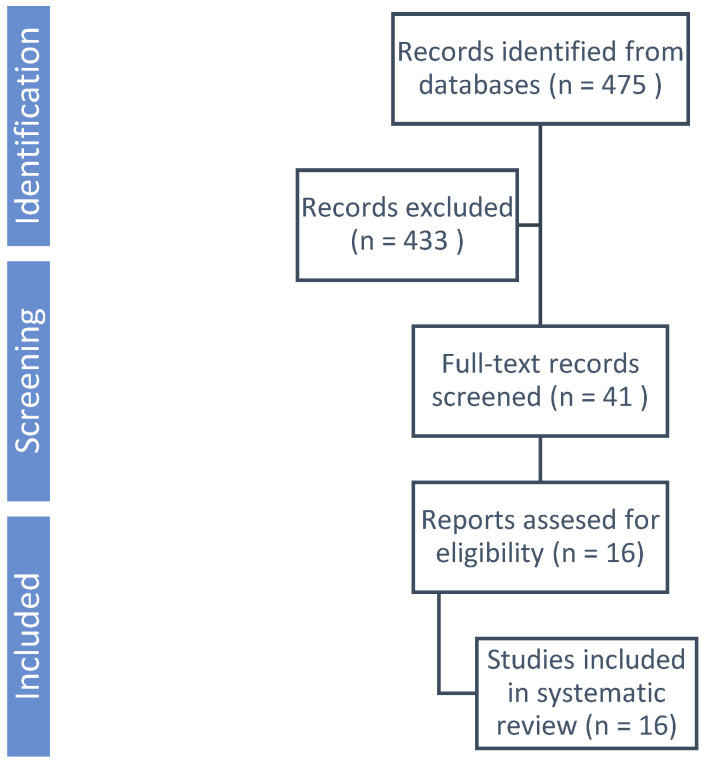 Figure 5
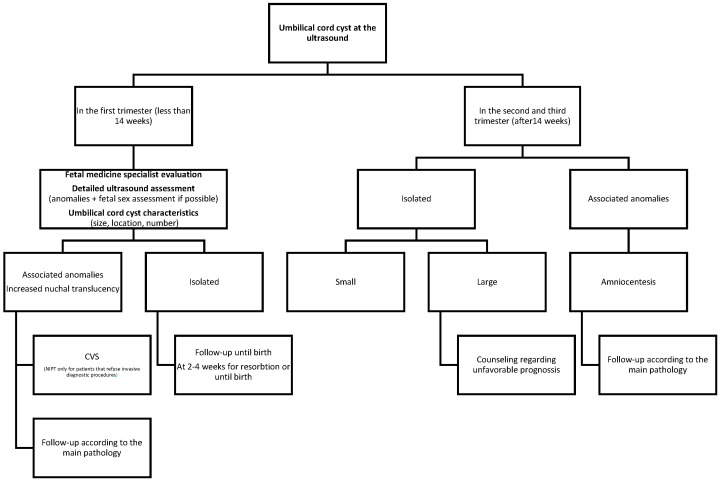 Figure 6
Peer Reviews
No public reviews on file for this paper yet. If you reviewed it on a platform where reviews are public (OpenReview, ICLR, NeurIPS, ICML), you can paste yours below so the community can read it here.
Videos
No videos yet. Explain this paper in a talk, walkthrough, or lecture? Add one.
Taxonomy
TopicsUrological Disorders and Treatments · Urinary and Genital Oncology Studies · Congenital Diaphragmatic Hernia Studies