A Quinoxaline 1,4-Dioxide Activates DNA Repair Systems in Mycobacterium smegmatis: A Transcriptomic Study
Olga B. Bekker, Olesya O. Galanova, Aleksey A. Vatlin, Svetlana G. Frolova, Egor A. Shitikov, Dmitry A. Bespiatykh, Ksenia M. Klimina, Vladimir A. Veselovsky, Rustem A. Ilyasov, Svetlana V. Smirnova, Diana A. Reznikova, Nikita I. Kochetkov, Dmitry A. Maslov, Valery N. Danilenko

TL;DR
This study shows that a quinoxaline compound activates DNA repair systems in Mycobacterium smegmatis, suggesting a new approach for tuberculosis treatment.
Contribution
The study reveals a novel mechanism of action for quinoxaline 1,4-dioxide compounds involving DNA damage and repair activation in M. smegmatis.
Findings
Exposure to LCTA-3368 upregulates genes involved in DNA repair and replication in M. smegmatis.
The compound increases reactive oxygen species concentration in a dose-dependent manner.
95 genes encoding oxidoreductase activity proteins show altered expression after treatment.
Abstract
In 2022, the World Health Organization reported that tuberculosis (TB) was the second leading cause of death globally from a single infectious agent following COVID-19. The development of new antitubercular agents with novel mechanisms of action for use in complex TB therapy is considered a key approach to combating TB. In this study, we examined the gene expression profile of M. smegmatis when exposed to a promising antituberculosis agent, quinoxaline 1,4-dioxide (QdNO) 7-chloro-2-(ethoxycarbonyl)-3-methyl-6-(piperazin-1-yl)quinoxaline-1,4-dioxide-1 (LCTA-3368). We investigated how the bacterial response changed with different minimum inhibitory concentrations (MIC) (1/4 × MIC, 1/2 × MIC, and 1 × MIC) and durations (30 min and 90 min) of treatment with the drug. Our analysis revealed significant upregulation in genes involved in DNA repair and replication processes, as well as changes…
Genes, proteins, chemicals, diseases, species, mutations and cell lines named across the full text — each resolved to its canonical identifier and authoritative record.
Click any figure to enlarge with its caption.
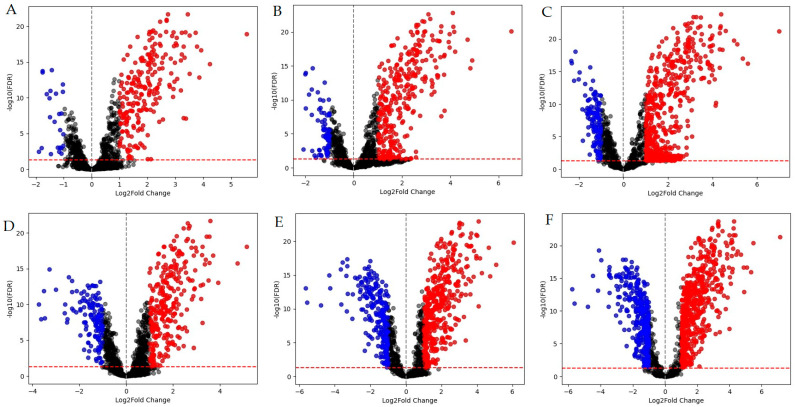 Figure 1
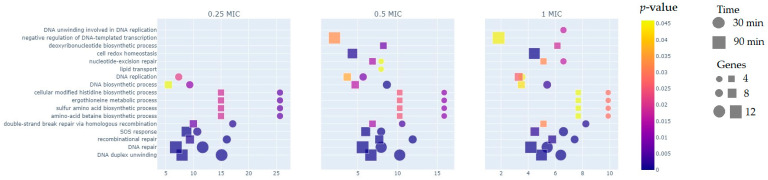 Figure 2
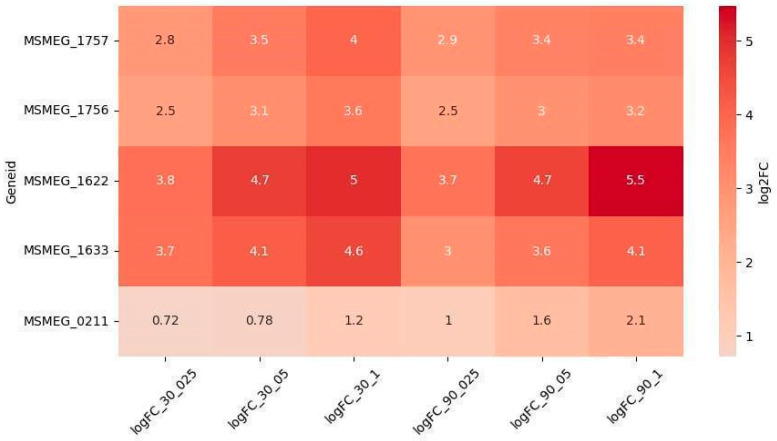 Figure 3
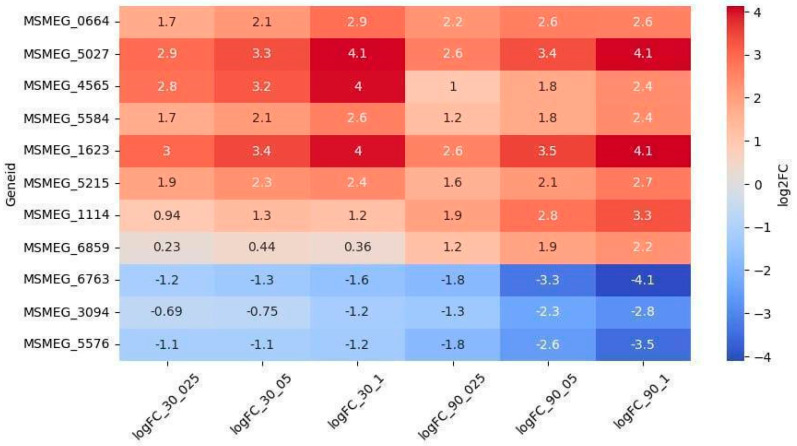 Figure 4
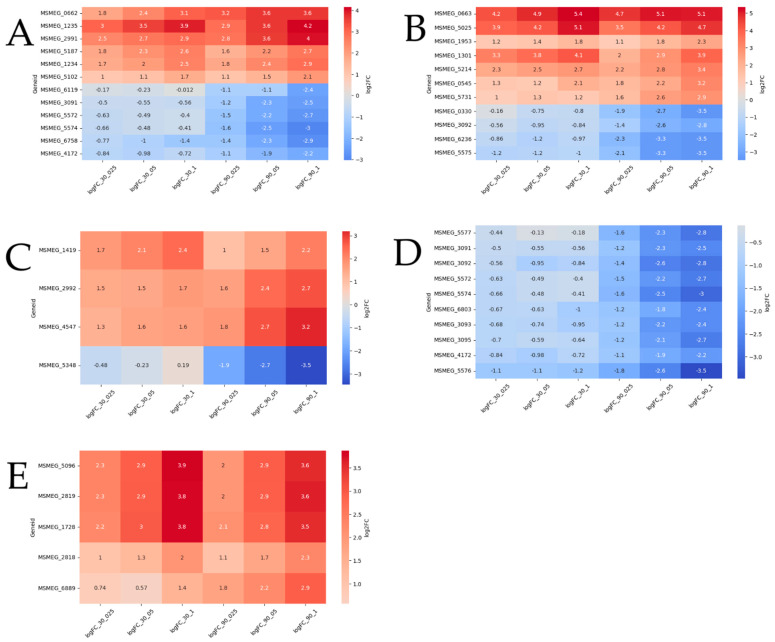 Figure 5
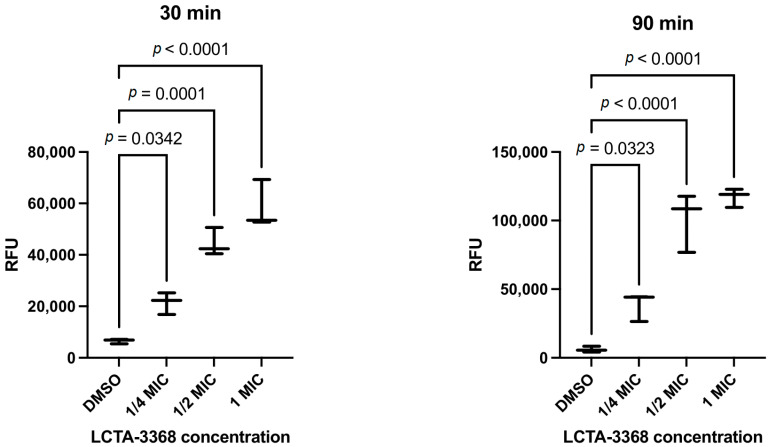 Figure 6
Peer Reviews
No public reviews on file for this paper yet. If you reviewed it on a platform where reviews are public (OpenReview, ICLR, NeurIPS, ICML), you can paste yours below so the community can read it here.
Videos
No videos yet. Explain this paper in a talk, walkthrough, or lecture? Add one.
Taxonomy
TopicsSynthesis and Biological Evaluation · Bioactive Compounds and Antitumor Agents · Mycobacterium research and diagnosis