A Novel Screening Approach for Familial Hypercholesterolemia: A Genetic Study on Patients Detected Using Preexisting Centralized Analytics
Joaquín Sánchez-Prieto, Fernando Sabatel, Fátima Moreno, Miguel A. Arias, Luis Rodríguez-Padial

TL;DR
This study identifies a high rate of genetic mutations in patients with familial hypercholesterolemia, showing that these mutations increase cardiovascular disease risk.
Contribution
A new population-based screening approach for FH using centralized analytics is introduced and evaluated.
Findings
70.2% of patients with FH had detectable genetic variants, mostly in the LDLR gene.
Patients with null variants showed a more severe FH phenotype and higher cardiovascular risk.
A genetic risk score revealed a 42% higher cardiovascular disease risk in patients with mutations.
Abstract
Introduction and Objectives: Familial hypercholesterolemia (FH) is an autosomal dominant genetic disorder of lipid metabolism that is characterized by elevated low-density lipoprotein cholesterol (LDL-C) levels and a high risk of atherosclerotic cardiovascular disease. Familial hypercholesterolemia is typically caused by mutations in the LDL receptor gene (LDLR), although other alterations may be found. The aim of this study was to perform a genetic study on a population identified through a new population-based diagnostic screen program for FH. Methods: Genetic variants in LDLR, apolipoprotein B (APOB), apolipoprotein E (APOE), proprotein convertase subtilisin/kexin type 9 (PCSK9), signal transducing Adaptor Family Member 1 (STAP1), low density lipoprotein receptor adaptor protein 1 (LDLRAP1) and lipase A, and lysosomal acid type lipase A (LIPA), as well as a genetic risk score, were…
Genes, proteins, chemicals, diseases, species, mutations and cell lines named across the full text — each resolved to its canonical identifier and authoritative record.
Click any figure to enlarge with its caption.
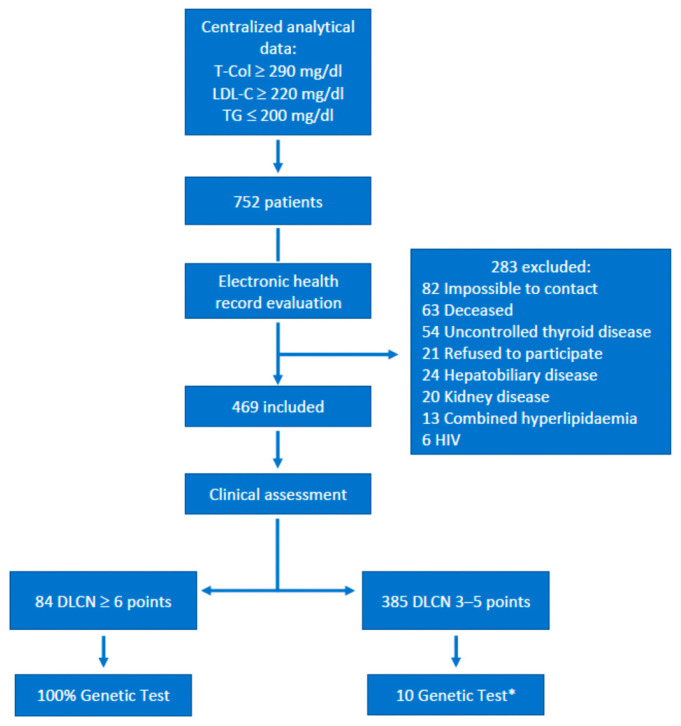 Figure 1
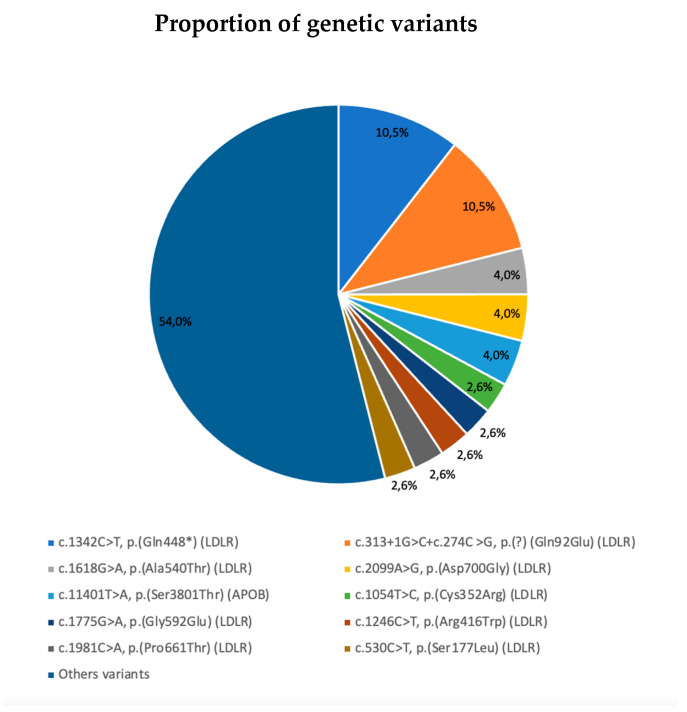 Figure 2
Peer Reviews
No public reviews on file for this paper yet. If you reviewed it on a platform where reviews are public (OpenReview, ICLR, NeurIPS, ICML), you can paste yours below so the community can read it here.
Videos
No videos yet. Explain this paper in a talk, walkthrough, or lecture? Add one.
Taxonomy
TopicsLipoproteins and Cardiovascular Health · Diabetes, Cardiovascular Risks, and Lipoproteins · Lipid metabolism and disorders