Allogeneic Hematopoietic Stem Cell Transplantation in Patients with Prolymphocytic Leukemia
Christina Groiss, Stefanie Kreissl, Irene Strassl, Olga Saini, Dagmar Wipplinger, Robert Milanov, Emine Kaynak, Petra Hasengruber, Christoph Aichinger, Stefanie Nocker, Thomas Bauer, Veronika Buxhofer-Ausch, Sigrid Machherndl-Spandl, Michaela Binder, Alexander Nikoloudis

TL;DR
Allogeneic stem cell transplants improve survival in rare blood cancers called prolymphocytic leukemias, despite high relapse rates.
Contribution
The study highlights the effectiveness of alloHSCT in treating prolymphocytic leukemia with long-term survival despite relapses.
Findings
B-PLL patients treated with alloHSCT remained relapse-free and alive with a median follow-up of 54 months.
Despite a 61% relapse rate in T-PLL patients, median overall survival was 78 months due to successful relapse therapy.
Poor pre-transplant performance status and high comorbidity index were linked to post-transplant mortality.
Abstract
Background: T-prolymphocytic leukemia (T-PLL) is a rare lymphoid neoplasm with particularly poor prognosis. Although it is no longer recognized as a distinct entity by the World Health Organization (WHO), B-prolymphocytic leukemia (B-PLL) comprises conditions with unfavorable outcomes. Both diseases most frequently affect patients in the seventh decade of their lives. Allogeneic hematopoietic stem cell transplantation (alloHSCT) significantly improves outcomes for selected PLL cases, as shown by several, mostly retrospective, analyses. Methods: In this article, we provide a review of existing PLL analyses, followed by a summary of cases treated at our center. We describe outcomes of six T-PLL and three B-PLL cases receiving alloHSCT at our institution between 2015 and 2022. Results: Despite a post-transplant 4-year cumulative relapse incidence of 61% in our T-PLL series, the median OS…
Genes, proteins, chemicals, diseases, species, mutations and cell lines named across the full text — each resolved to its canonical identifier and authoritative record.
Click any figure to enlarge with its caption.
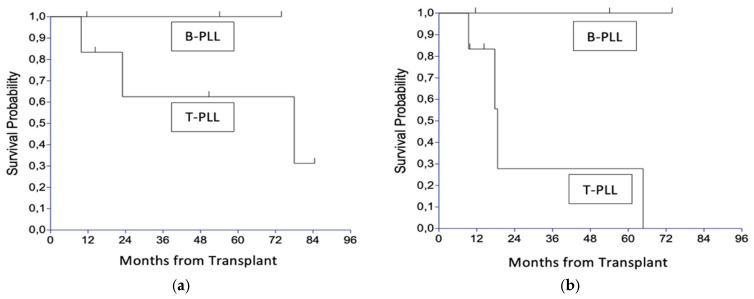 Figure 1
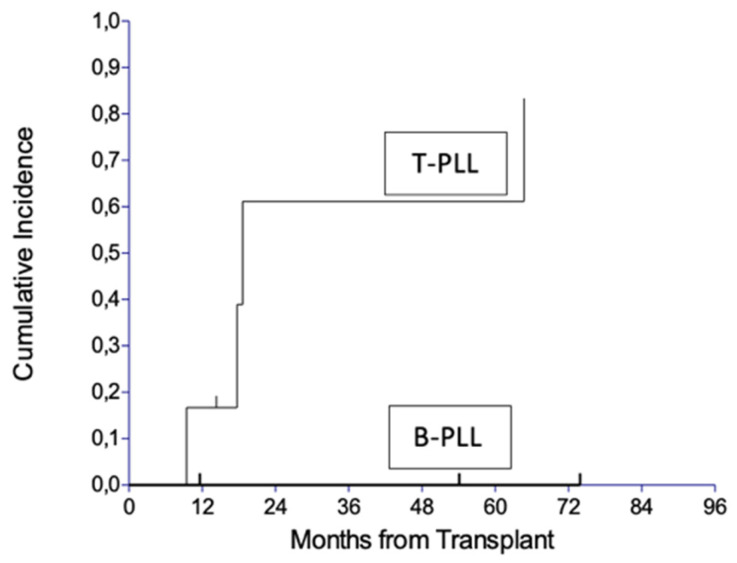 Figure 2
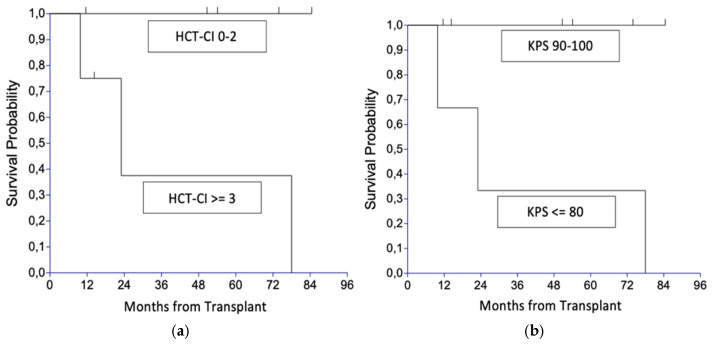 Figure 3
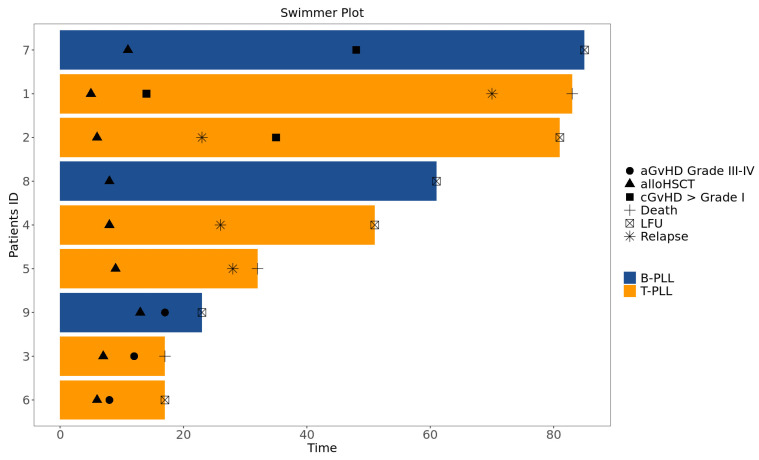 Figure 4
Peer Reviews
No public reviews on file for this paper yet. If you reviewed it on a platform where reviews are public (OpenReview, ICLR, NeurIPS, ICML), you can paste yours below so the community can read it here.
Videos
No videos yet. Explain this paper in a talk, walkthrough, or lecture? Add one.
Taxonomy
TopicsChronic Lymphocytic Leukemia Research · Acute Lymphoblastic Leukemia research · Lymphoma Diagnosis and Treatment